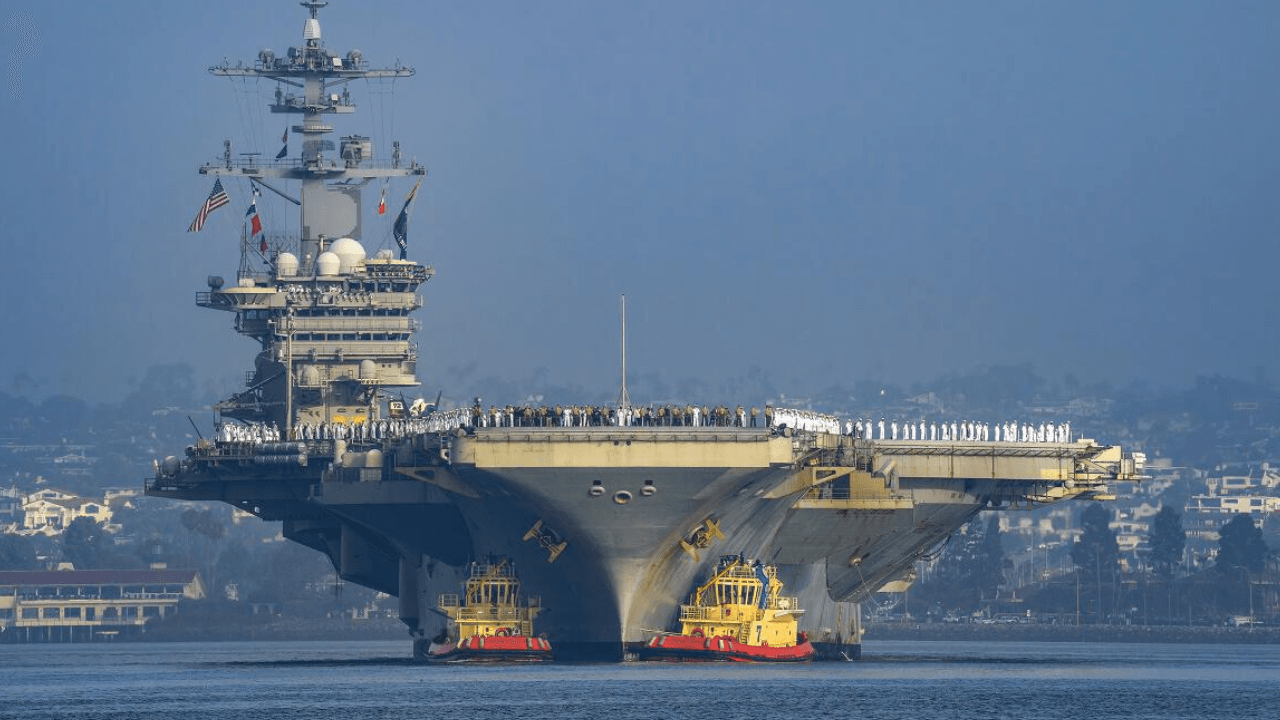
The United States has amassed its biggest concentration of air power in the Middle East since the 2003 invasion that sparked the Iraq War, according to reports.
The expansion of US military forces comes amid rising tensions with Iran and stalled negotiations over its nuclear program. Officials say the buildup could support sustained air operations if ordered.
The move reflects one of the most significant American military deployments in the region in more than two decades.
Massive Deployment of Aircraft and Naval Forces
According to reporting from the Wall Street Journal, the US has sent advanced fighters like F-35s and F-22s to bases across the Middle East. Refueling tankers, early warning planes, and command aircraft are also positioned to support potential missions.
Two aircraft carriers now anchor the buildup. The USS Abraham Lincoln strike group is already in the region, and the USS Gerald R. Ford is en route, enhancing US naval and air capabilities nearby.
Experts say this level of deployment allows for a sustained air campaign, not just a short precision strike. That contrasts with last June’s “Midnight Hammer” operation, when US bombers struck three Iranian nuclear facilities with a limited force.
Context: Strained US-Iran Relations
The buildup occurs as President Donald Trump weighs possible military action against Iran. Reports indicate US forces could be ready for a strike at short notice, though Trump has not authorized any attack yet.
Diplomacy continues in parallel: Iranian and US representatives met in Geneva recently in efforts to find a nuclear agreement. But both sides acknowledged they remain far apart on key issues.
White House Press Secretary Karoline Leavitt said progress has been limited and that Iran “would be very wise to make a deal.”
Why the Buildup Matters
Military analysts argue the size of the deployment signals serious US intent. By assembling advanced aircraft, two carrier strike groups, and support forces, the United States shows it is ready to conduct prolonged operations against a range of targets.
But observers also warn that a large air buildup can increase the risk of regional escalation and draw in rival powers. Iran has responded with naval drills and displays of its own capabilities near key shipping lanes like the Strait of Hormuz.
For now, the presence of significant US air and naval forces reflects both strategic positioning and pressure on Tehran as policymakers debate whether to pursue diplomacy or military action in resolving longstanding tensions.