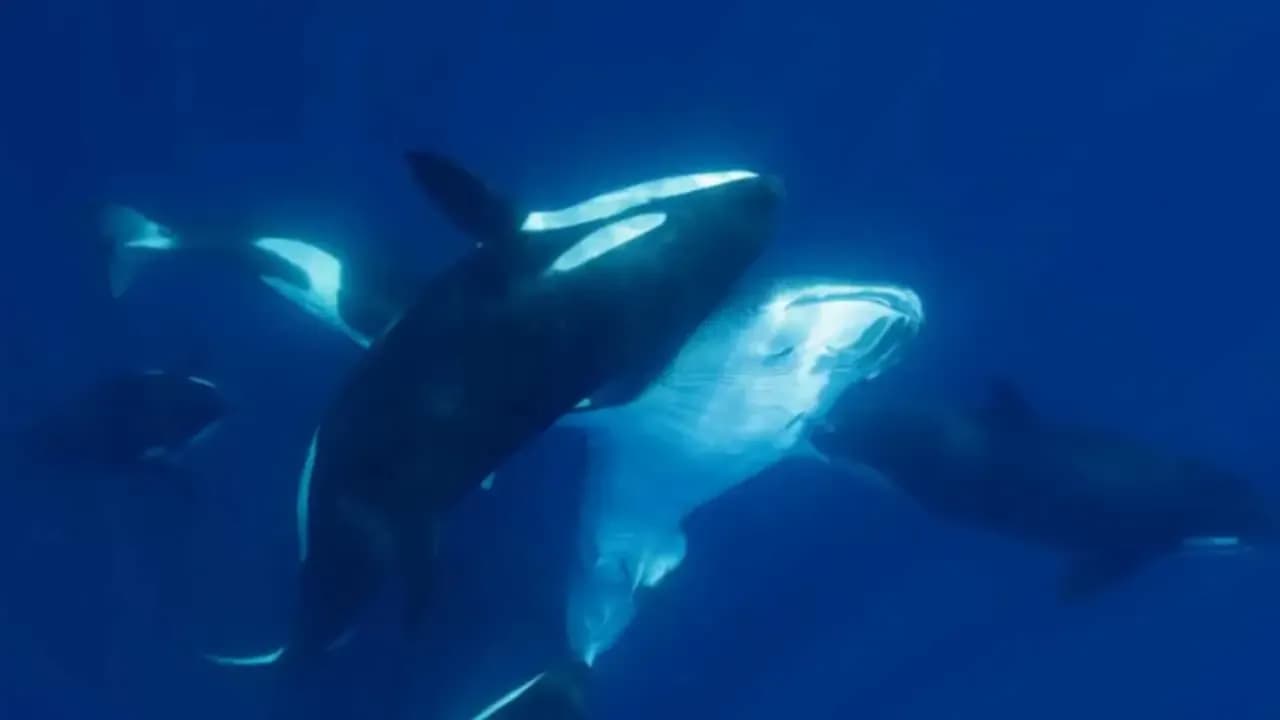
In the warm, turquoise waters of the Gulf of California, a remarkable spectacle has been unfolding beneath the surface. Over the past six years, researchers have documented a pod of killer whales (Orcinus orca) exhibiting coordinated hunting behavior targeting whale sharks (Rhincodon typus), the largest fish on Earth. This rare and unsettling predation highlights orcas’ extraordinary adaptability and dominance in marine ecosystems.
A Clash of Ocean Giants
Whale sharks, which can grow up to 18 meters (59 feet) long, are gentle filter feeders primarily consuming plankton, small fish, and krill. They are often found in tropical oceans, gathering at specific feeding sites essential for their survival. Killer whales, on the other hand, are apex predators renowned for their intelligence and complex social structures. Living in close-knit pods, orcas develop specialized hunting techniques tailored to their environment and prey.
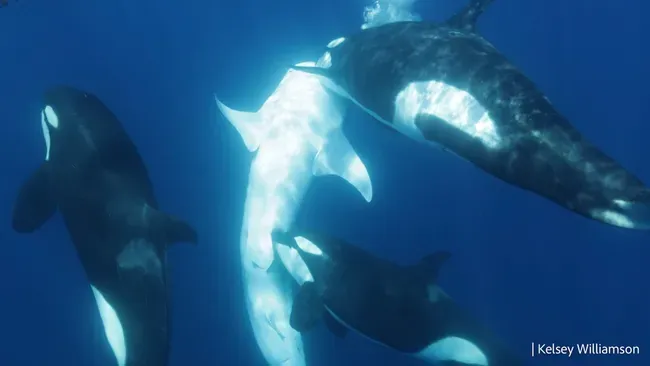
Recent research led by Francesca Pancaldi from Mexico’s Centro Interdisciplinario de Ciencias Marinas has shed light on a strikingly effective hunting strategy employed by these orcas. Marine biologist Erick Higuera Rivas explained how the pod collaboratively flips whale sharks onto their backs, inducing a state of tonic immobility that renders the sharks defenseless. Once immobilized, the orcas target the pelvic area, where muscle and cartilage are minimal, making it easier to access the lipid-rich liver and other organs.
However, one male orca, nicknamed “Moctezuma,” has been identified in three of the four recorded attacks, hinting at a potential specialization within this pod.
Unanswered Questions About Orca Behavior
Despite the precision and apparent purpose of these attacks, researchers have yet to photograph orcas consuming the extracted livers. This raises intriguing questions: Are the livers consumed out of sight, or do these attacks serve a different ecological purpose? The lack of direct evidence leaves the exact motivations of the orcas open to further investigation.
Orcas moving into False Bay and ripping the livers out of great white sharks have removed the sharks from the area entirely, even though it was one of the most dense great white populations in the world two years ago.
byu/kateroni innatureismetal
Implications for Marine Ecosystems
These findings offer a rare glimpse into the complex hunting behaviors of killer whales and their influence on marine ecosystems. By targeting species at all trophic levels, orcas demonstrate their unparalleled adaptability and ecological significance as apex predators.
As researchers continue to unravel the mysteries of orca predation, these observations remind us of the intricacies of marine life and the delicate balance of oceanic ecosystems.