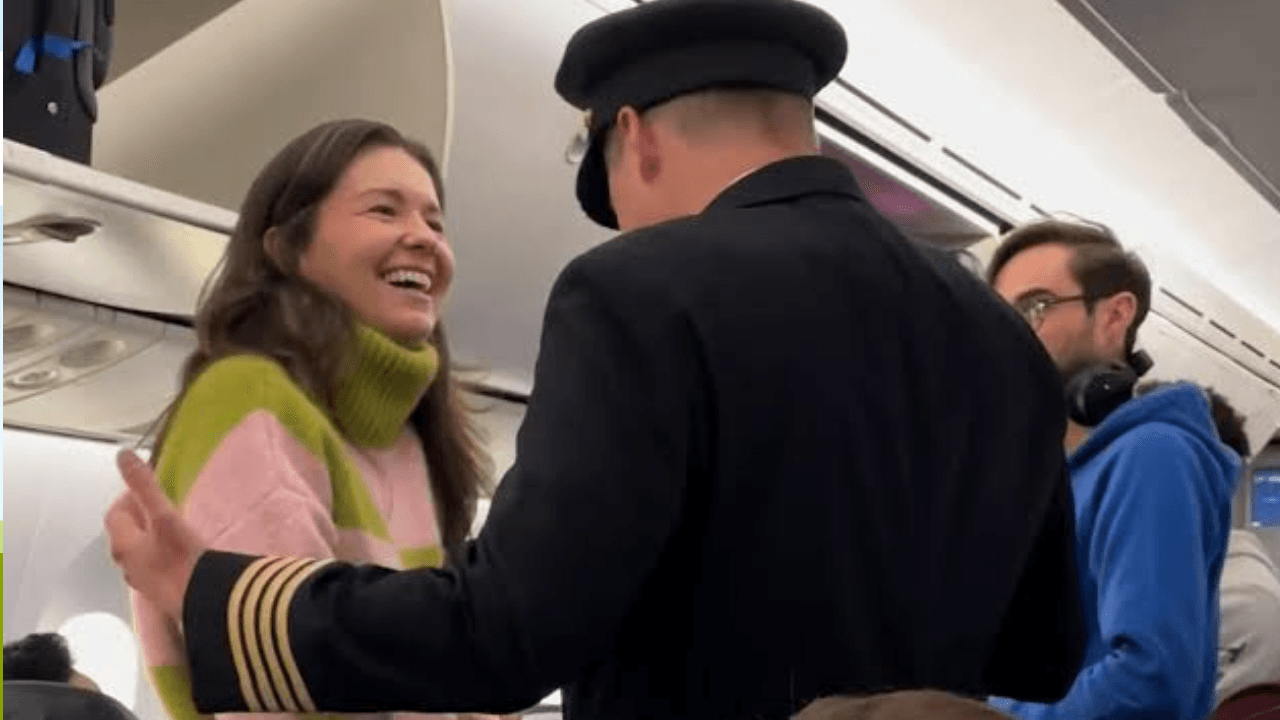
The passengers on a United Airlines flight were preparing for an ordinary journey when a pilot stepped into the cabin and picked up the intercom.
He had something personal to say.
Years earlier, a young woman on board had donated bone marrow to a stranger fighting leukemia. The recipient had survived, recovered and returned to work as an airline pilot.
Now he was standing on her plane.
The man she had helped save was there to thank her.
A College Student Made a Simple Decision
Allie Reimold signed up to join a bone marrow donor registry while she was in college.
The registration process involved a cheek swab and a willingness to be contacted if she matched a patient who needed a transplant.
Afterward, she returned to her studies and everyday life.
Years later, the registry contacted her with important news.
She was a potential match for someone with leukemia, a cancer affecting blood-forming tissues.
For many patients with certain blood cancers, a stem cell transplant can offer a chance of long-term survival. But finding a suitable donor can be difficult.
Allie agreed to donate.
The Recipient Was a United Airlines Pilot
The man who needed the transplant was David Whitson, a pilot for United Airlines.
He was undergoing treatment for leukemia and needed a compatible donor.
Allie's donation helped make his transplant possible.
Whitson survived the illness and eventually returned to flying.
He later spoke about how the transplant had changed his life, including the way his body now produces blood cells originating from Allie's donated stem cells.
In an emotional video shared by United Airlines, he described her as the person who saved his life.
The two had formed a connection through a medical procedure neither could have anticipated when Allie first joined the registry.
A Lasting Connection After the Transplant
After recovering, Whitson wanted to express his gratitude.
He made Allie his United Airlines travel pass companion, allowing her to receive certain flight benefits.
The arrangement also meant he could see when she booked flights through the airline's system.
That detail would eventually create an opportunity for a surprise.
One day, Whitson noticed that Allie was scheduled to fly from Houston while he was working at the airport.
He contacted the crew and gate staff to arrange a visit.
Then he boarded her plane.
A Surprise Announcement Over the Intercom
The passengers were seated when Whitson began speaking.
He explained that someone on board had once donated bone marrow to a stranger who was seriously ill.
He told them that he had been the recipient.
Then he identified Allie as the woman whose donation had helped him survive.
The cabin erupted in applause.
Whitson walked down the aisle toward Allie, and the two embraced.
The moment was recorded on video and later shared online, where viewers responded to the emotional reunion.
For the people watching, it was a reminder that a donor and recipient can remain connected long after the medical procedure itself.
'My Body Makes Her Blood'
Whitson explained the unusual biological connection created by a stem cell transplant.
Donated blood-forming stem cells can settle in a recipient's bone marrow and begin producing new blood cells.
That means a recipient's blood type can change after a successful transplant if the donor and recipient have different blood groups.
Whitson said his blood type changed from B positive to O negative after receiving Allie's cells.
His words offered a striking way to describe the impact of her donation.
She had not simply helped him through one medical procedure. Her cells were now part of the system that allowed his body to produce blood.
Why Bone Marrow Donors Matter
A stem cell transplant can be used to treat some leukemias and other serious blood disorders.
Donors are usually matched with recipients using human leukocyte antigen, or HLA, markers. A close match can reduce certain complications and improve the chances of a successful transplant.
Many donations today involve collecting blood-forming stem cells from the bloodstream rather than surgically removing marrow.
The method depends on the patient's needs and the donor's medical circumstances.
Joining a donor registry does not guarantee that someone will be called to donate. But for patients who cannot find a suitable family donor, registries can be essential.
Organizations such as NMDP help connect patients with potential unrelated donors.
A Thank-You That Reached an Entire Plane
Allie's decision began with a cheek swab and an offer to help someone she did not know.
Years later, she found herself on an airplane as the recipient of her donation stood before her.
Whitson was alive, healthy enough to fly again and eager to make sure everyone in the cabin knew what she had done.
The applause was for a moment of kindness that had started long before anyone boarded the aircraft.
She signed up to help a stranger. Years later, that stranger stood in front of an airplane full of people and thanked her for the life he still had.
This article recounts the story shared by United Airlines in October 2026. The transplant outcome described is specific to these individuals; not every stem cell transplant has the same result.
Sources: United Airlines — original video and story; NMDP — blood stem cell donation information; National Cancer Institute — stem cell transplant overview.