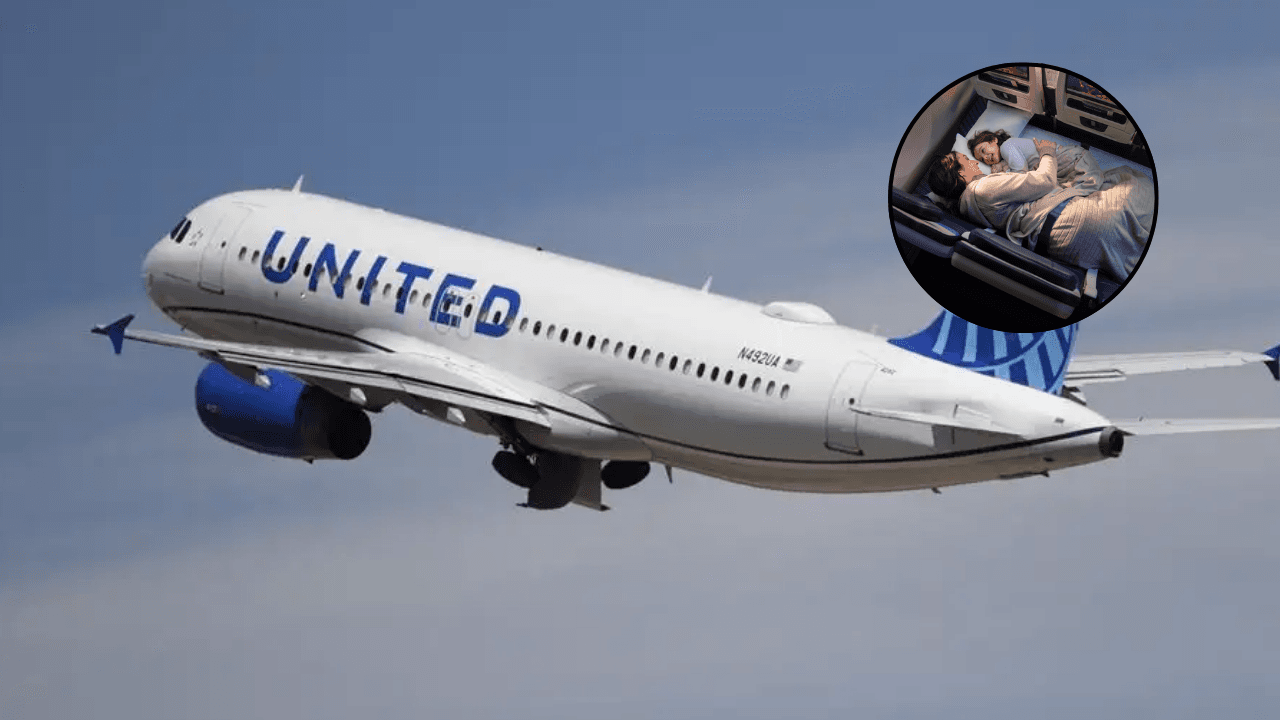
United Airlines is preparing a major shift in air travel with lie-flat economy seats designed for long-haul comfort.
The Chicago-based airline announced it will launch its new “Relax Row” seating option starting in 2027. The feature converts a row of three standard economy seats into a lie-flat sleeping space. United says the goal is to bring premium-level comfort to more passengers without the high price of business class.
How the Relax Row Works
The Relax Row will allow passengers to stretch out fully across three seats. Adjustable leg rests fold up to create a flat surface, turning the row into a bed-like space. Travelers will also receive a mattress pad, blankets, pillows, and a special travel kit for children.
United says the option is ideal for families, couples, or solo travelers who want more rest on long flights. The seats will be placed between standard economy and premium economy sections.
More details about United’s fleet and cabin upgrades can be found on the United Airlines official website.
A Push Toward More Comfortable Economy Travel
Andrew Nocella, United’s chief commercial officer, said the airline is focused on improving the passenger experience across all cabins.
“We are committed to delivering new experiences for all of our customers,” Nocella said. “Relax Row is one of the ways we are doing that.”
The concept is not entirely new. United’s partner airline Air New Zealand already offers a similar product called Skycouch. However, United will be the first North American airline to introduce this type of seating on a large scale.
Industry trends and airline innovations are tracked by sources like Reuters, which has reported growing demand for more comfort in economy cabins.
Where and When It Will Be Available
United plans to install Relax Row seats on its Boeing 787 and 777 aircraft. The rollout will begin with about 90 planes in 2027. The airline expects to expand the feature to more than 200 planes by 2030.
Each aircraft will include up to 12 Relax Rows. That means more passengers will have access to lie-flat seating without upgrading to business class.
What It Means for Travelers
This move signals a broader shift in the airline industry. Carriers are trying to balance affordability with comfort, especially on long international routes.
For travelers, it could mean better sleep, less fatigue, and a more enjoyable flight experience. For airlines, it offers a new way to attract customers who want comfort but cannot afford premium cabins.
If successful, United’s move could push other airlines to follow. And that could reshape what economy travel looks like in the years ahead.