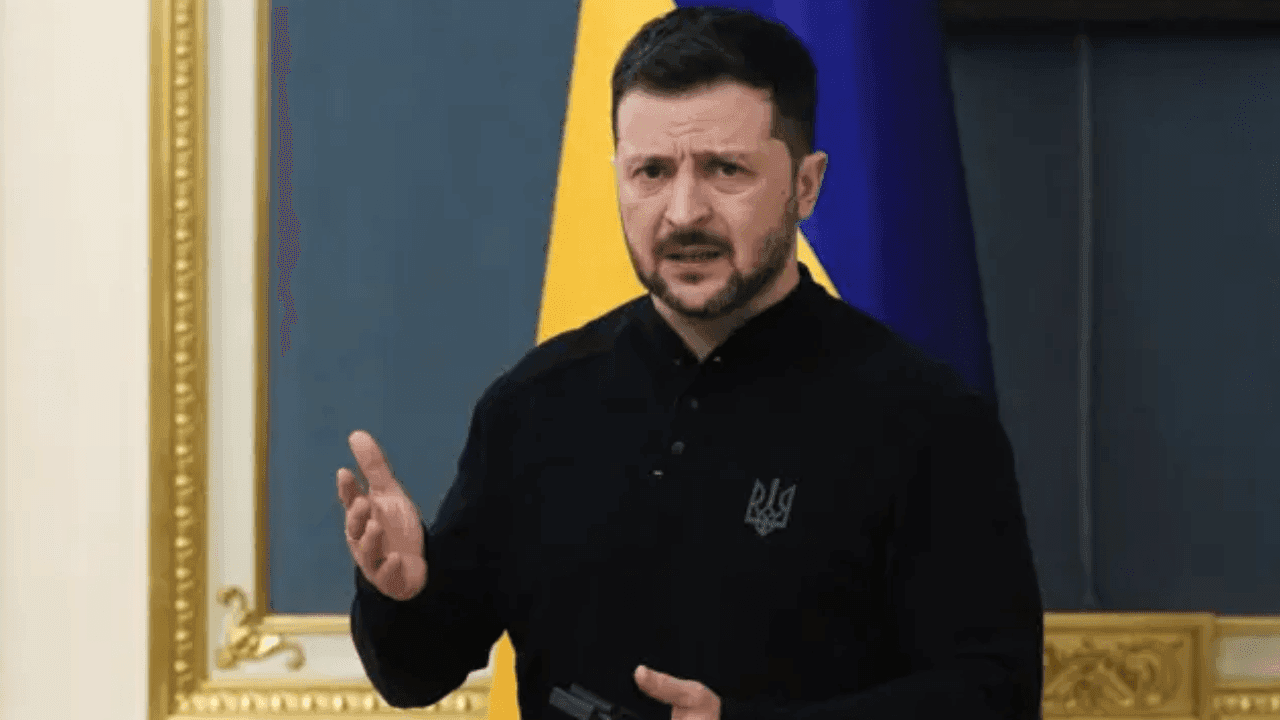
In a recent development that has sparked international intrigue, Ukrainian forces have captured two Chinese nationals who were found fighting for the Russian army in eastern Ukraine’s Donetsk region. President Volodymyr Zelensky provided this information during a press announcement, raising questions about the extent of foreign involvement in the ongoing conflict.
During the press conference, Zelensky indicated that intelligence reports suggest the presence of more Chinese soldiers in the Russian army than previously assumed. This revelation came alongside a video in which one of the captured individuals was seen in handcuffs, speaking Mandarin, and describing a recent battle with the Ukrainian military.
The Ukrainian Foreign Minister, Andrii Sybiha, strongly condemned the participation of Chinese troops on Ukrainian soil, asserting that it challenges China’s declared stance for peace. Sybiha mentioned that the Chinese envoy in Kyiv has been summoned to provide an explanation, marking a significant escalation in diplomatic tensions between Ukraine and China.
This is the first official instance where Ukraine has accused China of directly supporting Russia with manpower. Although Moscow and Beijing have not yet responded to these claims, the situation has added a complex layer to the already tense geopolitical landscape.
The United States State Department spokesperson Tammy Bruce also weighed in, calling the reports disturbing. She remarked that China’s support for Russia’s war efforts extends beyond manpower, involving the provision of critical dual-use goods like navigation equipment and semiconductor chips, casting doubts on China’s claims of neutrality.
Meanwhile, French media reported potential online engagement by individuals linked to the Russian army, revealing around 40 accounts on Douyin, a Chinese social media app, of people claiming allegiance to the Russian military effort.
The broader implications of this incident are profound, as it challenges the global narratives of neutrality and peace previously held. Zelensky’s call to action has also resonated internationally, urging a collective response from global leaders advocating for peace.
As Russian forces continue to ensure a strong presence in about 20% of Ukrainian territory, questions about the extent of foreign support for Russia intensify. This incident not only underscores the complex international dynamics at play but also puts pressure on allied nations to reassess their strategic responses to the Ukrainian conflict.