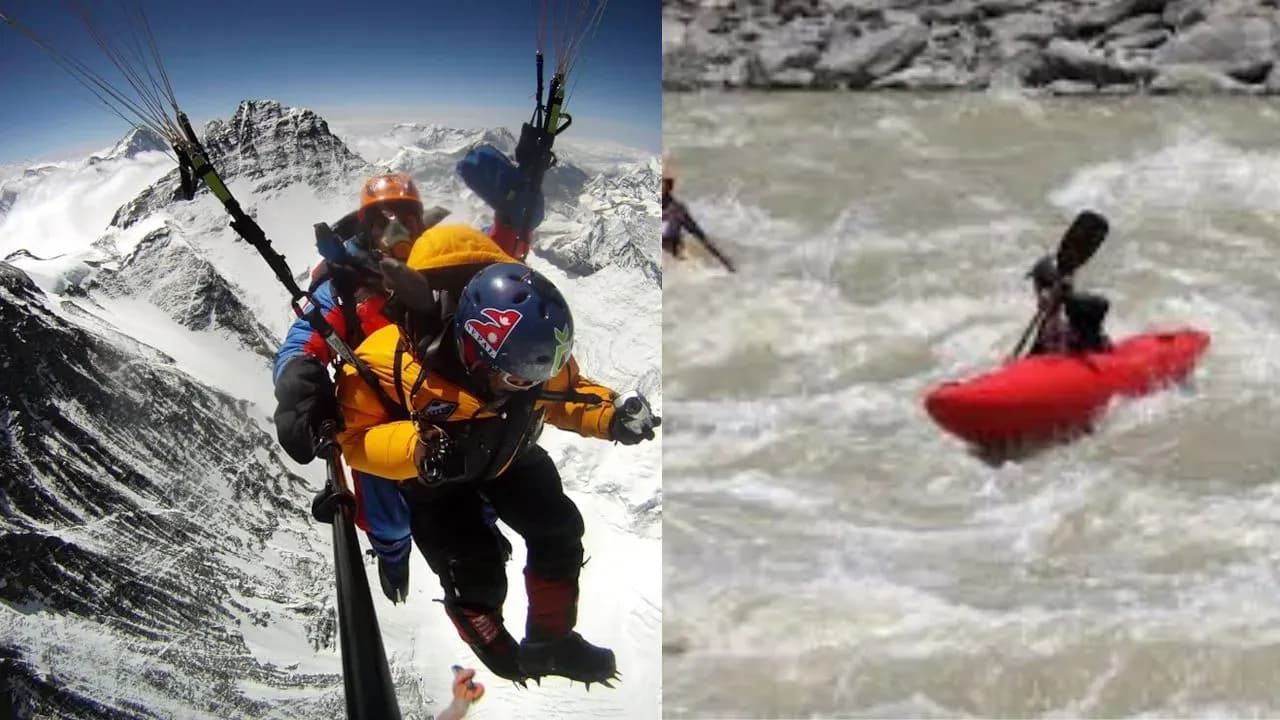
In 2011, Sanobabu Sunuwar and Lakpa Tsheri Sherpa made history with an extraordinary adventure. These two men from Nepal embarked on a journey that combined the high-altitude challenge of Mount Everest with a subsequent trek across varied terrains to the Indian Ocean. They paraglided from Mount Everest’s peak. Their challenging feat did not stop them. The two then kayaked through rivers to reach the sea. Let’s take a closer look at their incredible journey.
Preparation and Challenges when paraglided from Mount Everest’s peak
To begin their unique expedition, Sanobabu and Lakpa faced rigorous preparation. Climbing Mount Everest required extensive physical conditioning, knowledge of high-altitude climbing, and logistical planning. Reaching Everest’s summit is an immense feat in itself, involving treacherous icefalls, steep slopes, and unpredictable weather. Their journey commenced from Kathmandu, Nepal, where they organized the necessary gear and permits. Climbing Everest presented them with obstacles such as low oxygen levels, extreme cold, and high winds. The mountain’s notorious Khumbu Icefall, with its constantly shifting ice and deep crevasses, posed significant danger. Despite these challenges, they reached their peak on May 21, 2011.
Mount Everest’s extreme conditions have historically posed risks even to the most experienced climbers. The death zone, above 8,000 meters (26,247 feet), is an area where the human body cannot acclimate for extended periods. Climbers often face frostbite, hypothermia, and acute mountain sickness. The duo’s successful ascent required not only physical stamina but also careful route selection and the strategic use of supplemental oxygen.
Paragliding from Mount Everest’s summit was not only ambitious but also highly dangerous. The peak of Everest stands at 8,848 meters (29,029 feet), where the air is thin, making it difficult to control a paraglider. Wind conditions at that altitude can change rapidly, creating an unpredictable environment. The duo knew that any mistake could be fatal. To mitigate these risks, they carried out extensive checks on their paragliding equipment and waited for a window of favorable weather. Their equipment included custom-built paragliders designed to handle high-altitude flights and sudden temperature drops.
The Paragliding Descent
On the morning of May 21, 2011, Sunuwar and Lakpa prepared for their descent from the summit. They set up their paragliding gear amid freezing temperatures. With a quick launch, they lifted off from the world’s highest peak.

The flight itself was breathtaking and perilous. The thin atmosphere made steering a challenge, but the two adventurers maintained control. They soared above glaciers and valleys, covering significant distances in a short time. Within 45 minutes, they descended to Namche Bazaar, a village located at 3,440 meters (11,286 feet) in the Khumbu region. This rapid descent from the summit to a lower altitude reduced the risk of altitude sickness and allowed them to recover in a relatively safer environment. Namche Bazaar, a vital trading hub in the region, provided them with an opportunity to restock supplies and plan the next stage.
Namche Bazaar has historically served as a major stop for mountaineers and trekkers heading to or from Everest. The village is equipped with lodges, shops, and medical facilities, making it an ideal location for a brief recovery. By reaching this point, the duo was able to gather additional food, communicate their progress, and strategize for the next part of their expedition.
Transition to Kayaking
After their successful paragliding feat, Sanobabu and Lakpa began the next phase of their journey. They had planned a multi-day trek to reach a river suitable for kayaking. From Namche Bazaar, they made their way through trails, forests, and villages, eventually reaching the Sun Kosi River. The Sun Kosi, known as “The River of Gold,” is one of Nepal’s major rivers, famous for its challenging rapids. The river originates in the Himalayas and flows through steep gorges and remote areas before merging with other rivers.
The Sun Kosi River has long been known for its formidable rapids that test even seasoned kayakers. During the monsoon season, the river’s flow increases, amplifying the challenge. Sanobabu and Lakpa had to navigate through areas with dense vegetation, steep embankments, and hidden whirlpools that could have jeopardized their progress. The duo relied on their experience and teamwork to anticipate and overcome these obstacles.
Equipped with their kayaks, they embarked on a challenging 500-mile (approximately 800-kilometer) journey through the river. This segment of the trip posed numerous obstacles, including white-water rapids, whirlpools, and the ever-present threat of capsizing. Navigating through the river required precise paddling skills and the ability to read the water’s unpredictable movements. They encountered Class IV and V rapids, characterized by turbulent waves and rocks that could easily overturn their kayaks.
The Journey to the Indian Ocean when paraglided from Mount Everest’s peak
The river journey tested their physical and mental endurance. While kayaking, they faced obstacles such as strong currents and sharp rocks. On multiple occasions, they had to portage around dangerous sections, carrying their kayaks overland to bypass impassable areas. They pushed forward, driven by their commitment to completing their journey. The route took them through diverse landscapes, including narrow gorges and expansive plains. Each day brought new challenges, from sudden changes in weather to navigating around natural barriers.
The final stage of their journey involved transitioning from the river to open water. Upon reaching the Ganges River, they followed its flow until it emptied into the Bay of Bengal. The Ganges is the longest river in India and is considered sacred by millions. The river’s wide and often unpredictable flow added complexity to the final leg of their expedition. The moment they reached the Indian Ocean, they completed their ambitious project, a combination of mountaineering, paragliding, and kayaking. The entire expedition took approximately one month, with countless challenges faced along the way.
The Bay of Bengal itself is known for its unpredictable weather patterns, especially during the pre-monsoon period. Strong winds and sudden storms are common, adding an extra layer of difficulty for those venturing into open water. Sanobabu and Lakpa had to remain vigilant as they navigated these final miles, ensuring their safety as they reached their goal.
Recognition and Impact when paraglided from Mount Everest’s peak
Sanobabu Sunuwar and Lakpa Tsheri Sherpa’s expedition earned them global recognition. In 2012, National Geographic awarded them the title of “Adventurers of the Year.” Their feat was a testament to their courage and an inspiration to adventurers worldwide. They demonstrated that seemingly impossible goals could be achieved with meticulous planning and unwavering determination. Their achievement brought attention to the potential of combining different adventure sports into a single, cohesive expedition.
The journey also showcased the feasibility of high-altitude paragliding as a sport. Since their successful descent from Mount Everest, other adventurers have followed in their footsteps, attempting similar feats and pushing the boundaries of what is considered achievable. The accomplishment highlighted the importance of innovation and teamwork in extreme sports.
Conclusion
Sanobabu Sunuwar and Lakpa Tsheri Sherpa’s journey from Mount Everest’s peak to the Indian Ocean is a story of innovation, resilience, and adventure. Their unique combination of paragliding and kayaking showcased the human spirit’s ability to tackle extraordinary challenges. Their historic expedition inspires those who dare to push beyond conventional limits, showing that with preparation and courage, even the most ambitious dreams can be realized.
Also Read:
The Only Country Located in All Four Hemispheres of The World | Rich History of Kiribati!
A Husband Spends Over 40 Years Growing a Guitar-Shaped Forest to Honor His Late Wife!