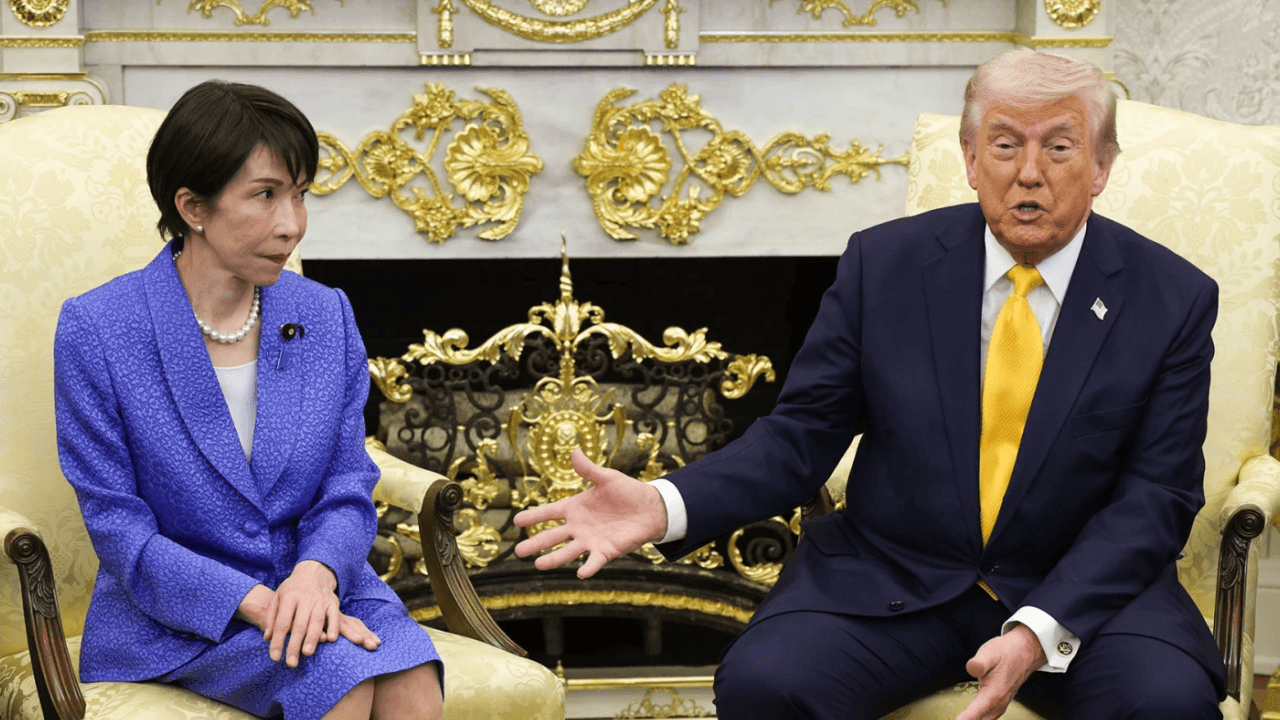
A tense moment unfolded when history collided with modern war strategy.
President Donald Trump left Japan’s prime minister visibly shocked after referencing Pearl Harbor during a discussion about U.S. strikes on Iran.
The remark came during a high-level meeting in Washington focused on the growing conflict in the Middle East.
It quickly drew attention for its unexpected tone and historical weight.
What Trump Said
During the meeting, a reporter asked Trump why the United States did not inform allies before launching attacks on Iran.
Trump responded that secrecy was necessary to maintain the element of surprise.
“We didn’t tell anybody because we wanted surprise,” he said.
He then turned to Japan’s Prime Minister Sanae Takaichi and added, “Who knows better about surprise than Japan?”
He followed with a direct reference to World War II, asking, “Why didn’t you tell me about Pearl Harbor?”
Japan PM’s Reaction
Prime Minister Takaichi appeared visibly taken aback by the comment.
Observers noted her reaction as one of surprise and discomfort during the exchange.
Trump later added that Japan “believes in surprise,” attempting to frame the comment in a broader context.
The moment quickly became a focal point of the meeting.
Why Pearl Harbor Matters
The attack on Pearl Harbor in 1941 remains one of the most sensitive events in U.S. history.
It led directly to America’s entry into World War II.
References to the event in modern diplomacy are rare and often carry strong emotional weight.
Historical context can be found on the History Channel website.
Context of the Meeting
The meeting between Trump and Takaichi focused on the ongoing war with Iran.
U.S. officials have defended recent strikes as necessary to target Iran’s military infrastructure.
Details of the broader conflict have been reported by outlets such as Reuters.
Allied coordination has become a key issue as tensions rise.
Diplomatic Impact
Trump’s comment may complicate discussions with key allies.
Japan is one of the United States’ closest partners in the Asia-Pacific region.
Strong diplomatic ties have been central to security cooperation between the two nations.
Moments like this can influence how allies view U.S. leadership during global conflicts.
Broader Questions on Strategy
The exchange also highlights ongoing debates about communication between allies.
Some leaders have questioned whether the U.S. should provide more advance notice before military actions.
Others argue that secrecy is critical for mission success.
As the Iran conflict continues, these questions are likely to remain at the center of global diplomacy.