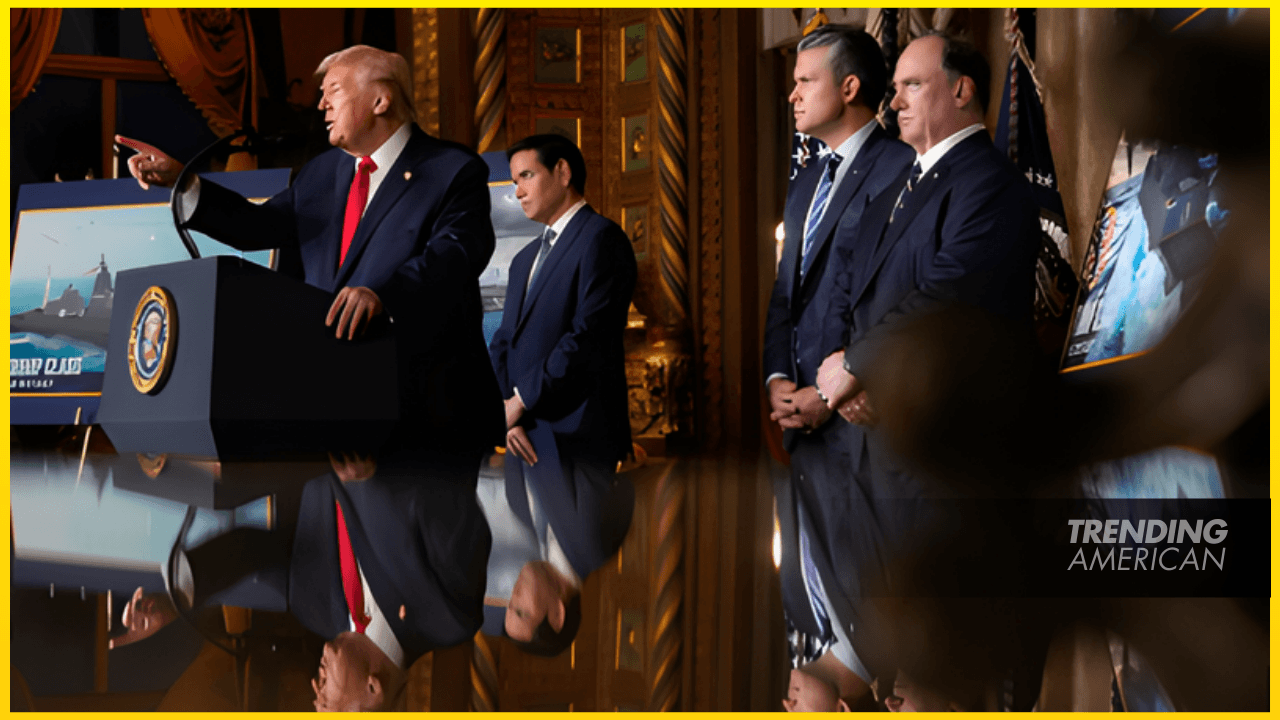
In West Palm Beach, Florida, President Donald Trump delivered a sharp warning to Venezuelan President Nicolás Maduro as the U.S. escalates its pressure campaign against Caracas. Standing with top national security aides, including Secretary of State Marco Rubio and Defense Secretary Pete Hegseth, Trump signaled readiness to intensify actions beyond a four‑month effort aimed at curbing illicit activity and sanctions evasion linked to Venezuela. He told Maduro that if he “plays tough,” it will be the last time he can do so, hinting at further escalations as the United States seeks to disrupt sanctioned oil shipments and projects its naval presence in the Caribbean.
A central element of the campaign has been the Coast Guard’s high‑profile interdiction of oil tankers associated with what U.S. officials describe as Venezuela’s shadow fleet. On the day of Trump’s remarks, Coast Guard units, with Navy support, were pursuing a sanctioned tanker under a false flag in international waters, part of Washington’s broader effort to choke off the flow of cargo tied to Maduro’s government. The administration characterized several vessels as moving near Venezuelan refineries or across the Caribbean as it pursues these targets, including tankers previously seized by U.S. forces as part of the so‑called shadow fleet.
Trump’s remarks also foreshadowed a broader buildup of U.S. naval capability in the region, including plans to commission a new, large warship to bolster deterrence against Maduro’s government. Homeland Security officials, including Kristi Noem, have described the tanker interdictions as a message that illicit activity and evasion of sanctions cannot stand.
Russian involvement figures prominently in the evolving crisis. Russian diplomats have signaled support for Venezuela while Moscow has reportedly begun evacuating families of diplomats from Caracas, a move that reflects rising regional tensions. Venezuelan Foreign Minister Yván Gil spoke with his Russian counterpart, Sergey Lavrov, acknowledging Moscow’s backing while criticizing what Washington calls piracy and other illicit acts conducted in the Caribbean.
The crisis has also seen domestic measures in Venezuela aimed at tightening penalties for activities linked to the interception of oil tankers, including acts that could be construed as piracy or blockades. Venezuelan lawmakers introduced legislation to criminalize broader activities tied to the seizure of shipping cargoes, signaling how the sanctions campaign has become entangled with regional security and legal debates over international law.
As U.S. forces pursue targeted vessels in the Caribbean and eastern Pacific, officials say the aim is to deter Maduro’s regime from continuing illicit activity and to restore greater stability to regional energy markets. The situation has drawn attention from international observers who caution that the United States’ aggressive approach risks destabilizing the region further while pressing Maduro to rethink his strategic calculations.
Disclosure: We may earn a commission when you make a purchase through the ads.