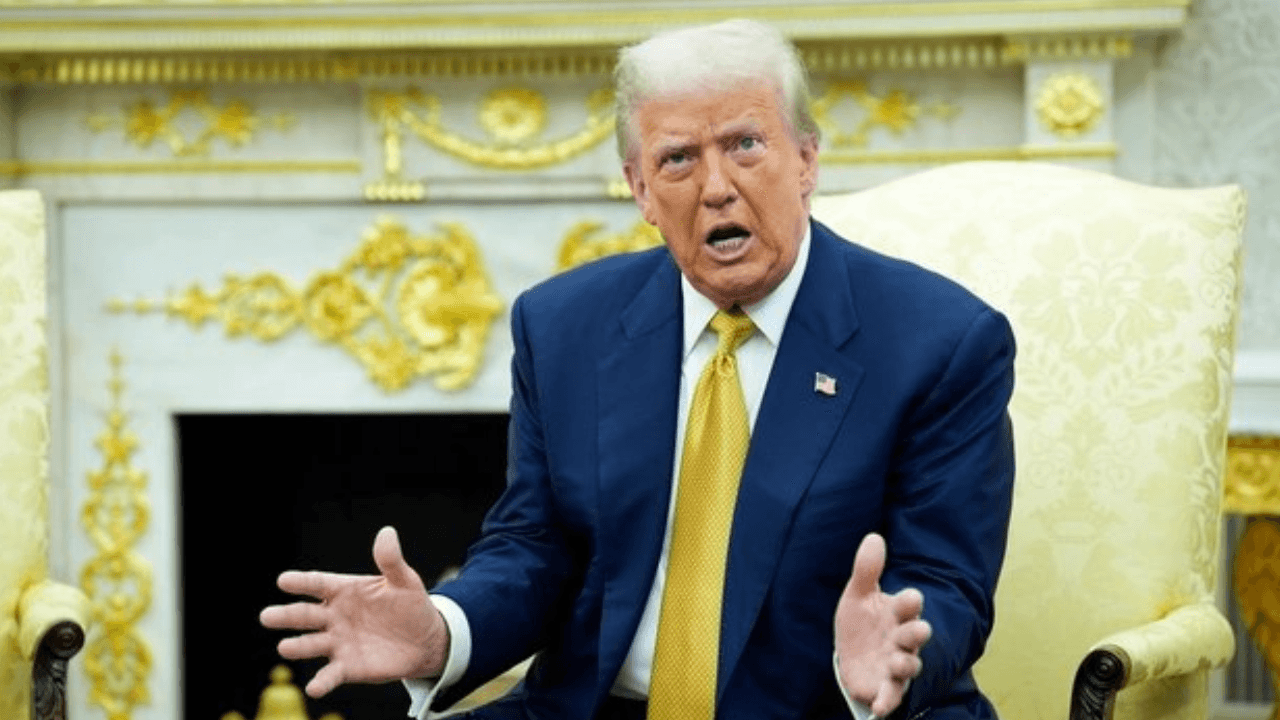
President Donald Trump warned Iran it could face a “very bad day” if it fails to reach a nuclear deal, even as reports say top military officials urged caution.
According to reporting from washingtonpost.com, wsj.com, and cbsnews.com, Joint Chiefs Chairman Gen. Dan Caine privately advised against additional strikes on Iran.
The reports cite concerns over military resource shortages, limited allied support, and the risk of wider escalation in the Middle East.
Military Concerns Behind the Scenes
Sources familiar with the discussions said Caine warned that weapons stockpiles have been strained by ongoing US support for Ukraine and Israel.
Officials also reportedly raised concerns that further strikes could trigger retaliation from Iran or its regional allies.
The Pentagon has not publicly confirmed the details of those private discussions. Defense policy updates are published at defense.gov.
Trump Pushes Back
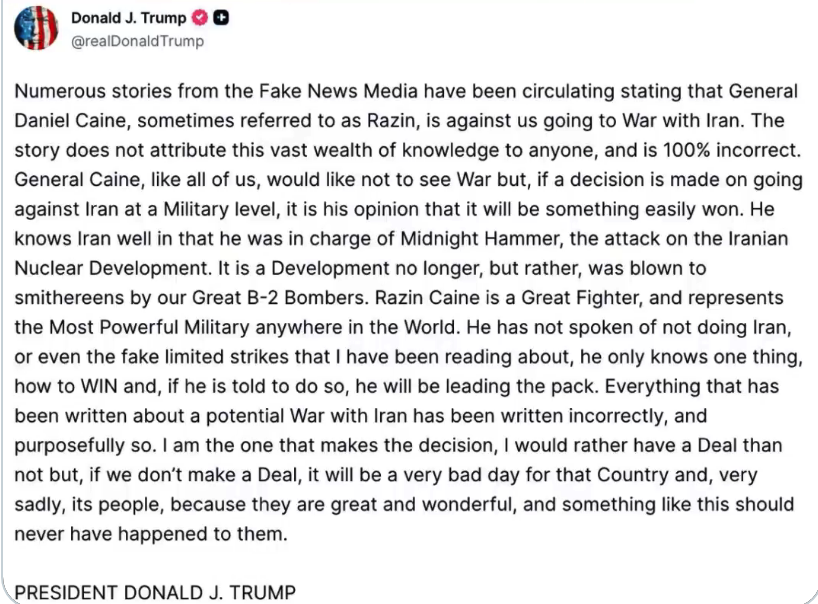
Trump dismissed the reports on Truth Social, calling them “fake news.”
He praised Gen. Caine as a “great fighter” who led the June 2025 Operation Midnight Hammer, a previous US strike targeting Iranian assets.
Trump reiterated his position that Iran must agree to a new nuclear deal or face consequences.
Carrier Groups Move Into Position
The United States has deployed multiple carrier strike groups to the region in recent weeks.
The USS Gerald R. Ford and USS Abraham Lincoln are operating within range of Iranian territory, signaling increased pressure.
Officials say the deployments are meant to deter escalation, though the scale of the buildup has drawn international attention.
Diplomacy or Escalation
Iran has warned that any attack will bring retaliation. At the same time, Iranian officials have said they remain open to continued talks.
The International Atomic Energy Agency continues to monitor Iran’s nuclear program, with reports available at iaea.org.
The mixed signals from Washington highlight internal tensions between political pressure and military caution.
As negotiations hang in the balance, the next move from either side could determine whether the crisis shifts toward diplomacy or confrontation.