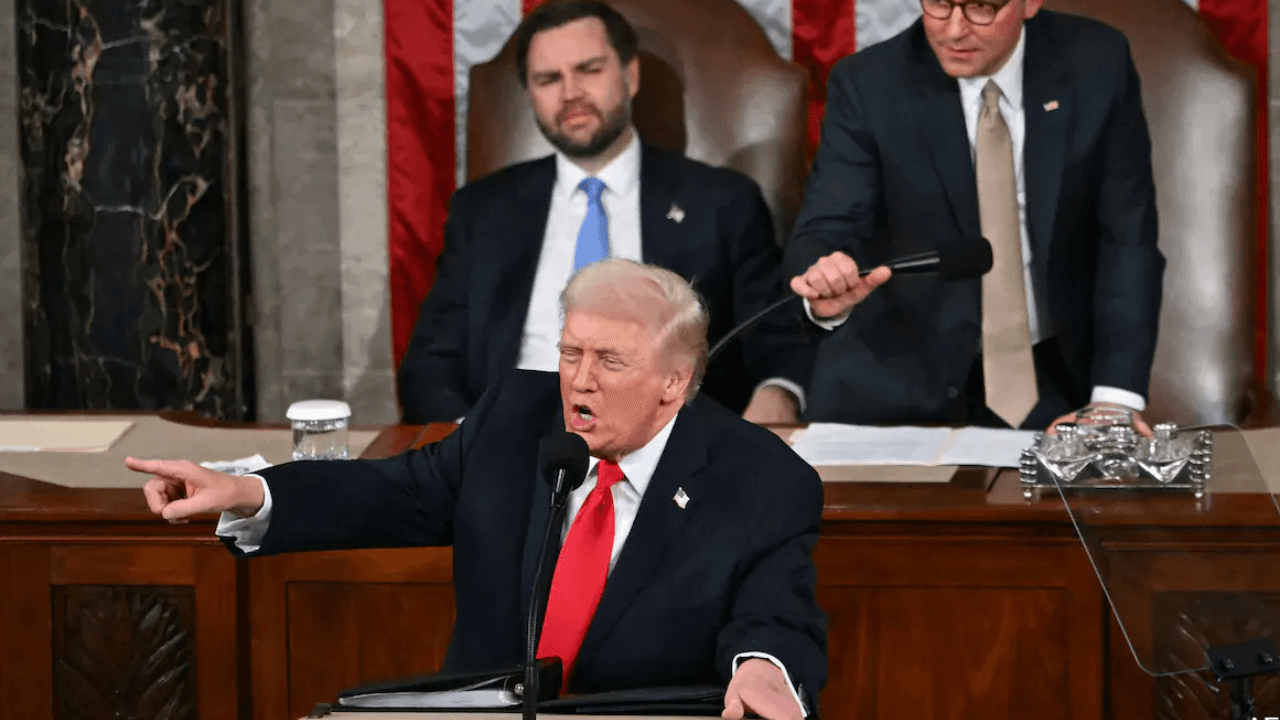
President Donald Trump is pushing Congress to pass what he calls the Delilah Law, a proposal that would block states from issuing commercial driver licenses to undocumented immigrants.
He made the announcement during his State of the Union address, linking the proposal to a crash that left a first grade girl with permanent injuries.
What Trump Said
In his speech, Trump said many undocumented immigrants cannot read English road signs and should not hold commercial driving licenses.
“That’s why tonight I’m calling on Congress to pass what we will call the Delilah Law,” Trump said. “Barring any state from granting commercial driver’s licenses to illegal aliens.”
The full transcript of the address is available through the White House official website.
The Case Behind the Proposal
The proposed law is named after Dalilah Coleman, a young girl who was severely injured in a crash involving a semi truck driver.
According to the White House, Coleman suffered a traumatic brain injury and developed cerebral palsy following the accident. Officials say she will require lifelong therapy and medical care.
The driver, identified as Partap Singh, allegedly entered the United States in 2022. Trump stated that Singh was released into the country after crossing the southern border.
Federal immigration policies and border release procedures are detailed by the Department of Homeland Security.
How Commercial Licenses Work
Commercial driver licenses are regulated at the federal level but issued by individual states. Requirements include written tests, road tests, and medical certification.
Under current federal law, states set certain eligibility standards. Immigration status rules vary depending on state policies and federal guidance.
Political and Legal Impact
Trump framed the Delilah Law as a public safety measure. Supporters argue it would prevent unqualified drivers from operating heavy vehicles across state lines.
Critics say commercial license rules already include strict federal safety standards and that immigration enforcement falls under separate federal laws.
Congress would need to draft and pass legislation to create a nationwide prohibition. The bill would likely face debate in both chambers.
The proposal adds another layer to the broader immigration debate as lawmakers weigh border security, work authorization, and public safety policies heading into the next legislative session.