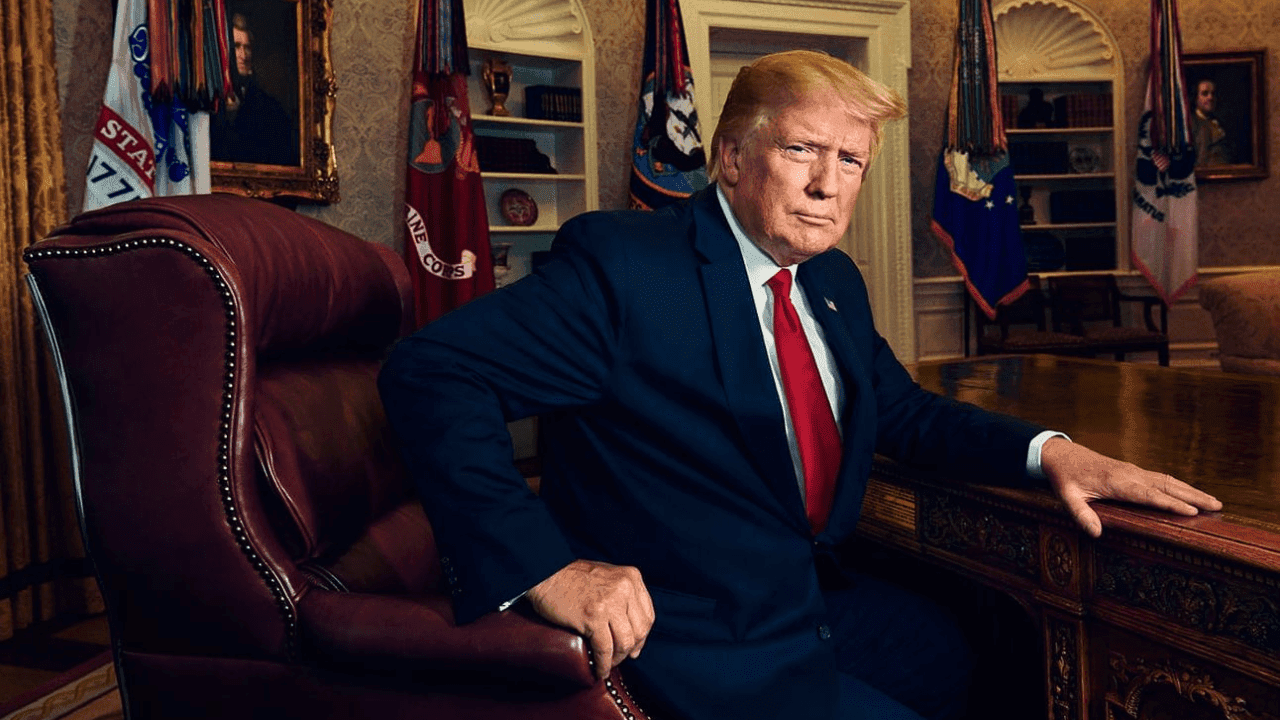
In a move that has sent shockwaves through both political circles and the general public, President Donald Trump has hinted at the possibility of serving a third term. While dining at his private club, Mar-a-Lago, Trump casually mentioned to NBC News that he isn’t joking about the prospect of a third term — a notion that directly challenges the 22nd Amendment of the U.S. Constitution, which limits presidents to two terms.
Trump, whose presidency already deviated from numerous political norms, suggested there might be ways around the Constitutional barriers. He’d been quoted saying, “I have had more people ask me to have a third term, which in a way is a fourth term because the other election, the 2020 election was totally rigged.” Despite losing the 2020 presidential election to Joe Biden, he maintains that the election was stolen from him, a claim repeatedly debunked by multiple audits and court rulings.
The concept of a third term is not just a political taboo but a legal impossibility as well. The 22nd Amendment, ratified in 1951, clearly states “no person shall be elected to the office of the President more than twice.” This was introduced post the unprecedented four-term presidency of Franklin D. Roosevelt, who remains the only president in U.S. history to break the two-term tradition. Trump’s comments underscore a persistent theme of undermining democratic practices and reflect a possible desire to remain omnipresent in political discourse.
Constitutional scholars have weighed in on the legal feasibility of Trump pursuing an additional term. Derek Muller, a law professor, emphasized that there is “no ‘one weird trick’ to getting around presidential term limits.” Any attempt to defy this would not only require extraordinary political manipulation but also face rigorous legal challenges and pushback from multiple branches of government.
Attention has also turned to Vice President JD Vance as a potential political pawn in Trump’s ambitious chess game. There is speculation about the possibility of Vance running for the top job with the intention to pass executive control back to Trump, as suggested in a speculative scenario. This, however, draws new legal questions given the 12th Amendment, which would prohibit someone ineligible for the presidency from holding the vice presidency as well.
Despite the legal and political hurdles, Trump’s consideration of another term has already found support among some base supporters who feel the nation is best guided under his leadership. Kayla Thompson, a supporter from Wisconsin, said she believes “America needs him.” Meanwhile, political strategists have suggested that shouting about a third term might be more about sustaining power and influence over the political landscape than a committed strategy.
Concluding on a reflective note, experts remind us of the spoils that a destabilization of democratic norms can bring. Looking towards history, the weight of Roosevelt’s extended presidency during World War II contrasts sharply with today’s peacetime political stage, highlighting not just the difference in circumstances but the sentiments behind such constitutional endeavors. The ongoing discourse surrounding this potential breach beckons both legal scholars and ordinary citizens alike to ponder the depths of American democracy and its capacity to withstand the tests of personal ambition.