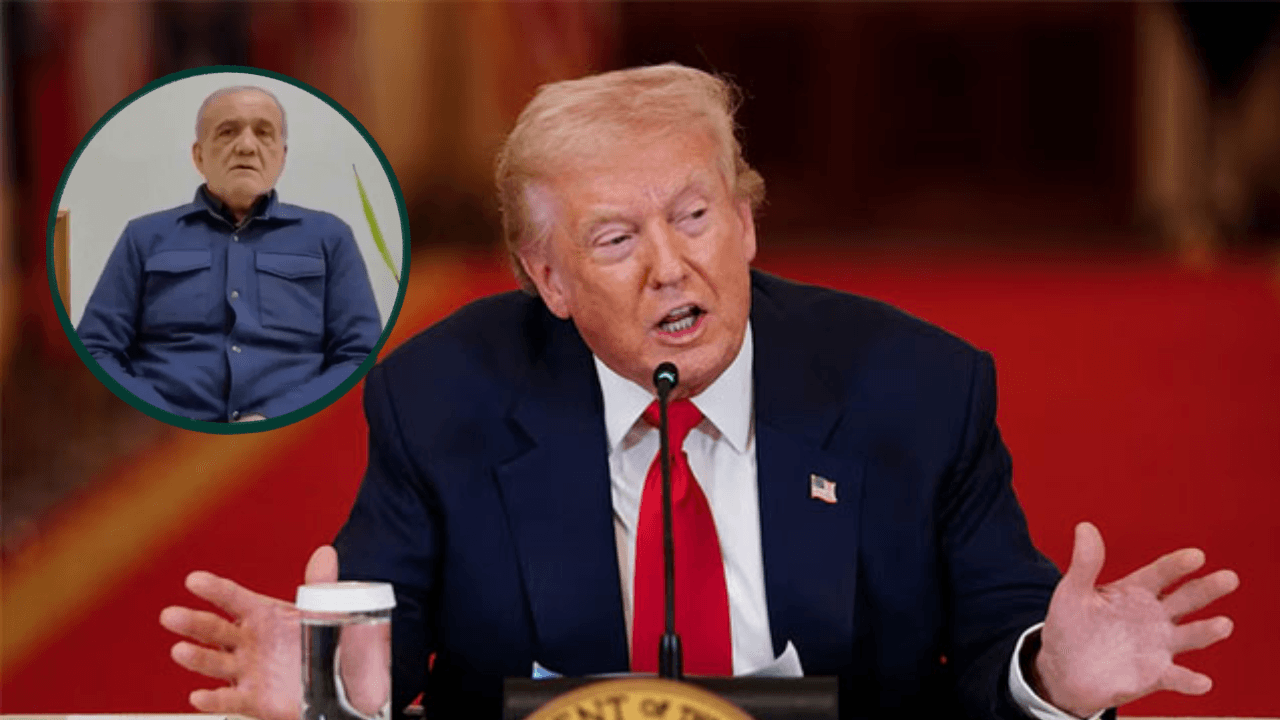
Trump Iran war comments escalated tensions after the U.S. president suggested Iran could lose all leadership in the conflict.
Speaking to reporters aboard Air Force One on Saturday, U.S. President Donald Trump said he was not interested in negotiating with Iran. Instead, he raised the possibility that the war could end only if Iran’s military and leadership structure collapse completely.
“At some point, I don’t think there will be anybody left maybe to say ‘We surrender,’” Trump said during the flight.
The remarks came as the U.S.-Israeli military campaign against Iran entered its second week and fighting spread across several countries in the Middle East.
Trump Rejects Negotiations With Iran
Trump told reporters that negotiations may become meaningless if Iran’s military leadership is eliminated through ongoing airstrikes. His comments signaled a tougher stance than previous U.S. calls for diplomacy.
The White House has not announced any new diplomatic efforts with Tehran since the latest conflict began. Officials have instead emphasized support for Israel’s operations against Iranian targets.
According to reporting from Reuters, the U.S. and Israel have carried out strikes on Iranian missile sites, command centers, and military infrastructure.
The escalating attacks have raised fears that the conflict could widen across the region.
Iran President Apologizes to Neighboring Countries
Iranian President Masoud Pezeshkian attempted to ease tensions with nearby countries after Iranian forces struck U.S. facilities located in the Gulf region.
“I personally apologize to neighboring countries that were affected by Iran’s actions,” Pezeshkian said, urging them not to join the U.S.-Israeli attacks on Iran.
However, he rejected Trump’s demand for Iran’s unconditional surrender. Pezeshkian called the idea “a dream” and said Iran would continue defending itself.
His apology stirred criticism from hardline factions inside Iran, including members of the powerful Islamic Revolutionary Guard Corps.
Fighting Spreads Across the Middle East
Israel and Iran exchanged new attacks Saturday as the conflict expanded beyond their borders.
Iranian forces launched strikes against Israel and Gulf states hosting U.S. military bases. Israeli forces responded with fresh airstrikes in Lebanon after Hezbollah militants fired rockets across the border.
Israeli Prime Minister Benjamin Netanyahu said any members of Iran’s Revolutionary Guard who laid down their arms would not be harmed.
Meanwhile, explosions and drone attacks were reported across the region, including incidents in Kuwait, Bahrain, and the United Arab Emirates.
Embassy Explosion in Norway Raises New Questions
An explosion also struck near the U.S. embassy compound in Oslo early Sunday morning.
Norwegian police said the blast caused minor damage but no injuries. Witnesses told Norwegian newspaper Verdens Gang that smoke rose near the embassy shortly after the explosion.
The cause of the blast remains unclear, and the U.S. State Department has not issued a public response.
Diplomatic tensions remain high as governments monitor the expanding conflict.
Heavy Casualties Reported in the Conflict
The human toll of the war continues to grow.
Iran’s ambassador to the United Nations said U.S. and Israeli attacks have killed at least 1,332 Iranian civilians and injured thousands more. Iranian strikes have killed 10 people in Israel.
At least six U.S. service members have also died during the conflict. Their remains arrived Saturday at a U.S. Air Force base in Delaware.
Officials in Lebanon reported roughly 300 deaths after Israeli strikes hit Hezbollah positions and urban areas in Beirut.
Details about U.S. military involvement can be found through official updates on Defense.gov.
Global Markets Feel the Impact
The war has begun affecting global markets and energy supplies.
Oil prices have surged to multi year highs as the Strait of Hormuz, a key global shipping route, faces disruptions. Kuwait, Iraq, and Qatar have already reduced oil and gas output due to security concerns.
Analysts warn the economic impact could spread if the conflict continues to escalate.
With fighting intensifying and diplomacy stalled, the next moves by Washington, Tehran, and regional powers could determine whether the war expands further.