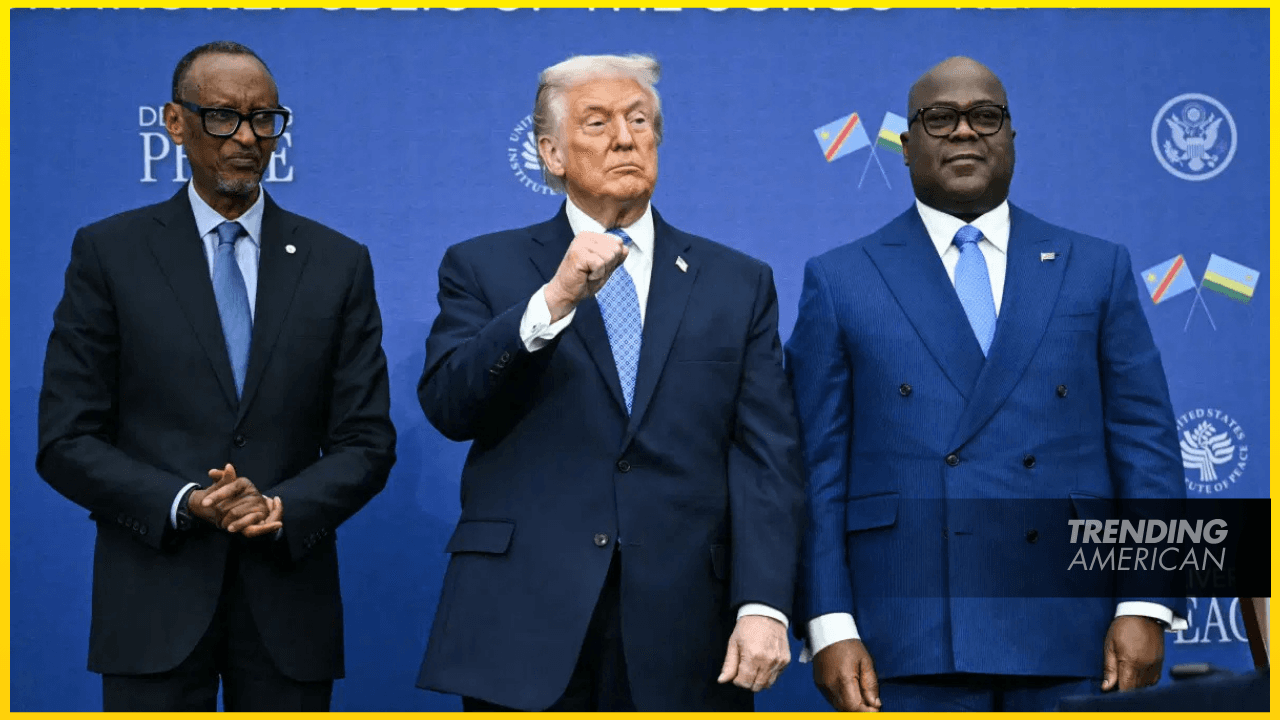
In Washington, D.C., a high-profile ceremony brought Rwanda’s President Paul Kagame and the Democratic Republic of Congo’s President Felix Tshisekedi together with U.S. President Donald Trump. The three leaders signed a peace pact brokered by Washington as fighting raged in eastern Congo, underscoring hopes for regional stability even as violence continued on the ground.
The agreement, described by its backers as a framework to end decades of mutual hostility between Rwanda and the DRC, envisions steps toward de-escalation, a commitment to dialogue, and mechanisms for verification. The United States framed the deal as part of a broader push to stabilize a mineral-rich region that is vital to global supply chains, with implications for both regional security and Western access to strategic metals.
Kagame and Tshisekedi entered the ceremony in a venue described as a peace-institute milieu, with Trump serving as host and facilitator. In the context of the M23 rebel group and other armed actors operating in eastern Congo, observers stressed that the pact’s success hinges on credible enforcement and sustained political will from Kigali and Kinshasa.
Yet, even as the signatures were being placed on paper, violence did not pause. Fresh clashes erupted in eastern DRC around Kamanyola and Kaziba on the day of signing, a stark reminder that diplomacy and on-the-ground conflict remain tightly interwoven in the region. Analysts cautioned that while the deal signals a significant diplomatic milestone, the real test will be whether the parties can translate words into verified actions amid ongoing hostilities.
Proponents argued the accord could unlock a longer-term stabilization process, reduce the risk to civilians, and create a more predictable environment for mining and other cross-border commerce. Critics, however, warned that without robust monitoring, transparent implementation, and accountability for violations, the pact could unravel as soon as the public spotlight fades.
For readers and civilians in the region, the signing represents both a glimmer of international attention and a reminder of the fragility of peace efforts in a conflict zone. The deal highlights how external powers, notably the United States, seek influence through diplomacy and mineral access, even as local battles continue to shape daily life for communities near the border.
As diplomats will watch closely in the weeks ahead, the true measure of the agreement will be concrete steps on the ground: ceasefires respected, displaced people allowed to return home, and verifiable progress toward stabilizing the eastern provinces. The coming months will reveal whether this pact can survive the pressures of continued conflict, competing interests, and the high stakes tied to Congo’s precious mineral wealth.
Disclosure: We may earn a commission when you make a purchase through the ads.