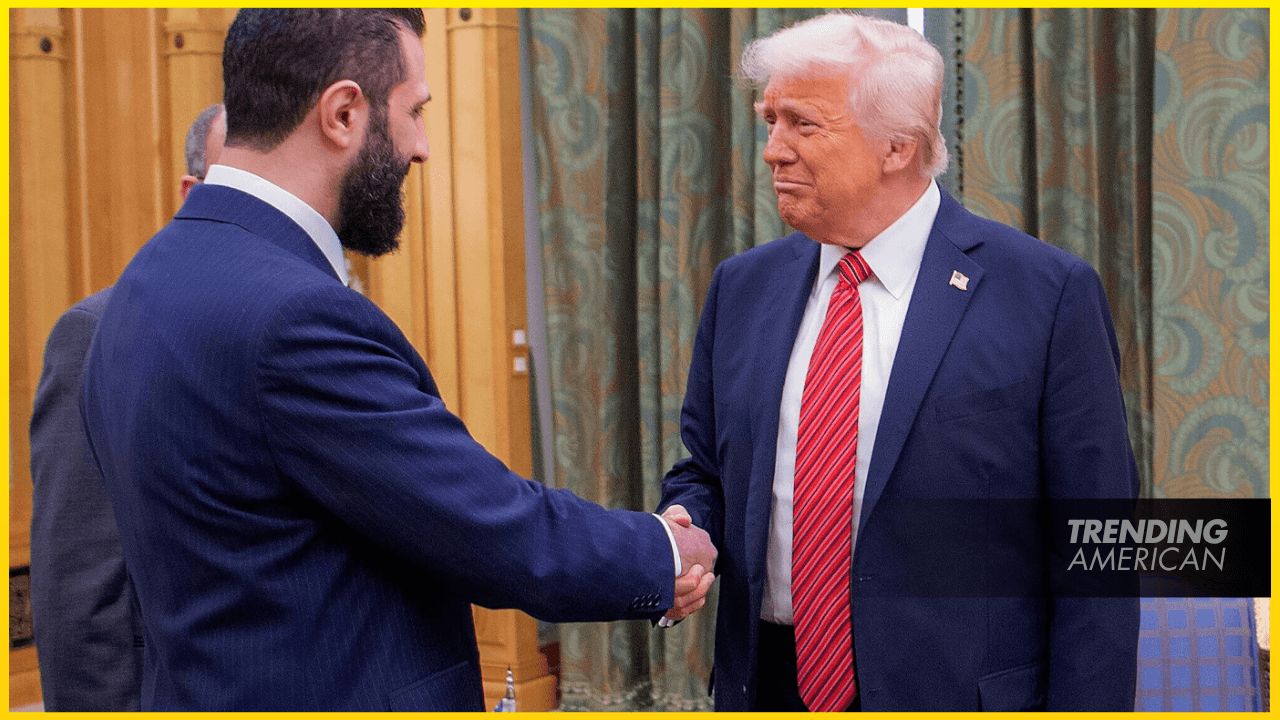
President Donald Trump recently shook the global stage by meeting Syrian President Ahmed Hussein al-Sharaa, known for his jihadist past. The encounter, laden with historical controversy, led Trump to express on Truth Social that it was ‘an honor’ discussing Middle East peace with al-Sharaa. This bold proclamation arrives as Syria undergoes critical transitions, under new leadership post the Bashar al-Assad epoch.
Al-Sharaa, once a formidable figure within al-Qaeda and Al-Nusra Front, ascended to Syria’s presidency in January 2025, succeeding Assad through a pivotal overthrow. Despite accusations of war crimes and a grim history of conflict against American troops, his turn towards peace advocacy has brought unexpected diplomatic engagements.
The meeting, hosted in the White House’s esteemed Oval Office, adds a dramatic chapter to regional and international relations, challenging traditional norms of allyship. Trump’s decision to engage with al-Sharaa, who the U.S. once labeled a ‘Global Terrorist’, reflects a provocative pivot in American foreign policy strategies.
Critics argue this engagement legitimizes al-Sharaa’s past, while proponents suggest it could herald a new era of stability in the Middle East. With demands for transparency growing, the world watches how this relationship will shape geopolitical landscapes.