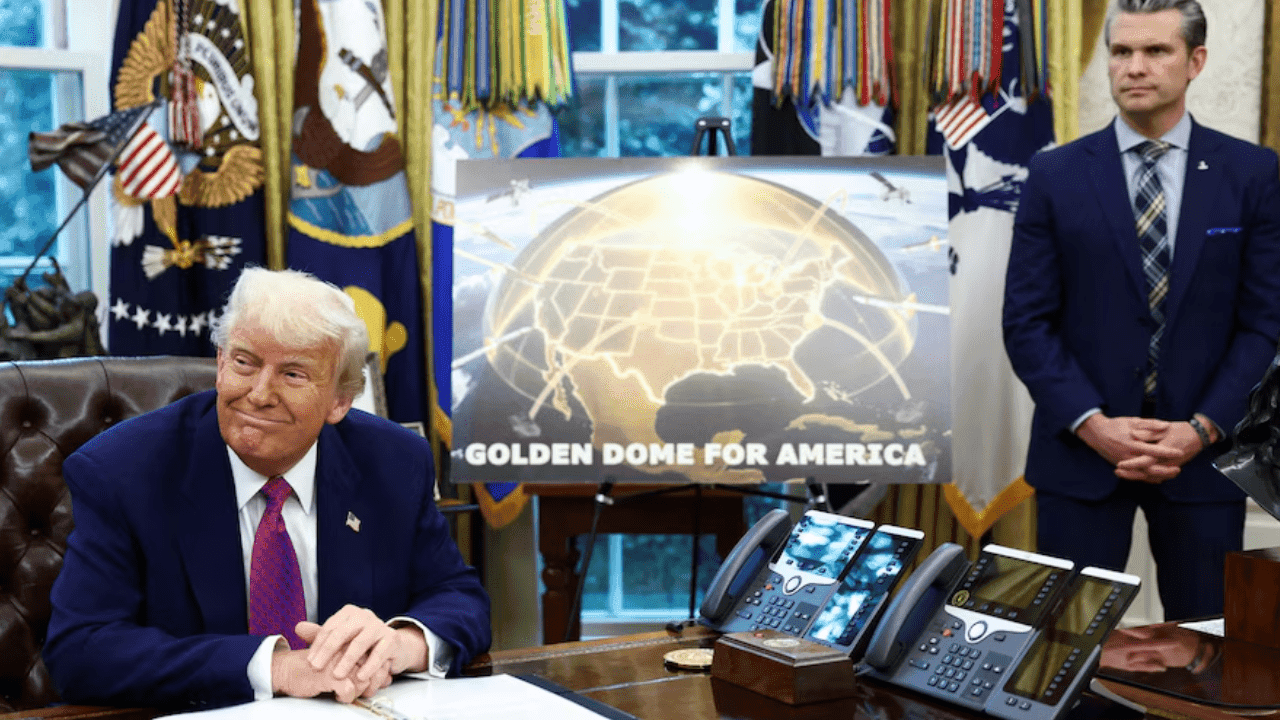
In a bold move, President Trump announced on May 20, 2025, his plan to create a ‘Golden Dome’ an advanced missile defense system aimed at protecting the United States from missile attacks.
This initiative has captured the attention of defense experts and the global community. The plan, described as the most ambitious of its kind, involves deploying a vast network of space-based sensors and interceptors that could target missiles from adversaries anywhere in the world.
This announcement has not only caught the eyes of media outlets but has also stirred debates about its feasibility, cost, and international implications. The proposed budget for the Golden Dome is colossal, estimated to cost around $175 billion over three years, with an initial $25 billion allocated for construction in the following year. This strategic defense system is envisioned to deploy thousands of small satellites capable of intercepting missiles, a feat compared to private initiatives like SpaceX’s Starlink project.
While some experts support the project, seeing it as a crucial defense against future space-based threats, others like Laura Grego from the Union of Concerned Scientists, caution about its practicality. She argues that while having a space-based missile defense sounds promising,
it’s susceptible to countermeasures and could easily be overwhelmed. This skepticism is shared by others who question whether the current technology can achieve the desired defense capabilities or if it might trigger a new arms race in outer space. President Trump, however, remains undeterred, promising that the Golden Dome would be operational before the end of his term.
While his assertive stance aims to reflect American resilience and technological superiority, it also faces domestic scrutiny over the long-term costs and potential diplomatic backlashes. Trump warns of the inevitability of future conflicts extending into space, thus justifying his initiative as a proactive defense measure. Meanwhile, international ramifications loom as nations like Russia and China respond to this American strategy by advancing their own military technologies. The unveiling of the Golden Dome paves the way for intensified geopolitical dynamics, where outer space becomes an extension of Earthly power tussles.
To achieve its ambitious goals, this project demands collaboration with the private sector, innovations in missile and satellite technology, and increased governmental support. The compelling vision of a secured American shield against missile threats now hinges on whether this concept can transition from theoretical preparations to a global security reality.