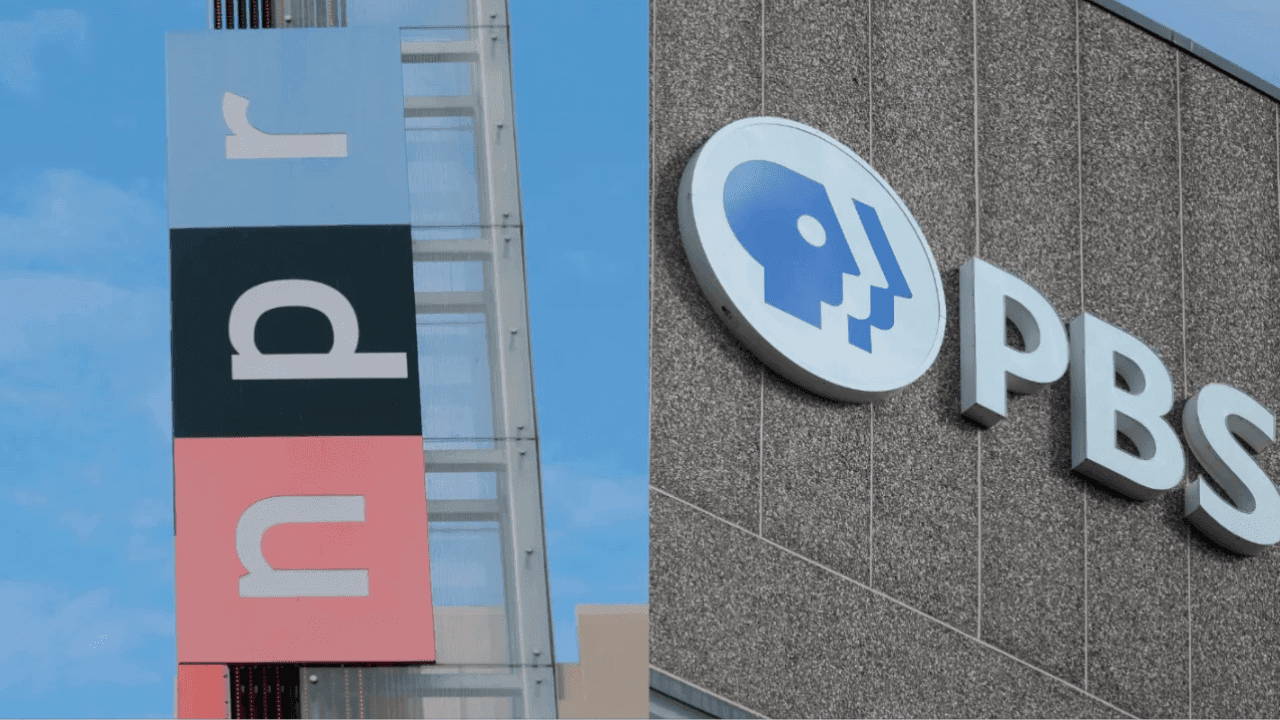
In a bold and controversial move, President Donald Trump signed an executive order aimed at cutting federal funding to public broadcasters PBS and NPR. This decision, announced on Thursday, comes with allegations from Trump of ‘bias’ in their reporting practices. The order demands that the Corporation for Public Broadcasting and other federal agencies halt public funding and eliminate indirect financial support to these institutions. The White House described the order as a response to what it perceives as ‘radical, woke propaganda’ spread under the guise of news, funded by taxpayer money.
Trump’s decision marks the latest in a series of efforts by his administration to assert control over media outlets and institutions that do not align with his political ideologies. Since assuming office, Trump has made several strides in reshaping federal funding policies, affecting various sectors including arts, education, and humanities. Noteworthy are his endeavors using power to oust leaders or cut funding to bodies such as the John F. Kennedy Center and the National Endowment for the Humanities, citing similar reasons for the lack of alignment with his administration’s values.
The impact of this order is potentially transformative for the landscape of American public media. PBS and NPR, known for their public-oriented content and educational programming, rely heavily on federal funding, which constitutes a significant portion of their budgets. The loss of this funding could potentially force these organizations to reconsider their operations, scale back programming, or look for alternative funding sources to maintain their current output.
Critics argue that this move could undermine the independence of public broadcasters which are meant to operate free from governmental interference. They emphasize the risk of such actions eroding journalistic freedom and compromising the breadth of information available to the public. Proponents in support of Trump’s decision argue, however, that it ensures taxpayer money is not utilized to fund perceived partisan content.
As a broader reflection of his administration’s stance, Trump’s decision highlights the ongoing tension between federal power and public institutions. Observers are keen to evaluate how this executive order will be implemented and its long-term implications on public broadcasting in the United States, especially as it draws attention to the contentious dialogue regarding media freedom and government regulation.
In conclusion, while Trump’s executive order reflects his administration’s desire to cut perceived governmental excesses in funding media entities with differing views, it also stirs a significant debate regarding the balance between free media and governmental oversight. Time will reveal how these dynamics evolve, potentially reshaping the future of public broadcasting.