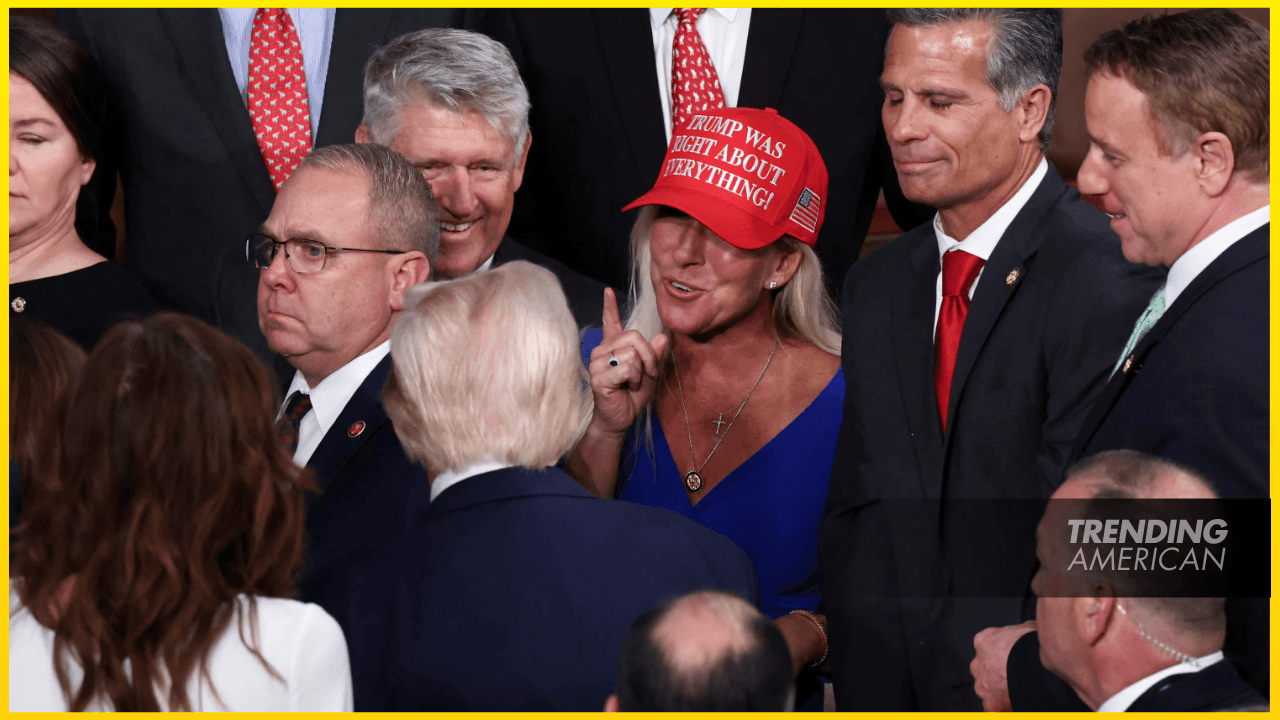
In an unexpected political earthquake, former President Donald Trump dramatically renounced his alliance with Georgia Rep. Marjorie Taylor Greene, tagging her ‘Wacky Marjorie.’ Once a monumental figure in the MAGA universe, Greene is now viewed as a rogue variable by Trump. Disdain for ‘complaints’ about his unwillingness to engage and accusations of her drifting ‘Far Left’ fueled the breakup.
The chasm widened concurrently with Greene’s increasing critique of GOP leaders and her controversial demand for the release of the Jeffrey Epstein files—a move Trump opposes. Fears of transparency clashing with Trump’s narrative further shattered their bond.
This iconic political dispute echoes loudly through the MAGA heartland, particularly unsettling Trump loyalists in Georgia, Greene’s stomping ground. Speculation swirls on whether this signals a broader ideological schism in the Republican camp as some insiders murmur about Greene’s perceived moderation.
Since May, tension simmered; Greene publicly faced off with conservative coteries and declined to run against Democratic Senator Jon Ossoff. Her refusal to engage in traditional gubernatorial or presidential bids contrasts with her prior ambitions, reinforcing perceptions of a political metamorphosis.
Appearing on shows like ‘The View,’ Greene exhibits a surprising pivot, criticising GOP House Speaker Mike Johnson. Is she bridging a divide or forging a new political path?
This rupture invites queries about the future of Trump’s political machine—can it sustain itself amidst splintering voices?
Disclosure: We may earn a commission when you make a purchase through the ads.