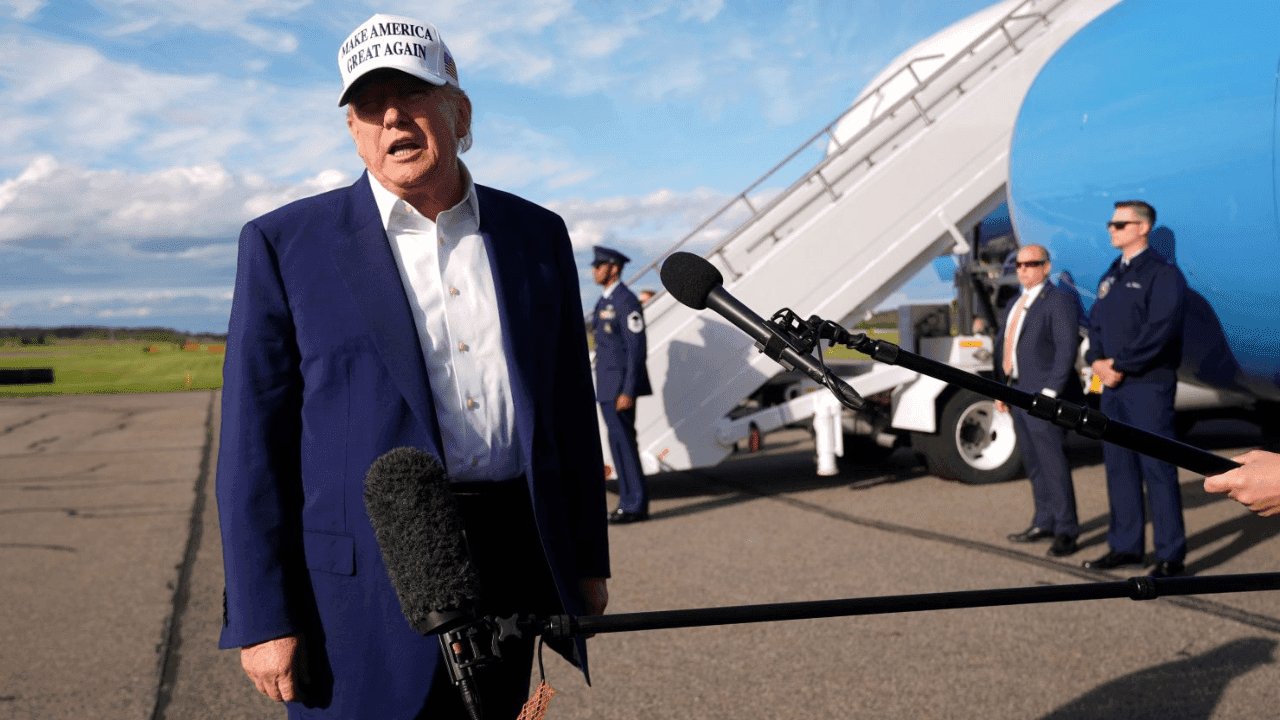
In a recent development that underscores ongoing tensions, U.S. President Donald Trump has expressed his discontent with Russian President Vladimir Putin following a massive missile strike against Ukraine. The attack, which is reported to be the largest aerial assault of the war so far, has triggered international condemnations and concerns over escalating violence.
While speaking to journalists at the Morristown Municipal Airport in New Jersey, Trump publicly criticized Putin, stating, “I’m not happy with what Putin is doing. He’s killing a lot of people, and I don’t know what the hell happened to him.” This statement marks a significant moment as Trump, who previously maintained a relatively cordial relationship with Putin, openly disagrees with the Russian leader’s military actions.
The assault, which occurred amidst ongoing negotiations, involved the launch of hundreds of drones and missiles targeting key Ukrainian cities, including the capital Kyiv. Ukrainian officials have confirmed that the attack resulted in the deaths of at least 12 individuals, with many others injured.
In response to the strikes, Ukrainian President Volodymyr Zelenskyy has called for a stronger international reaction, urging sanctions against Russia. He criticized the silence from America and others around the world, which he suggested only emboldens Putin to continue such aggression.
Trump took to his platform on Truth Social to further elaborate on his feelings, mentioning, “Putin has gone absolutely CRAZY!” and showing discontent not only toward Putin but also offering critical remarks about Zelenskyy’s handling of the situation.
The recent attacks are yet another indication of the volatile situation in Ukraine and the broader geopolitical ramifications. As global leaders weigh in, the discussion around effective international intervention continues, with Trump’s remarks adding a significant voice to the ongoing dialogue.
Historically, the dynamic between Trump and Putin has often been a subject of intrigue, characterized by Trump’s previous attempts to maintain a diplomatic stance. However, these latest developments highlight an apparent shift, as Trump did not hold back in condemning the deadly consequences of Russian actions. Trump’s comments may signify a potential change in diplomatic narratives regarding Russia’s role in global politics, especially headed by Western leaders and influencers.
As the world watches the unfolding events, the pressure mounts on international bodies and leaders to calibrate their responses. The geopolitical chess game, with Ukraine as a pivotal focal point, could evolve further depending on future developments and how influential figures like Trump engage in public diplomacy.