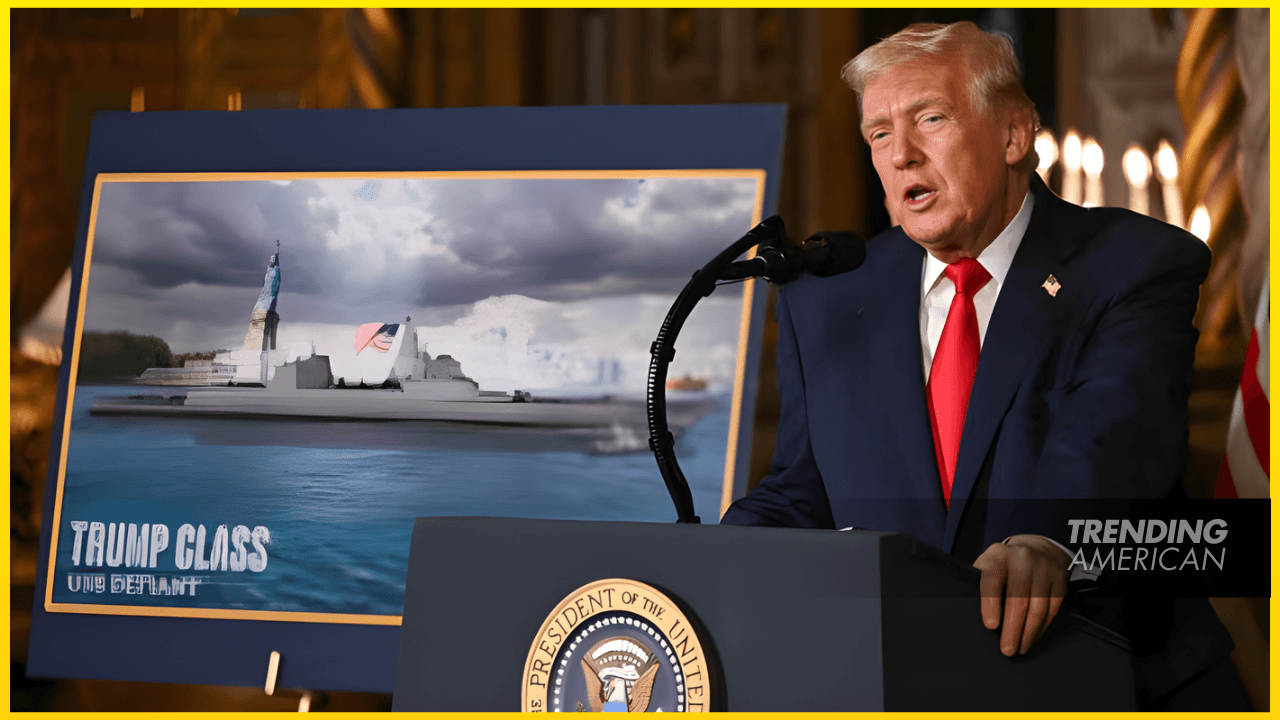
In a ceremony at the Mar-a-Lago estate in Palm Beach, Florida, President Donald Trump stepped before a row of flags to unveil a bold new vision for naval power: a Trump-class battleship designed to anchor a wider program called the Golden Fleet. He was joined by Navy Secretary John Phelan, Defense Secretary Pete Hegseth, and other senior members of the White House and Navy leadership behind the concept.
The plan centers on two first ships, each weighing roughly 30,000 to 40,000 tons, built quickly to form the core of a fleet envisioned at 20 to 25 ships. The lead ships would carry surface-launched nuclear missiles and would be supported by a future arsenal that could include railguns, hypersonic weapons, and other advanced systems as they mature. Navy leadership would lead the design, with the White House framing the ships as a robust deterrent—often summarized as peace through strength—intended to outpace potential adversaries and redefine what a battleship could be in the 21st century. One option cited for the lead vessel’s name is USS Defiant.
The broader context calls for accelerating a new naval propulsion and weapons architecture, expanding domestic production facilities, and reexamining defense spending and procurement to bring the Golden Fleet from concept to reality. Costs, timeline, and industrial challenges would be scrutinized as the plan moves through Congress and the Pentagon. Subsequent coverage across Washington and beyond weighed the proposal’s costs, production challenges, and the political symbolism of naming ships after the President. News outlets and analysts debated whether the plan would reshape naval warfare and how quickly a new generation of battleships could enter service.
Disclosure: We may earn a commission when you make a purchase through the ads.