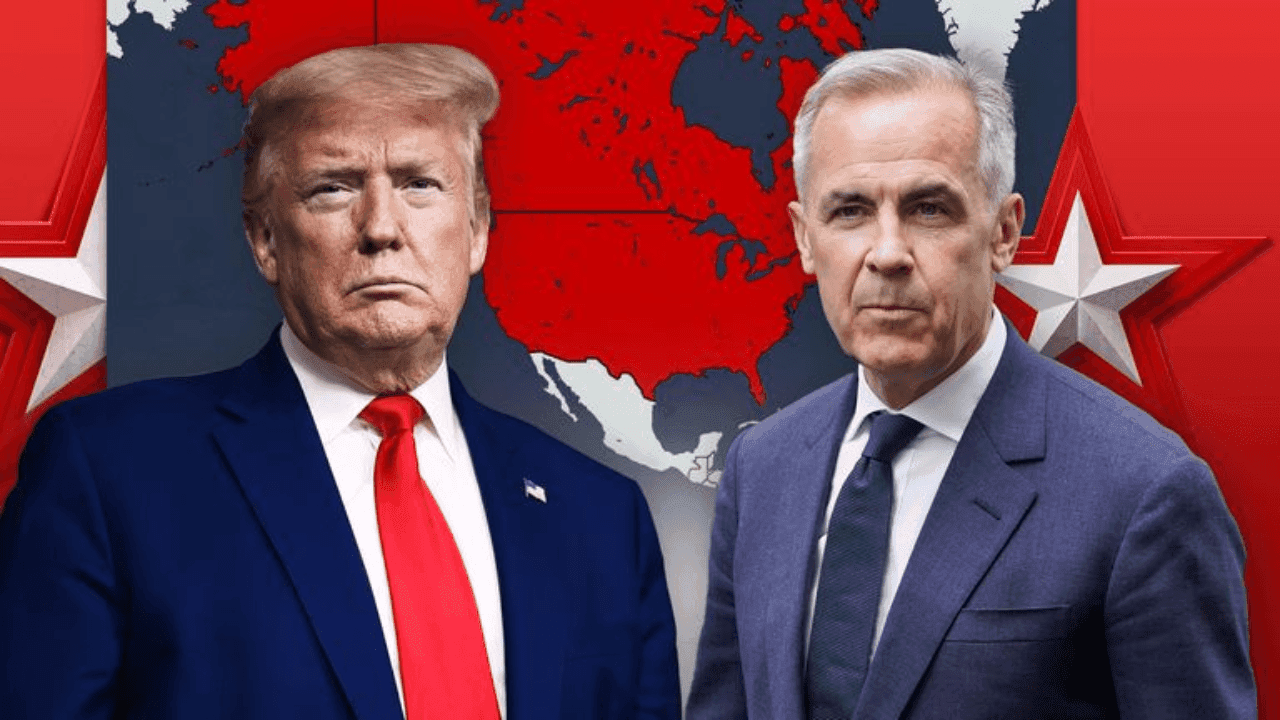
In a startling development, President Donald Trump has once again stirred the political waters by reiterating his 51st state threat just as Canada Prime Minister Mark Carney is set for a critical White House meeting. This controversial statement comes at a time when international relations are already on the edge, with numerous geopolitical factors at play.
The idea of expanding the US to include a new state has always been a notion filled with complexities and legal challenges. Trump’s repeated assertions about the 51st state strategy have triggered both speculations and concerns among global leaders, especially as Carney prepares to discuss pressing issues with the current US administration.
The timing of Trump’s declaration is significant, given the nature of Carney’s visit to the White House. The discussions expected to take place could potentially affect international alliances and economic policies across the Atlantic. Trump’s 51st state comment adds an unexpected twist to the political dynamics, potentially complicating Carney’s diplomatic agenda.
Political analysts are quick to dissect the motivations behind Trump’s statements. Some see it as a strategic ploy to regain influence and remain relevant in international politics. Others believe it might be an attempt to distract from ongoing domestic issues.
Trump’s relationship with Canadian politics has been a mix of cooperation and tension, and his recent comments might open a new chapter in this complex narrative. The former president has not provided clear details on how his 51st state vision would unfold or which territories are involved, further fueling speculation and debate.
Carney’s upcoming meeting with White House officials will likely address a range of bilateral issues, from trade agreements to climate change policies. Yet, with Trump’s 51st state remark lingering in the background, the discussions could take an unexpected turn, potentially requiring Carney to navigate a political landscape as volatile as the economic situations back home.
Historically, the concept of adding another state to the United States has been contested and is often viewed through a lens of skepticism. The legality, political ramifications, and international responses are factors that are scrutinized whenever such topics arise. Trump’s current statements have revived these discussions, with experts weighing in on the feasibility and desirability of such a move.
As the world watches Carney’s movements across Atlantic diplomacy, Trump’s proclamation serves as both a reminder of his political clout and a disruption to traditional diplomatic proceedings. It remains to be seen if Trump’s words will have a tangible impact on Carney’s objectives or if it merely serves as a historical footnote in the annals of international relations.
In conclusion, while Trump’s 51st state threat reignites conversations about US territorial expansion, the immediate focus will be on Carney’s ability to articulate and safeguard the UK’s interests during his US visit. The coming days will reveal whether this political maneuver by Trump is a masterstroke or a misfire in international diplomacy.