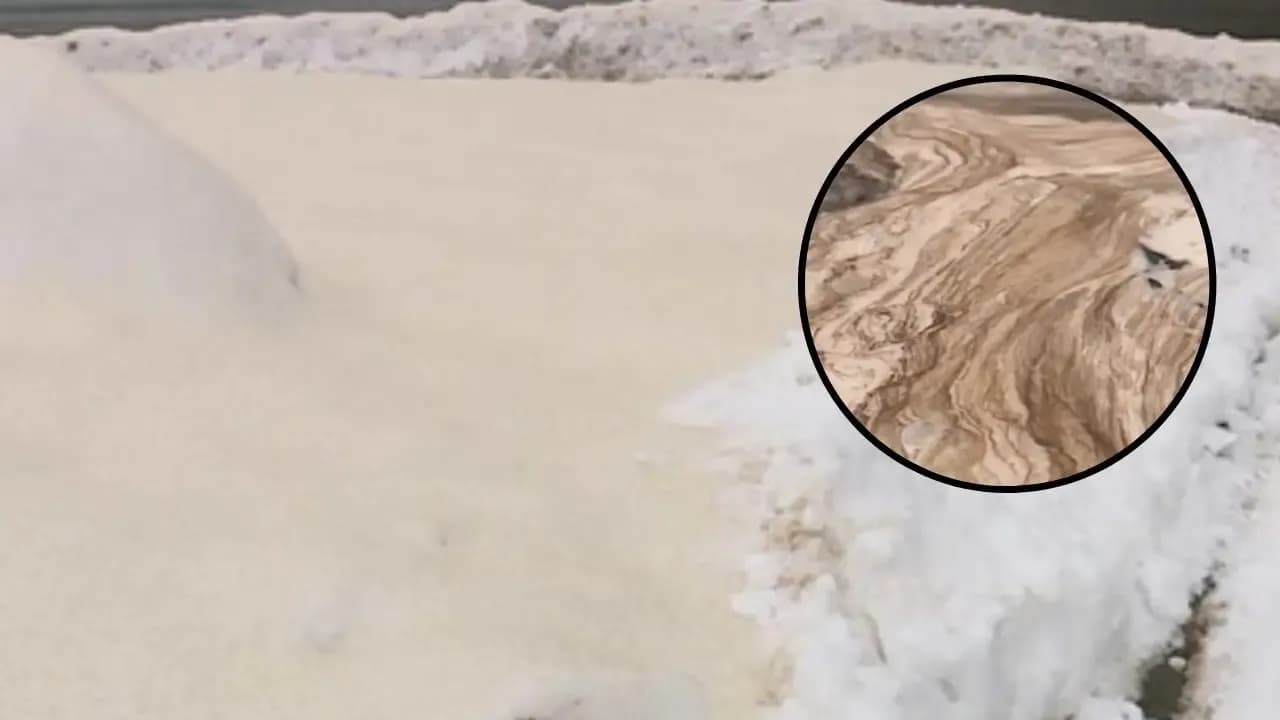
Residents of Rumford, Maine, were taken aback on December 10, 2024, when an unexpected brown-tinted snowfall blanketed their town. Known for its pristine white winters, the community faced immediate health advisories from local authorities due to the unusual discoloration.

What Caused the Brown Snow?
Investigations revealed that the phenomenon resulted from a malfunction at the ND Paper Rumford Division, a local paper mill. The incident led to the release of “black liquor,” a byproduct of the paper-making process, which mixed with the falling snow, imparting a tan or brownish hue to the accumulation.
Health and Environmental Risks
Initial tests conducted by environmental authorities on December 11 indicated that the brown snow had a high pH level of 10, classifying it as alkaline. Such alkalinity posed risks of skin and eye irritation upon contact. As a precaution, town officials advised residents to avoid touching the snow and to keep children and pets indoors.
Subsequent assessments by the Maine Department of Environmental Protection on December 12 showed that the pH levels had decreased to below 8, alleviating some immediate concerns. However, authorities continued to warn residents about potential long-term environmental effects.

How the Community is Responding
The community expressed frustration over the incident, citing safety concerns for families, pets, and the local environment. Cleanup efforts began on December 13, with environmental agencies and the paper mill working to address the situation. The mill pledged to conduct third-party testing to ensure public safety and to prevent similar malfunctions in the future.
Broader Implications
This incident underscores the delicate balance between industrial activity and environmental safety. It highlights the necessity for stringent safety protocols and immediate responses to mitigate risks during unforeseen industrial accidents. As Rumford works to recover, the event serves as a reminder of the importance of accountability and proactive measures to safeguard public and environmental health.