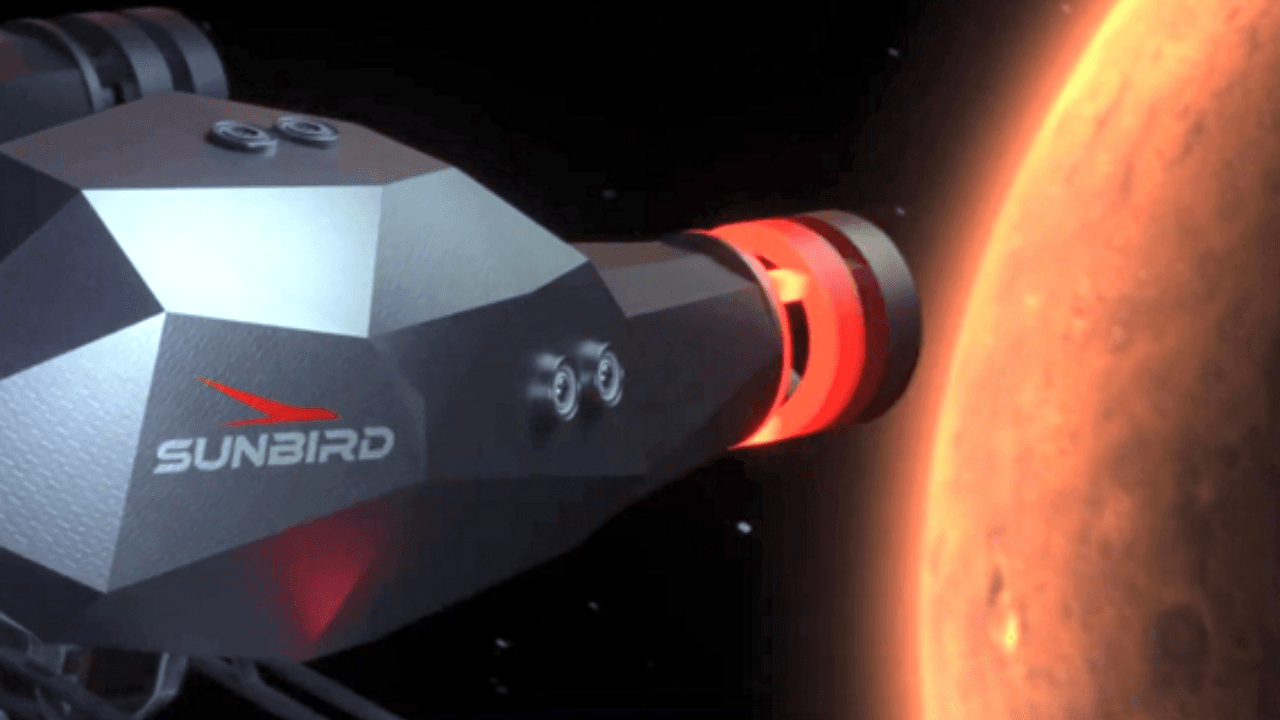
In a pivotal moment for space travel, UK-based startup Pulsar Fusion is developing a game-changing rocket called Sunbird. This innovative vehicle harnesses the same energy that fuels our Sun, aiming to reach an astounding speed of 329,000 miles per hour. If successful, it could reduce the travel time to Mars from about seven months to a mere 30 days.

This futuristic rocket runs on its Direct Fusion Drive (DDFD), a compact nuclear fusion engine designed for both thrust and electrical power. By harnessing nuclear fusion, Sunbird promises not just revolutionary travel times, but also sustainability. Each rocket’s estimated production cost stands at around $70 million, making it a significant investment for the future of interplanetary travel.
Pulsar Fusion plans to initiate static tests in 2025, with a target for an in-orbit demonstration of the core technology components by 2027. This timeline is ambitious yet achievable, as the company is already expanding operations, including a new office in Texas to enhance its research capabilities.
However, what makes the Sunbird project truly electrifying is its bold vision for space exploration. Alongside passenger transport, this technology could facilitate cargo transport, asteroid mining, and deep space missions. Imagine loading valuable resources from asteroids and transporting them back to Earth at unprecedented speeds.
What truly distinguishes Pulsar Fusion from other companies dabbling in space technology is its commitment to utilizing clean energy for propulsion. The DDFD employs a unique blend of helium-3 and deuterium to minimize harmful emissions, creating a propulsion system that not only promises speed but also environmental responsibility.
While the technical aspects of fusion propulsion hold great promise, the human element is equally compelling. Team members at Pulsar are driven by a shared passion for exploration and discovery. They envision a future where humans can become more than Earth’s inhabitants, pushing the boundaries of our understanding of the universe.
While it’s still early days, Pulsar Fusion’s journey reflects a renaissance in space technology, fueled by passionate individuals and innovative ideas. The prospect of a nuclear fusion-powered rocket is no longer a distant dream but a tangible project backed by science and ambition.
And as we await the results of Pulsar’s testing, one can’t help but reflect on what this means for humanity. Will we soon not just visit, but inhabit other worlds? What lies beyond Mars, waiting for us to explore?
Are we on the brink of a new era in space exploration that could change humanity’s relationship with the universe?