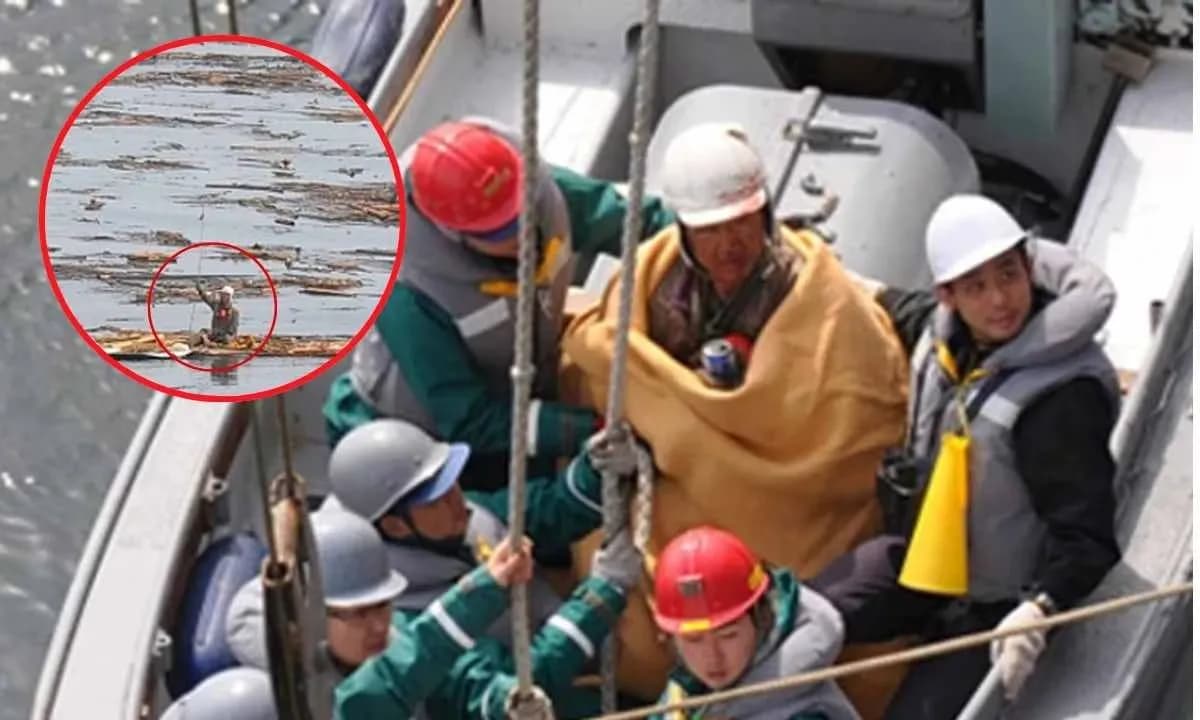
When the 2011 tsunami hit Japan, thousands were swept away in an instant. But one man, Hiromitsu Shinkawa, experienced something almost unbelievable — he sailed on the roof of his house for three days across the open sea. His story captured the world’s attention, not just because he survived, but because he drifted alone on debris in one of the most dangerous disaster zones ever recorded.
Hiromitsu Shinkawa, 60 years old at the time, lived in the coastal city of Minamisoma, Fukushima. On March 11, after a massive earthquake triggered the devastating tsunami, Shinkawa found himself clinging to the floating remains of his home. Rescuers spotted him about 10 miles off the coast, waving a piece of red cloth to get their attention.
The impact of the tsunami was enormous. Over 15,000 people lost their lives, and entire towns were wiped out. Economically, the damages were estimated at $360 billion, making it the costliest natural disaster in world history. Fukushima’s nuclear power plant also suffered, causing a radiation crisis that further deepened the disaster’s effects.
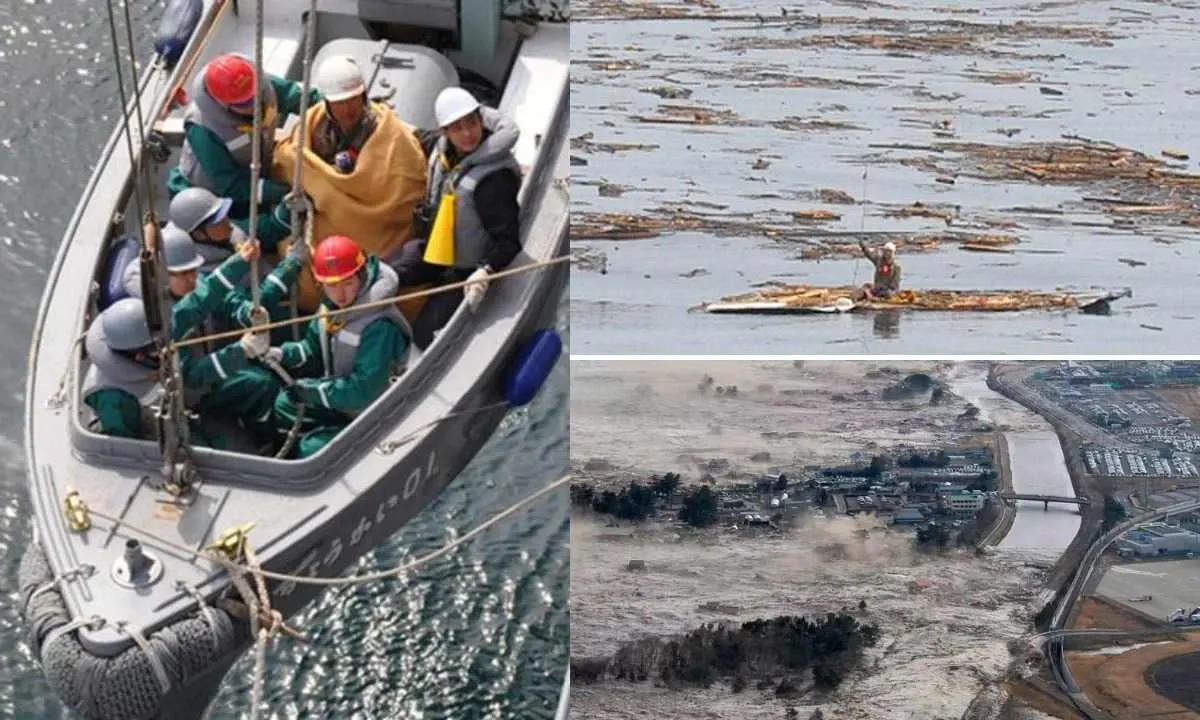
When the rescue helicopter reached Shinkawa, he had been adrift without food or clean water for three days.
“I thought today was the last day of my life.”
He later said.
His wife, unfortunately, was lost to the tsunami, and he had been searching for her when the waves struck. According to reports, he was in surprisingly stable condition despite the ordeal, only suffering dehydration and exhaustion.
His rescue was one of the first positive news stories to come out after the disaster, offering a rare glimmer of hope. Officials from Japan’s Self-Defense Forces reported that Shinkawa had tied himself to the roof to avoid being washed away completely. His presence in the open sea was so unexpected that rescuers initially thought they were seeing debris, not a survivor.
Photographs taken from the helicopter showed Shinkawa sitting on what remained of his home, surrounded by endless blue water. His desperate act of waving a bright red flag helped save his life. The powerful images quickly spread across global media, symbolizing survival against impossible odds.
Despite the miraculous rescue, Shinkawa’s story also highlighted the deep losses faced by survivors. Many, like him, lost not just their homes but their families and entire communities. Authorities continued to search for missing people in the days and weeks that followed, while survivors tried to rebuild their shattered lives.
Even now, Shinkawa’s story is used to remind people of the unpredictable force of nature and the resilience of human survival. It also raised awareness about the need for better disaster preparedness and quicker rescue missions in extreme situations.
The sight of a man sailing his house on the vast ocean might seem almost unreal — yet it happened. What other extraordinary survival stories might have been lost in the chaos of that day?