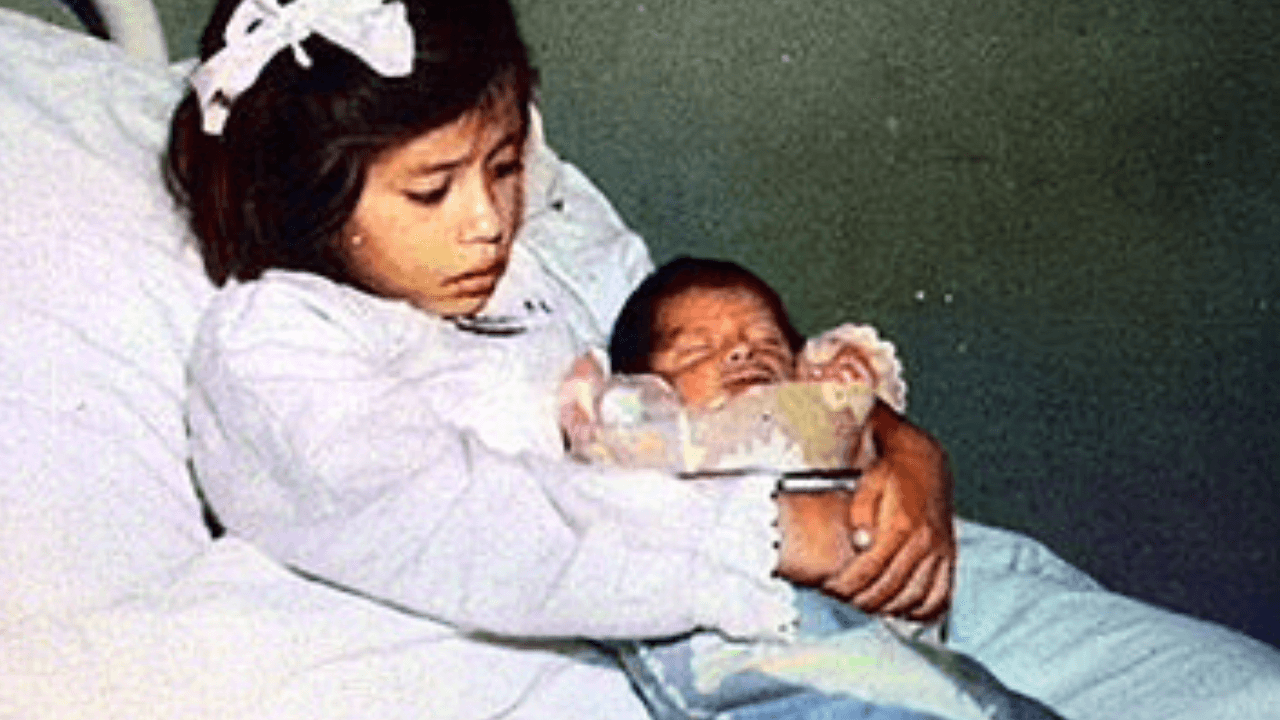
The world was stunned in 1939 when a five year old girl from Peru delivered a healthy baby. Her name was Lina Medina. She was brought to a hospital because her stomach appeared swollen, and her family feared she had a tumor. Instead, doctors learned she was seven months pregnant.
On May 14, 1939, Lina delivered a six pound baby boy by Cesarean section. She was exactly five years, seven months, and 21 days old. According to medical reports from the time, she remains the youngest confirmed mother in world history. Her case was documented by Peruvian doctors and reviewed by independent researchers.
A rare medical condition
Experts later determined that Lina had a condition known as precocious puberty. It occurs when a child’s body begins puberty much earlier than normal. In the United States, doctors define it as puberty beginning before age eight in girls and before age nine in boys. More medical information about precocious puberty is available through the National Institutes of Health.
Pediatric endocrinologist Dr. Erica A Eugster told reporters that Lina’s case represents an extreme example of the condition. Some reports claimed she began menstruating before age one, which would make it one of the earliest cases ever documented, though such early onset remains extremely rare.
A headline that traveled the globe
News of Lina’s pregnancy and birth spread around the world. Major newspapers including the Los Angeles Times and The New York Times reported on her case. The assistant surgeon general of the United States later confirmed that the medical findings were real. His comments were recorded in a 1939 article available in archives referenced by Reuters.
Despite global attention, Lina and her family avoided interviews. She later raised her son believing he was her younger brother. He reportedly learned the truth when he was about ten years old.
A mystery that remains unanswered
One question from the case has never been fully resolved. Authorities at the time tried to learn who fathered Lina’s child, but Lina did not provide a clear answer. Her father was briefly investigated and released. No formal charges were ever made.
Lina named her son Gerardo, after one of the doctors who cared for her. He lived until 1979 and died at age forty from bone cancer. Lina later worked as a secretary, married, and gave birth again in 1972. Very few verified public records exist after that time, and it is unclear whether she is still alive today.
What made this possible?
Doctors believe Lina’s pregnancy resulted from a rare pituitary gland disorder. In modern medicine, children with similar early hormonal development receive treatment that can slow puberty until an appropriate age. Advances in imaging and hormone therapy now help doctors diagnose and manage these rare conditions.
The case of Lina Medina continues to appear in medical textbooks and journal discussions because of its uniqueness. More than eight decades later, she remains a mystery, a medical anomaly, and a reminder of how complex the human body can be.
Researchers say her case may never be repeated. Yet it continues to raise questions about science, ethics, and history.