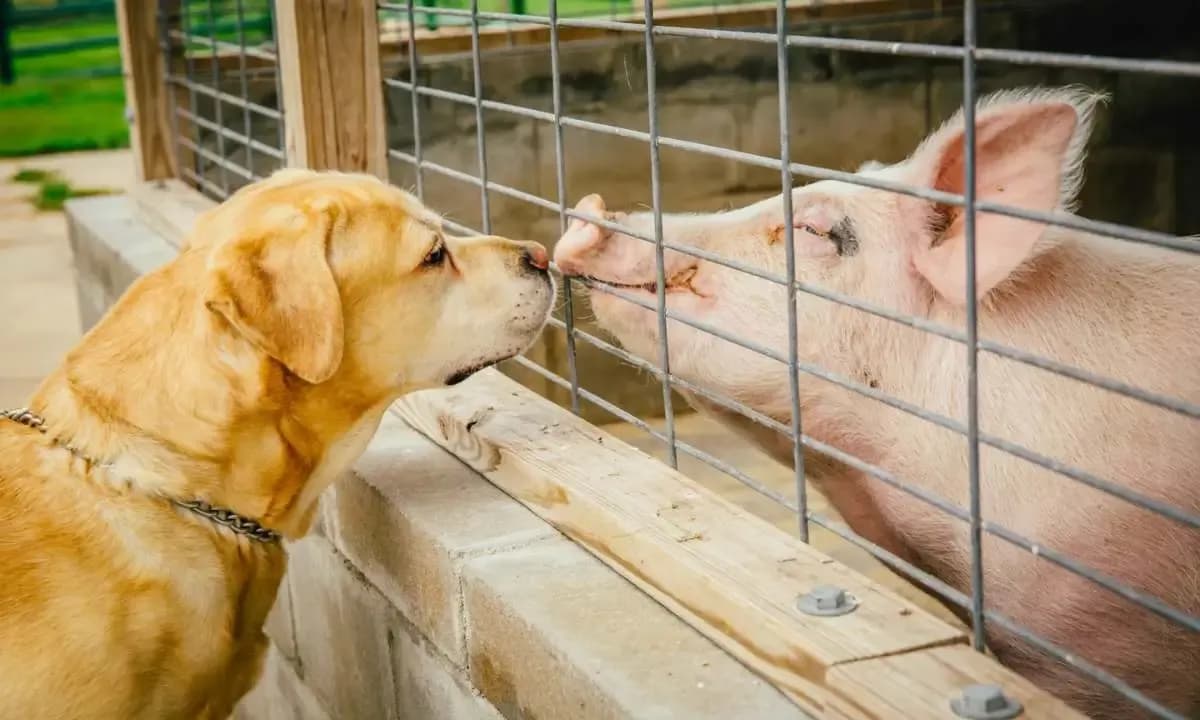
When most people picture pigs, they think of muddy barns, farmyards, or perhaps just bacon on a breakfast plate. But science has been quietly rewriting that image. Far from being dirty or simple-minded, pigs are turning out to be some of the most intelligent and emotionally complex animals on Earth. In fact, studies show they may even outsmart dogs—and in some ways, toddlers.
Researchers at Emory University and many other institutions rank pigs as the fifth most intelligent animal in the world. They stand beside chimpanzees and dolphins, not down at the bottom of the animal kingdom as many assume.
Experiments reveal that pigs have impressive long-term memory, advanced problem-solving skills, and the ability to recognize themselves in mirrors. In one striking case, piglets quickly figured out how to use a mirror to find hidden food—a concept that takes human children years to understand.
The more scientists test pigs, the more surprising their results become. They can dream, respond to their names, follow commands, and even play simple video games using a joystick. They have been observed differentiating between their own artwork and the scribbles of other pigs.
When compared on human standards, their intelligence often matches that of a three-year-old child. At that age, both pigs and toddlers enjoy playing creatively, recognize themselves as individuals, and express distinct likes and dislikes.
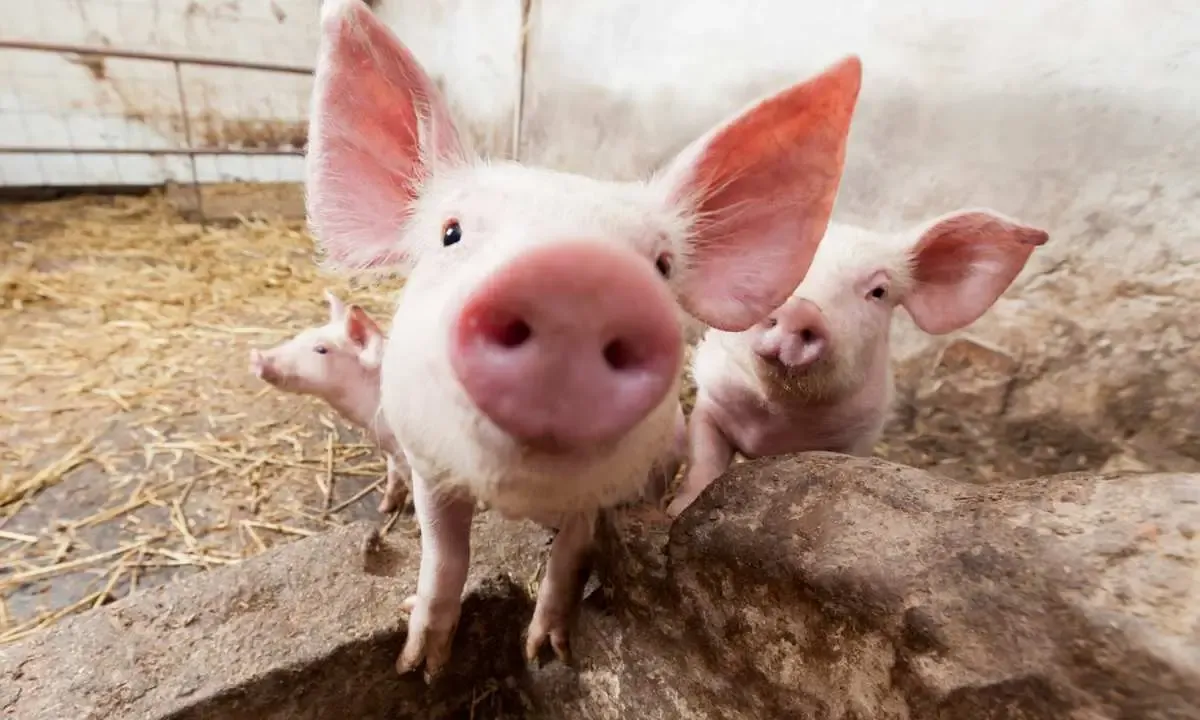
DNA similarities also tell part of the story. Humans share about 98% of their DNA with pigs—close to the same level as chimpanzees—while we share only 90% with cats and 82% with dogs. This is one reason pigs are often used as medical models in research and training. Their anatomy, physiology, and even skin resemble ours in ways few other animals do.
Beyond raw brainpower, pigs display emotional depth. Farmers, veterinarians, and scientists consistently observe them showing joy, anxiety, anger, and grief. They can form lifelong friendships, and some show visible sadness when they lose a companion.
They are also highly social, forming structured hierarchies in their groups. Introducing a new pig to a sounder often sparks fights, not because they are mindless, but because they recognize individuals and protect their established relationships and roles.
Their communication skills are just as complex. Pigs produce more than 20 distinct vocalizations, from short grunts to long squeals, each carrying meaning. Studies of mother pigs show they sometimes “sing” to their piglets in tones that soothe them, much like a human lullaby. Some pigs are even more “talkative” than others, suggesting that personality plays a role in how they interact.
Pigs’ intelligence also shines through in their memories. They can recall specific past events, remember which food source gave them more rewards, and avoid places where they were confined for too long. One study showed that pigs preferred crates that held them for shorter periods, proving they could measure time and use it to make future choices.
Problem-solving is another area where pigs shine. When faced with a difficult task, dogs will often look to humans for help. Pigs, however, ignore humans and persist until they figure it out themselves. Some even use tools, such as bark for digging, or manipulate objects to get food. Their determination and independence set them apart in the animal world.
Surprisingly, pigs also care about cleanliness. The stereotype of pigs rolling in filth isn’t entirely true. They wallow in mud not because they like dirt, but because they can’t sweat and need a way to cool off. Given space, pigs carefully separate their sleeping and eating areas from where they relieve themselves. Some have even been seen decorating their living spots with flowers or leaves.
Empathy is another layer of their intelligence. Pigs show “emotional contagion,” meaning they mirror the feelings of others. If one pig is stressed, others around it often become stressed too. This sensitivity to emotions is considered one of the roots of empathy in both animals and humans. In recent studies, pigs have even been seen resolving conflicts among their peers, approaching either victims or aggressors to calm tension in the group.
Of course, all of this raises a difficult question: if pigs are this intelligent, why do we treat them so differently from the animals we call “friends”? In the U.S., dogs and cats are loved as family, while pigs are mostly raised in factory farms under harsh conditions.
Yet in sanctuaries, pigs reveal their big personalities—escape artists, charmers, and belly-rub enthusiasts who rival any dog in affection and playfulness. Cultural history plays a big role here. In India, cows are considered sacred. In Peru, guinea pigs are food. In the U.S., it’s pigs. These cultural lines, as researchers like Dr. Melanie Joy explain, are shaped by “Carnism,” the belief system that conditions people to eat some animals and love others.
The contradiction is often called the “Meat Paradox.” We know pigs are smart and capable of suffering, yet most people still eat pork. Farmers themselves recognize this. In a Brazilian study, all 44 pig farmers interviewed agreed that pigs can feel pain, stress, and joy, and most described their pigs as intelligent individuals with traits like stubbornness or friendliness.
Even when it comes to intelligence comparisons across species, pigs consistently surprise us. They are widely considered more intelligent than cats, often smarter than dogs, and cognitively on par with monkeys. Their problem-solving abilities make them rivals even to elephants and dolphins in certain areas, though each species has its own strengths.
At the end of the day, intelligence alone may not be the only factor to consider. The philosopher Jeremy Bentham famously asked, “The question is not, Can they reason?, nor Can they talk? but, Can they suffer?” Pigs clearly can. They feel pain during routine farm practices like castration and tail docking, often done without anesthesia. They show fear when threatened, and joy when cared for. They are individuals with memories, emotions, and personalities.
So the next time you hear the word “pig,” it might be worth rethinking the stereotype. Beneath the snout and the curly tail is an animal with the memory of a chess player, the emotions of a friend, and the curiosity of a child. Science is showing us that pigs are not just farm animals, but some of the most intelligent and socially complex creatures in the world.