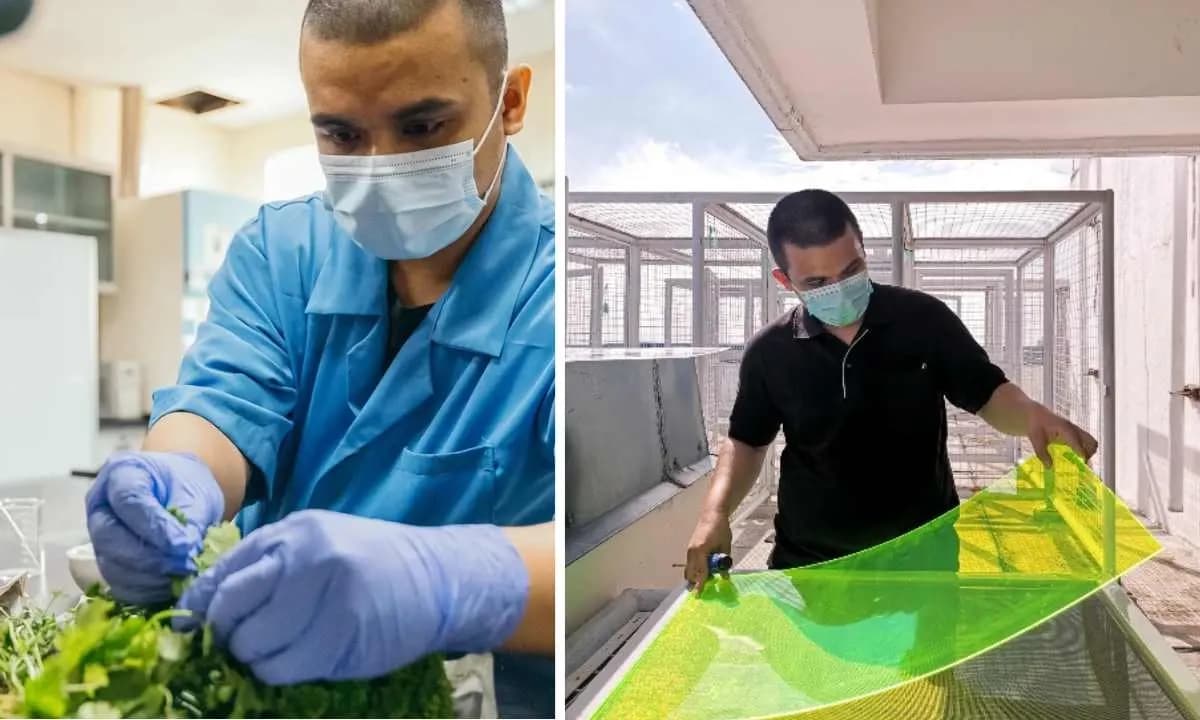
Imagine harnessing power from rotting fruit—sounds unbelievable? That’s exactly what Carvey Ehren Maigue, a Filipino engineering student, achieved with his revolutionary solar panel system, AuREUS, short for Aurora Renewable Energy and UV Sequestration. At just 27 years old, Carvey created a groundbreaking technology that turns upcycled food waste into energy, opening up new possibilities for sustainability.
Growing up in the Philippines, a country that faces energy challenges, Carvey witnessed firsthand the daily struggle for consistent power. Inspired by this need, he developed AuREUS, a system that can generate electricity even in cloudy conditions by capturing ultraviolet (UV) light, a resource often overlooked by traditional solar technology.
Unlike conventional solar panels that require direct sunlight, AuREUS works wonders on overcast days. It utilizes luminescent particles taken from food waste—specifically fruits and vegetables. When these particles absorb UV rays, they re-emit them as visible light that standard solar cells can convert into electricity.
‘It’s all about giving a second life to organic materials,’ Carvey shared in an interview. This innovative approach not only provides a sustainable energy source but also tackles the problem of food waste, which plagues many communities.
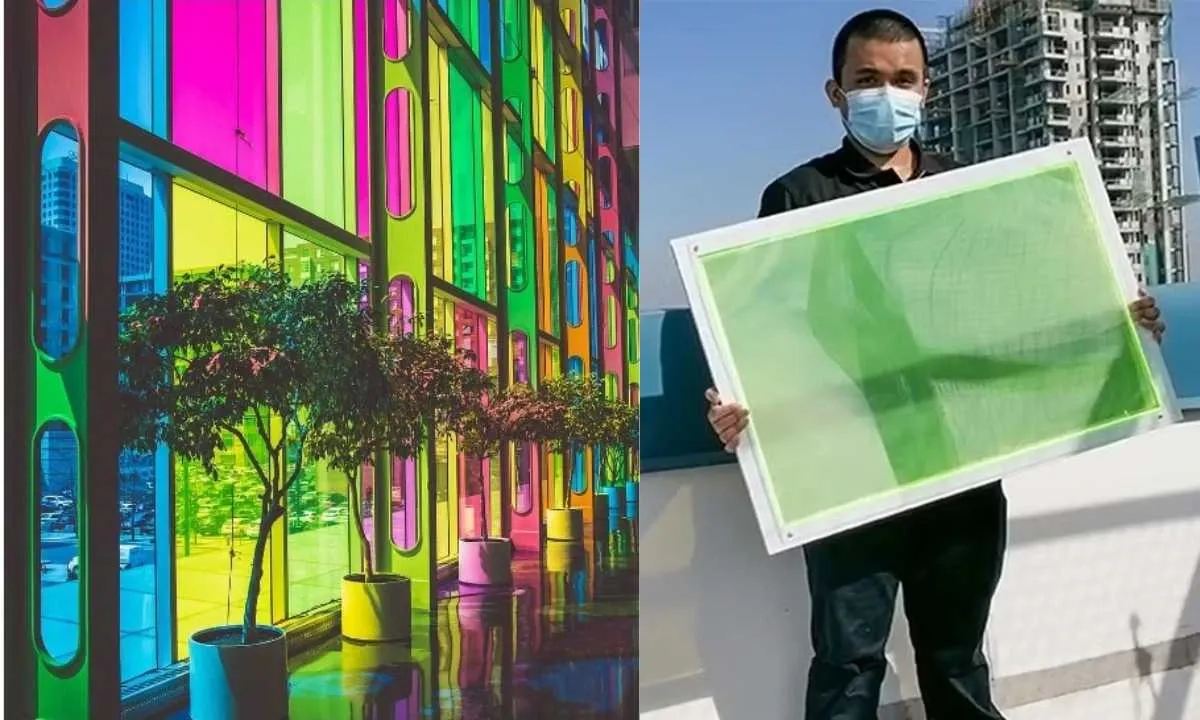
Carvey’s invention is more than just another eco-friendly product; it’s a potential game changer for urban environments where space for traditional solar panels is limited. Imagine windows and building facades that not only serve their primary function but also contribute to the power supply of an entire building!
The unexpected twist of using food waste adds an extra layer of significance to his story. With 1.3 billion tons of food wasted globally each year, Carvey’s technology could play a crucial role in fighting climate change. As he explains, ‘If we can convert waste into energy, we can significantly reduce our carbon footprint.’
Upon introducing AuREUS, it didn’t take long for his innovation to gain international recognition. In 2020, Carvey earned the prestigious James Dyson Sustainability Award, becoming the first recipient for the award’s inaugural year. This honor not only acknowledged his hard work but also highlighted the importance of sustainable technology globally.
Another aspect of Carvey’s journey is the inspiration he provides to aspiring engineers. ‘I want to show young students that innovation is possible, no matter where you come from,’ he said. His story encourages the next generation to think creatively and focus on sustainability, especially in developing areas.
After winning the award, Carvey’s focus remained on refining the AuREUS system. Collaborating with researchers and local farmers, he investigated how to enhance efficiency and scalability. He dreams of widespread use in urban homes and businesses, where every building could contribute to a greener planet.
However, not everything has been seamless. Like many innovators, Carvey faced skepticism about his idea’s feasibility. Yet, each doubt only fueled his determination to prove that sustainability can be achieved through creativity and science.
As news of AuREUS spreads, discussions surrounding food waste and renewable energy have gained momentum. Carvey has become a spokesperson for sustainable technologies, advocating for their integration into everyday life. ‘We need to change our mindset about waste,’ he emphasizes. ‘Every bit of waste has potential.’
As we look toward the future, Carvey Ehren Maigue stands as a symbol of hope. His dedication to fighting climate change through innovative means inspires young minds around the world. His story asks a critical question: What other everyday materials could we transform into solutions for global challenges?