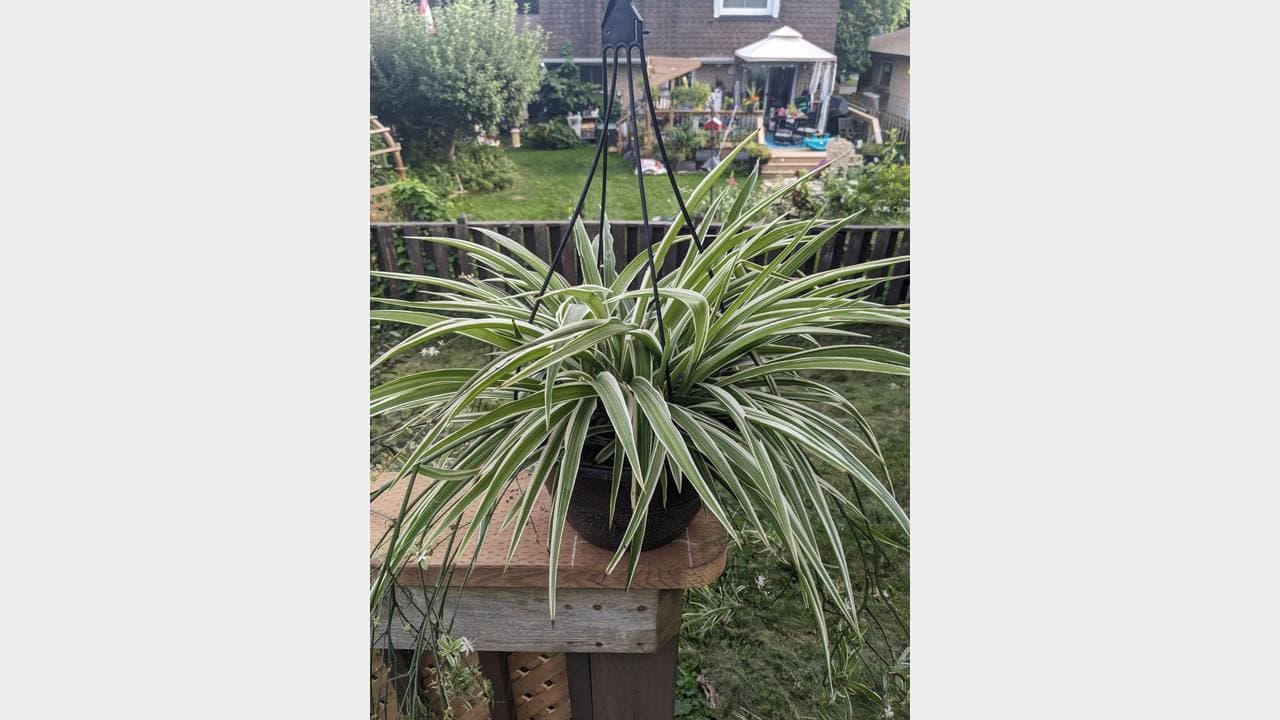
The claim is appealing: a familiar houseplant could help clean the air around us. Spider plants did remove a pollutant in laboratory experiments, but the setting is essential to understanding the result.
A plant inside a small, sealed test chamber is not the same as a few pots in a living room. The distinction changes what the research can reasonably promise.
What the original research investigated
NASA's archive lists the 1984 paper Foliage Plants for Removing Indoor Air Pollutants from Energy-efficient Homes, by B. C. Wolverton, R. C. McDonald and E. A. Watkins Jr.
The experiments investigated pollutant removal under controlled chamber conditions. Spider plants were among the plants studied for their ability to take up formaldehyde.
That is evidence of a process observed in a particular experiment. It is not evidence that a spider plant will remove the same proportion of pollution from an occupied home in the same time.
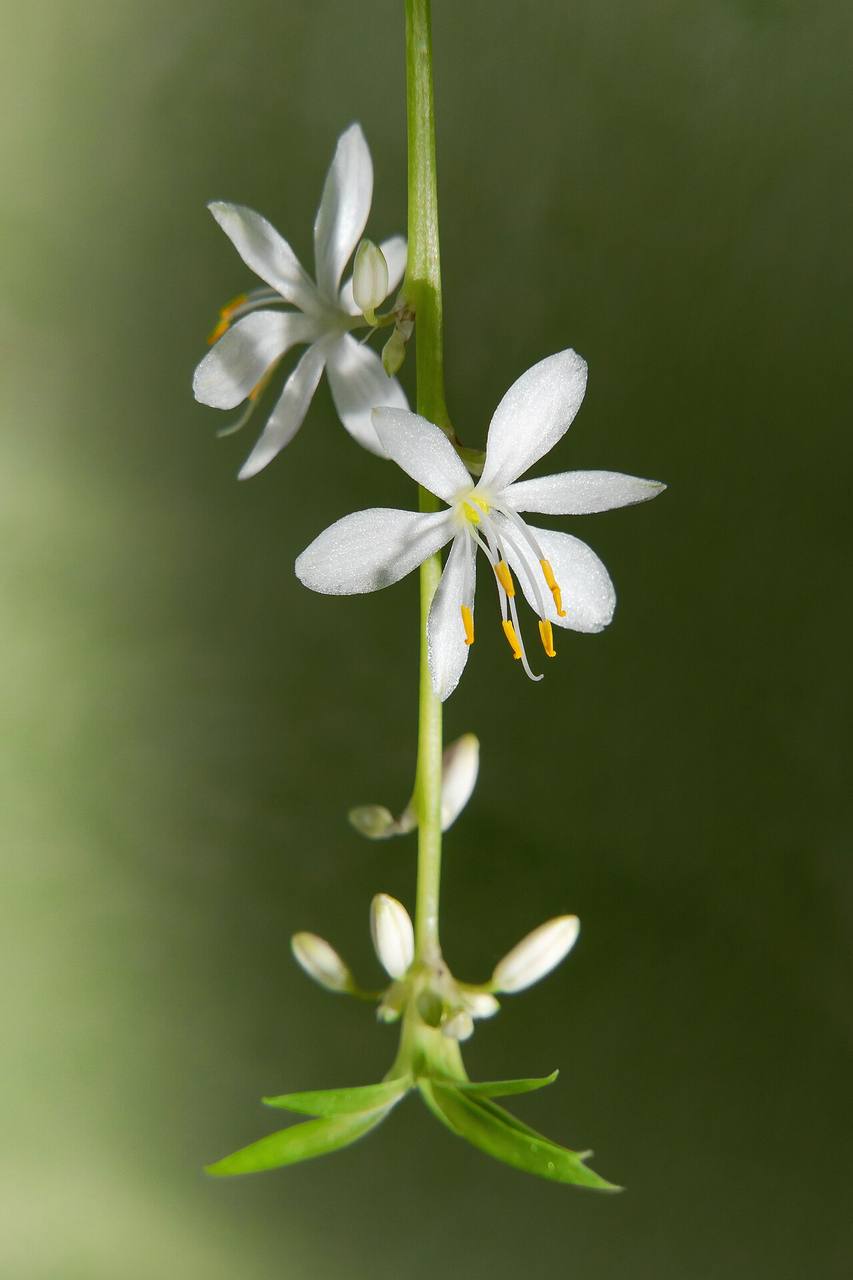
Spider plant flowers. Botanical context, not evidence of household air-cleaning performance. Photo: W.carter, CC0. Resized; JPEG conversion.

Why a room changes the calculation
In a review published online in November 2019, researchers Bryan Cummings and Michael Waring examined 12 published studies and translated 196 chamber results into clean-air delivery rates.
They found that the removal achieved by ordinary potted plants was small compared with the air exchange already occurring in typical buildings. Matching that exchange would require plant densities far beyond normal household arrangements.
The review addresses passive potted plants. It should not be stretched into a claim about every engineered biofiltration system, which is a different technology requiring its own evidence.
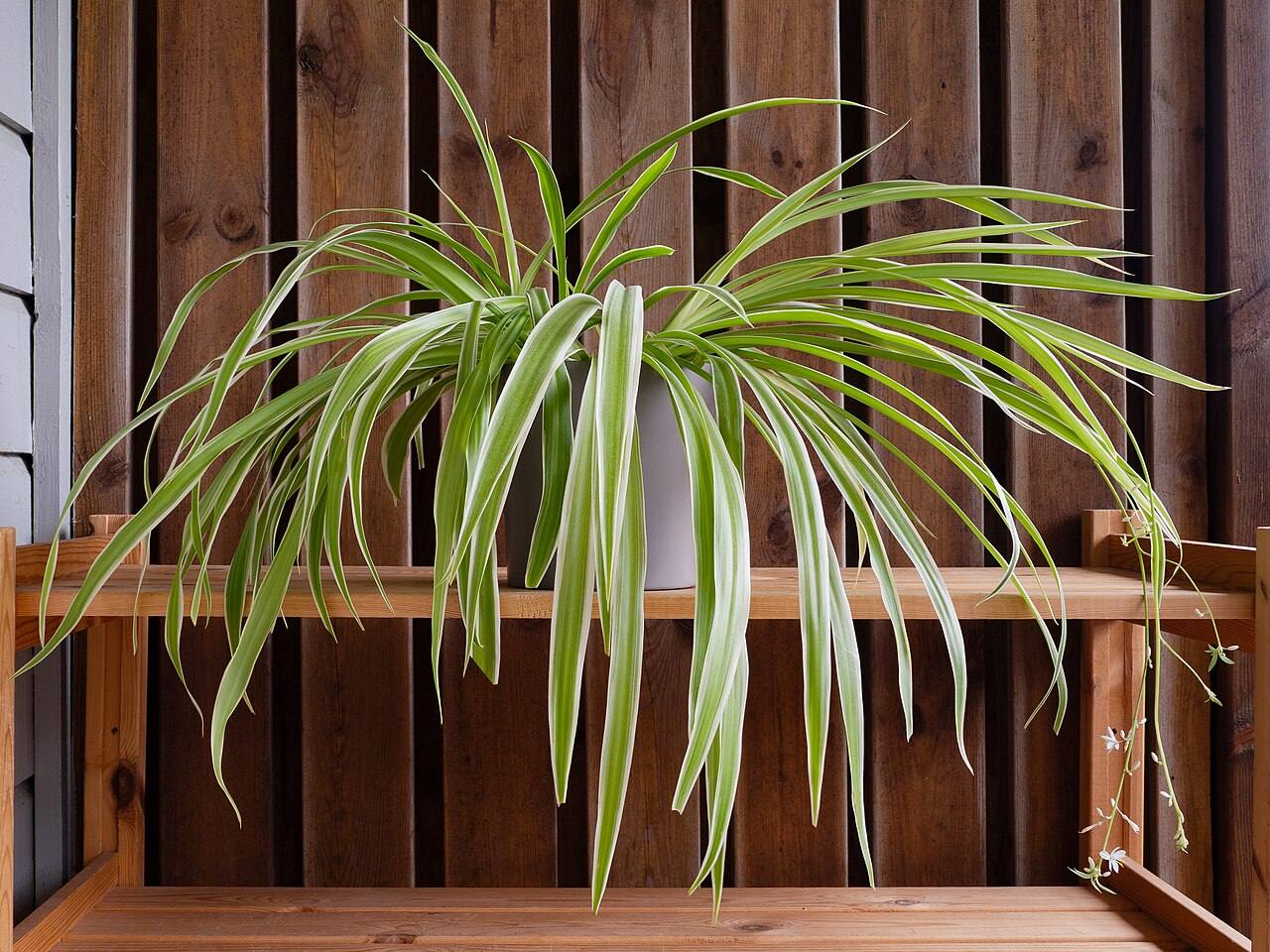
Spider plant with flowers and plantlets, photographed outside the experiments discussed. Photo: W.carter, CC0. Resized; JPEG conversion.

What EPA guidance says
The U.S. Environmental Protection Agency's guide to indoor air quality says there is no evidence that a reasonable number of houseplants removes significant quantities of pollutants from homes and offices.
Its guidance emphasizes controlling sources of pollution and appropriate ventilation. It also cautions against overwatering indoor plants, because overly damp soil can encourage microorganisms.
There is no need to turn an enjoyable houseplant into a household air-cleaning promise. A spider plant can remain a decorative part of a home while its laboratory history is described accurately.
The useful takeaway is about evidence: an impressive result in a sealed chamber needs real-world testing before it becomes a claim about the air people breathe in everyday rooms.
Featured image: A potted spider plant, not a plant photographed during a NASA experiment. Photo: WikiGreg327, CC0. Resized and fitted to a 16:9 canvas.
