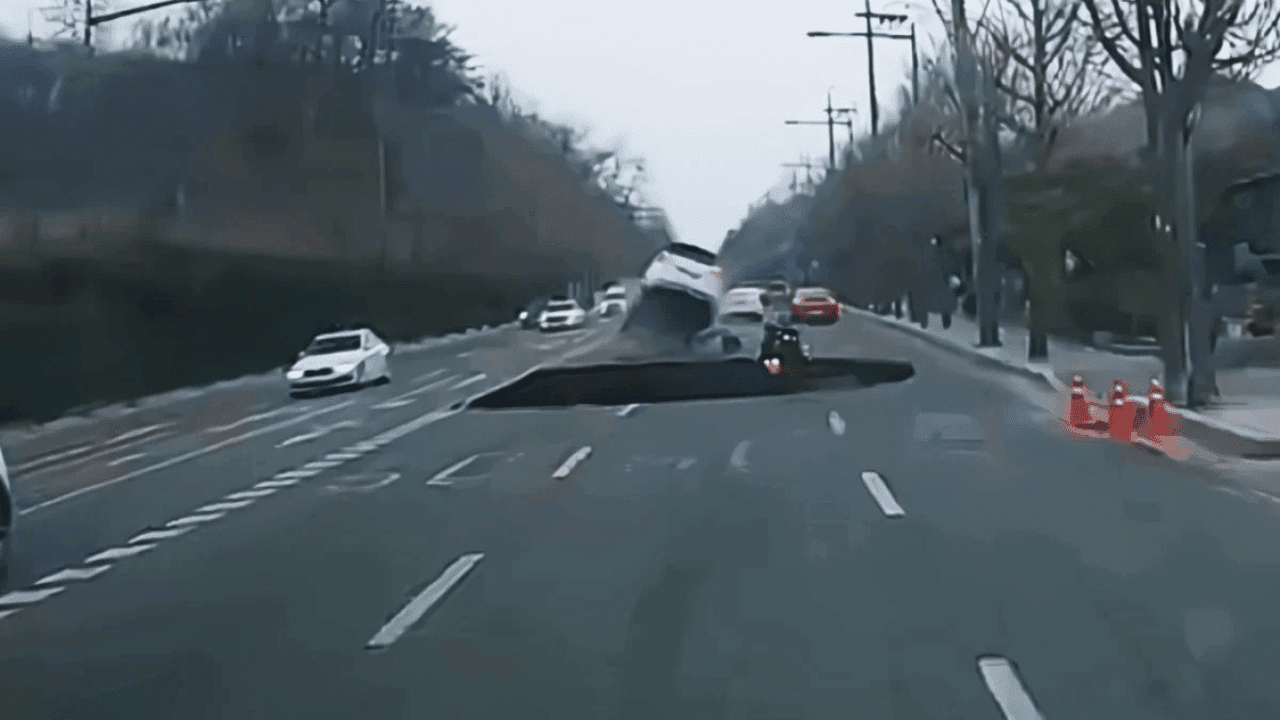
A sudden and tragic incident unfolded in Seoul as a massive sinkhole opened up in a busy intersection, claiming the life of a motorcyclist. On Monday evening, panic ensued when the ground unexpectedly gave way during the evening rush hour, around 6:30 PM, instantly swallowing the motorcyclist and critically injuring the driver of a car that narrowly avoided a similar fate. Authorities confirmed the identity of the victim as a man in his 30s, discovered in cardiac arrest almost 17 hours post-collapse, buried approximately three feet under the earth and about 50 meters from the sinkhole’s center.
Dashcam footage captured the dramatic moment the sinkhole appeared, highlighting the immediate danger faced by evening commuters. The type of catastrophe seen in Seoul disrupts not only traffic and daily lives but also raises questions about urban safety and infrastructure maintenance. The sinkhole, now 20 meters wide and 20 meters deep, has prompted the closure of nearby schools as precautionary measures are taken to ensure the safety of residents.
Preliminary investigations have pointed to ongoing metro line extension work in the vicinity as a potential contributing factor to the disaster. While sinkholes remain relatively rare in South Korea, with fewer than 200 annual reports, the unexpected nature of such events underscores the need for constant vigilance in urban planning and construction projects.
As officials continue to investigate the root cause of the incident, there is public concern and demand for answers. The community looks to city authorities to strengthen safety regulations and ensure that strategies are in place to prevent similar occurrences in the future. Experts suggest a comprehensive review of construction practices, especially in high-density urban areas where the impacts of such incidents can be devastating.
In the wake of this tragedy, Seoul grapples with the broader implications of urban safety, infrastructure reliability, and the balance between development and risk management. The city’s resilience will be tested as it navigates crisis management and safety improvements. Meanwhile, citizens mourn a senseless loss and anxiously await clarity on how such a calamitous sinkhole could have opened in their midst.