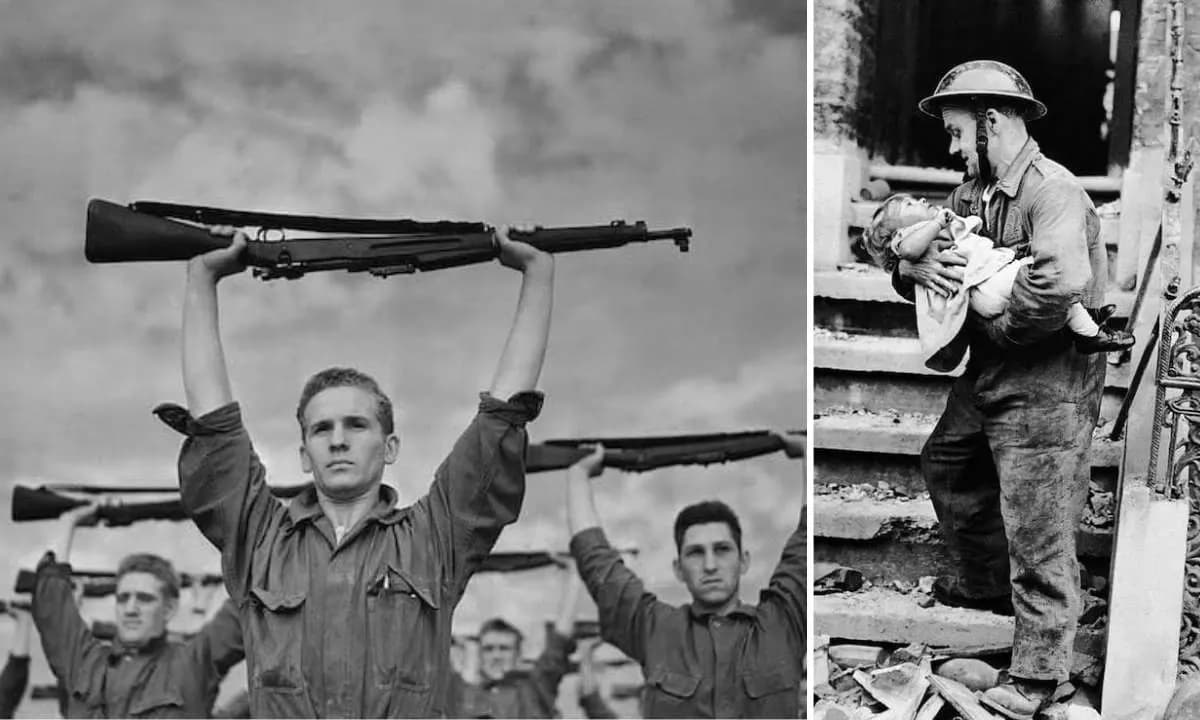
At dawn on September 1, 1939, the world changed. German forces crossed into Poland and the guns of the battleship Schleswig-Holstein opened fire on the Polish post at Westerplatte. Hours later, bombs fell on the town of Wieluń—an early, brutal signal that civilians would not be spared. Within days, Britain and France declared war on Germany. World War II had begun.
Share Your Voice With the World
In times of change, every story matters. Reach journalists and global readers today with one powerful press release.
Publish Now via 24-7 Press Release NewswireThe story didn’t come out of nowhere. In the years before the invasion, Adolf Hitler had moved from diplomatic feelers to hard demands: Danzig’s “return,” a corridor across Polish land to link East Prussia to Germany, and a broader push for Lebensraum—living space—at Poland’s expense. Poland, supported by new guarantees from Britain and France, refused to trade its independence for promises.
Then came the shock move: the Molotov–Ribbentrop Pact signed with the Soviet Union a week before the invasion, including a secret map to divide Eastern Europe. With Moscow neutralized, Hitler set the timetable for war. On the night of August 31, German operatives staged the Gleiwitz radio incident as a pretext; at 4:45 a.m. on September 1, the attack began.
Germany attacked from three directions—East Prussia in the north, the German frontier in the west, and, with Slovak support, from the south—racing toward Warsaw. The Wehrmacht combined fast-moving armor, motorized infantry, and dive-bombers to break lines and strangle communications.
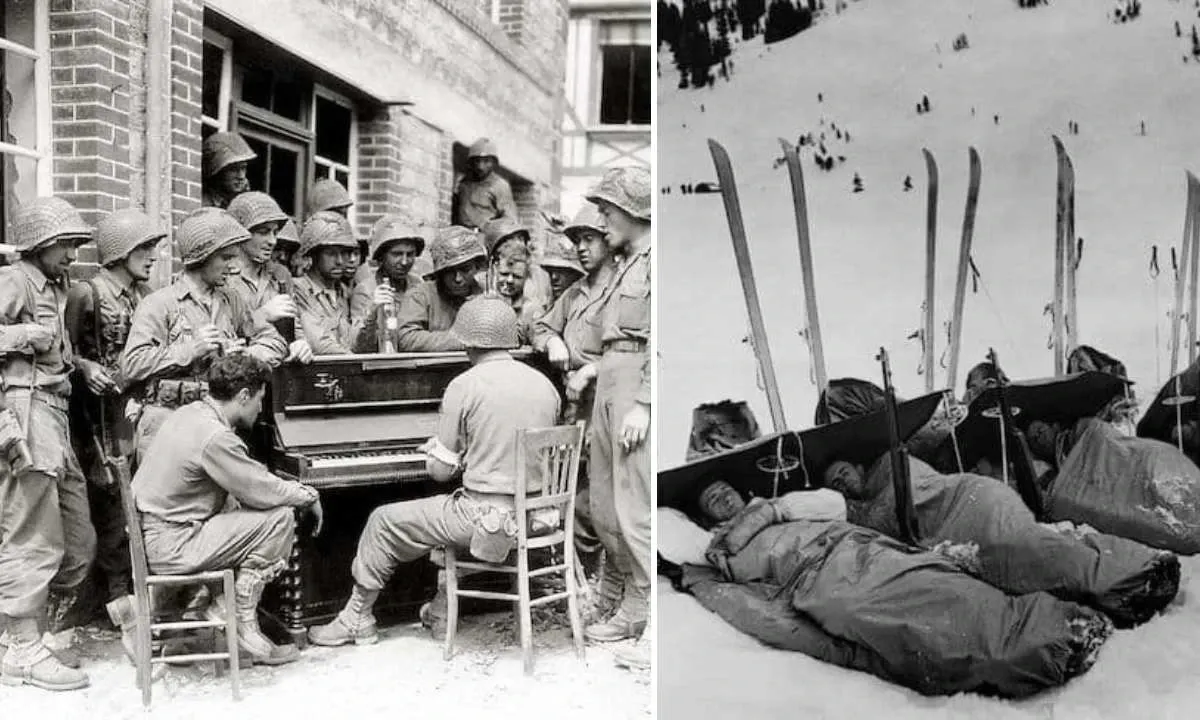
The Luftwaffe seized control of the air early, smashing rail junctions and airfields and terrifying civilians on the roads. For many troops, the pace felt superhuman; stimulants like Pervitin (a methamphetamine then circulating among German units) fueled continuous operations with little sleep.
Poland was not unprepared—but it was outmatched. Mobilization lagged under diplomatic pressure to keep talking. Polish forces were spread along a huge border to protect people and industry in the west, which made coordinated retreats difficult as German spearheads cut behind them.
The Polish Air Force, contrary to German propaganda, was not wiped out on the ground; it had dispersed in time, but it still faced modern enemy aircraft in overwhelming numbers. At sea, three Polish destroyers slipped away days before the invasion in the “Peking Plan” to fight on with the Royal Navy.
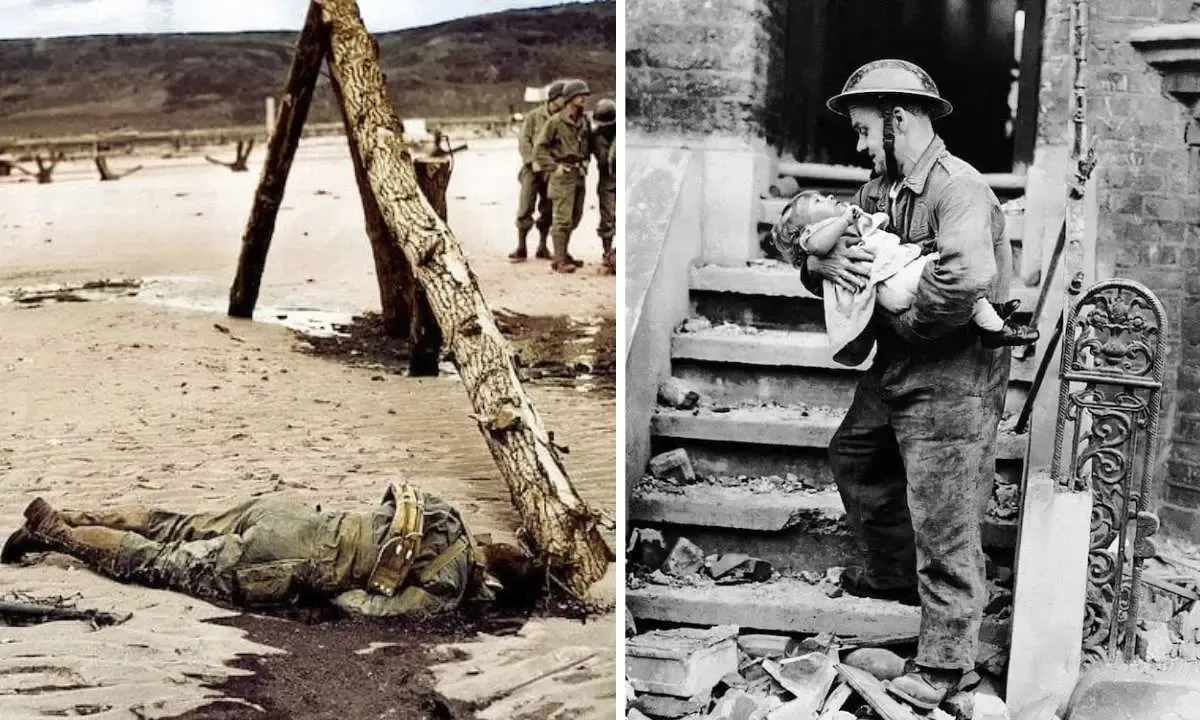
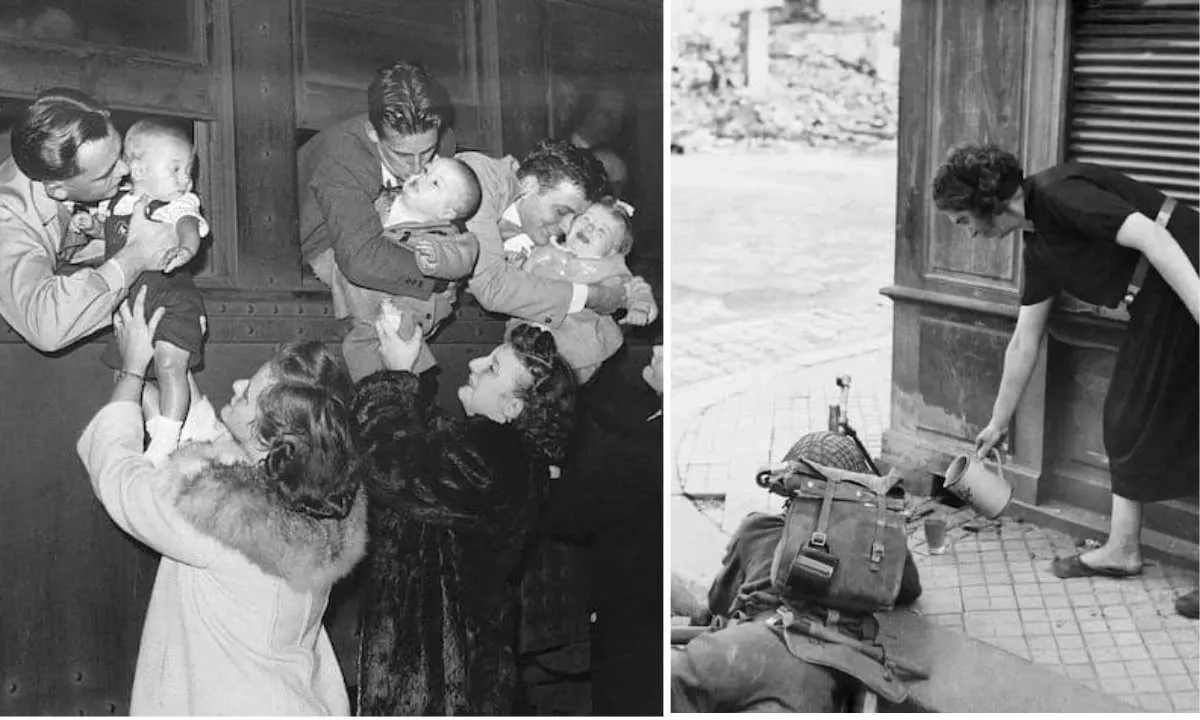
The first week was a blur. In the north and west, German columns pushed to the Vistula; armored units reached the outskirts of Warsaw by September 8. Poland’s largest counterstroke came almost immediately—the Battle of the Bzura (September 9–19)—a surprise attack by the Poznań and Pomorze armies against the German 8th Army’s flank. It achieved initial gains but was crushed from the air and encircled on the ground. After Bzura, Poland lost the initiative. Warsaw braced for siege.
Then the floor dropped out. On September 17, while Poland was still fighting Germany, the Soviet Red Army crossed the eastern frontier—moving in under the secret terms of the pact and claiming to “protect” minorities. With a second front open, the plan to hold a defensive “Romanian Bridgehead” and await a Western offensive became impossible.
Some units fought on; others slipped into Romania and Hungary to reach France or Britain. Warsaw held until September 28; Modlin fell on the 29th; the last organized Polish group, General Kleeberg’s “Polesie,” surrendered after the Battle of Kock on October 6. The campaign was over.
Occupation followed fast. Germany annexed western Poland and the Free City of Danzig; the remaining central block became the General Government under Hans Frank. The Soviets absorbed the east into the Ukrainian and Byelorussian republics.
In Brest-Litovsk on September 22, German and Soviet commands even coordinated a hand-over—an image that captured the cold logic of the partition. Out of these zones grew the Polish Underground State and, abroad, the Polish Armed Forces in the West, loyal to a government-in-exile. Poland never signed a surrender.
Don’t Let History Repeat Itself
Moments in history remind us how fragile peace can be. Take action today—invest in learning, preparation, and smarter choices for your future.
Secure Your Advantage Inspired by lessons from September 1, 1939 .The human cost started immediately. The Luftwaffe’s bombing of Warsaw alone killed thousands of civilians; across the campaign, mass shootings, terror bombings, and targeted operations like “Tannenberg” murdered Polish citizens in towns and villages.
By the end of the 1939 campaign, roughly 65,000 Polish soldiers were dead; about 660,000 became prisoners of war split between Germany and the USSR. German losses were far lower. Civilians suffered terribly in both zones, and early Nazi policy in occupied Poland foreshadowed the genocide to come.
If this sounds like a straight line into world war, it was. Britain and France declared war on Germany on September 3, but their “Saar Offensive” barely scratched the Westwall while Poland fought alone in the East.
What began as a “Polish” campaign was in fact a hinge moment: it opened the European theater of World War II and set patterns—coalitions, occupations, air power over cities, industrialized brutality—that would define the next six years.
Eighty-six years later—on this exact date—we mark not just a timeline, but a warning. The invasion of Poland shows how fast brinkmanship can become catastrophe, how alliances mean little without action, and how civilians are the first to feel the weight of modern war. It also shows how a nation without a choice keeps fighting—underground, in exile, and in memory.
Disclosure: We may earn a commission when you make a purchase through the ads.