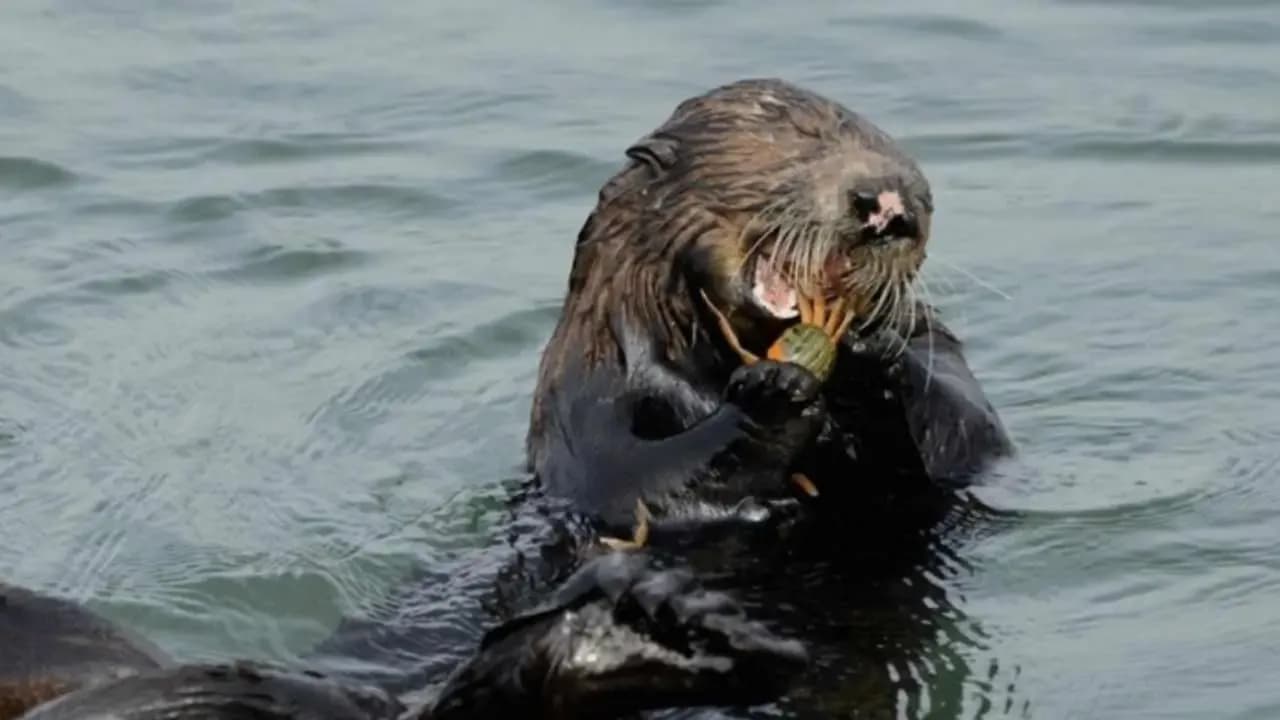
For years, California’s coastal ecosystems have faced a silent invasion. The European green crab (Carcinus maenas), an aggressive predator and ecosystem disruptor, has spread rapidly, threatening marshlands and eelgrass beds. Left unchecked, these crabs devastate habitats that are crucial for marine biodiversity and coastal stability. Amid this environmental challenge, sea otters often celebrated for their charm have emerged as an unexpected solution.
Scientists and conservationists are now recognizing sea otters as key players in restoring balance to the region’s waterways. By preying on invasive green crabs, sea otters are helping to preserve vital coastal ecosystems, showcasing their importance far beyond their well-loved image.

The Green Crab Threat
Green crabs were first detected in California waters in the late 1800s, but their numbers surged in the 1990s and early 2000s, particularly in areas like Elkhorn Slough. These crabs uproot eelgrass beds essential nurseries for marine species and degrade marsh ecosystems, which act as buffers against erosion. Their presence also disrupts native species that rely on these habitats for survival.
Without a natural predator to control their population, green crabs spread unchecked, leaving scientists searching for solutions to curb their ecological damage.

Sea Otters to the Rescue
The return of sea otters has offered a natural remedy. Once hunted to near extinction for their fur, southern sea otters (Enhydra lutris nereis) have made a slow comeback in places like Elkhorn Slough, thanks to dedicated conservation efforts. As apex predators, sea otters consume vast amounts of prey daily to sustain their energy needs. This includes invasive green crabs, which they crack open using their strong jaws and agile paws.
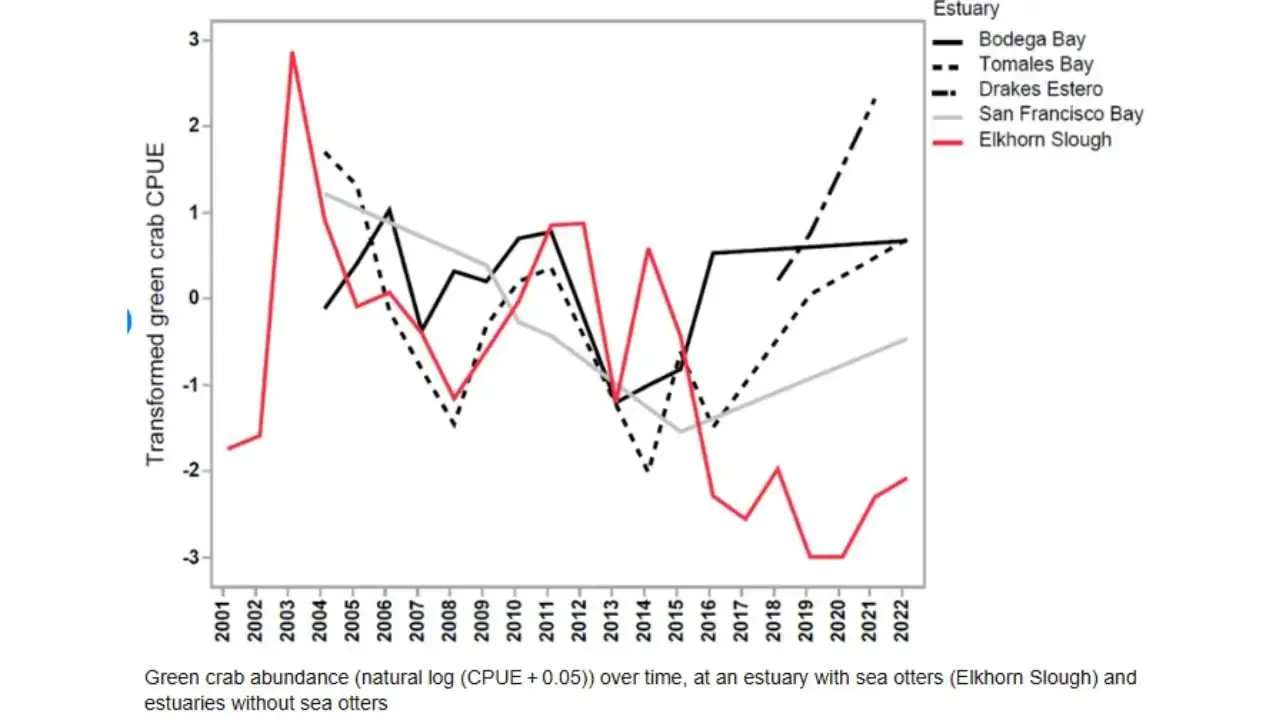
A recent study published in Biological Invasions highlights the scale of their impact: sea otters in Elkhorn Slough consume up to 120,000 green crabs annually. Researchers observed that areas with active sea otter populations showed significant declines in green crab numbers compared to regions without otters.
Sea otters act as ecosystem guardians. By preying on invasive crabs, they indirectly support the recovery of eelgrass beds and marshes, restoring balance to the habitat.
Dr. Kerstin Wasson – Lead Researcher
Restoring Coastal Balance
The impact of sea otters goes beyond controlling green crabs. By reducing crab numbers, they protect eelgrass beds from being uprooted, allowing these critical habitats to flourish. Healthier eelgrass beds benefit marine biodiversity and help stabilize coastlines, mitigating erosion caused by waves and tides.
Elkhorn Slough has become a model for this recovery process. Restoration projects, such as tidal marsh rehabilitation, combined with the natural return of sea otters, have created a more resilient ecosystem.
Ongoing Challenges for Sea Otters
While sea otters play a critical role in coastal restoration, their populations remain fragile. Habitat loss, pollution, and other human activities continue to pose risks. Conservationists emphasize the need for sustained efforts to protect and expand otter populations along the California coast.
Researchers also see potential in reintroducing sea otters to other regions where green crabs continue to spread unchecked. Their presence could replicate the success seen in Elkhorn Slough.
A Natural Solution with Lasting Impact
Sea otters may be known for their playful behavior, but their role as ecosystem guardians cannot be overlooked. By preying on invasive green crabs, they are helping to restore California’s coastal balance, one crab at a time.