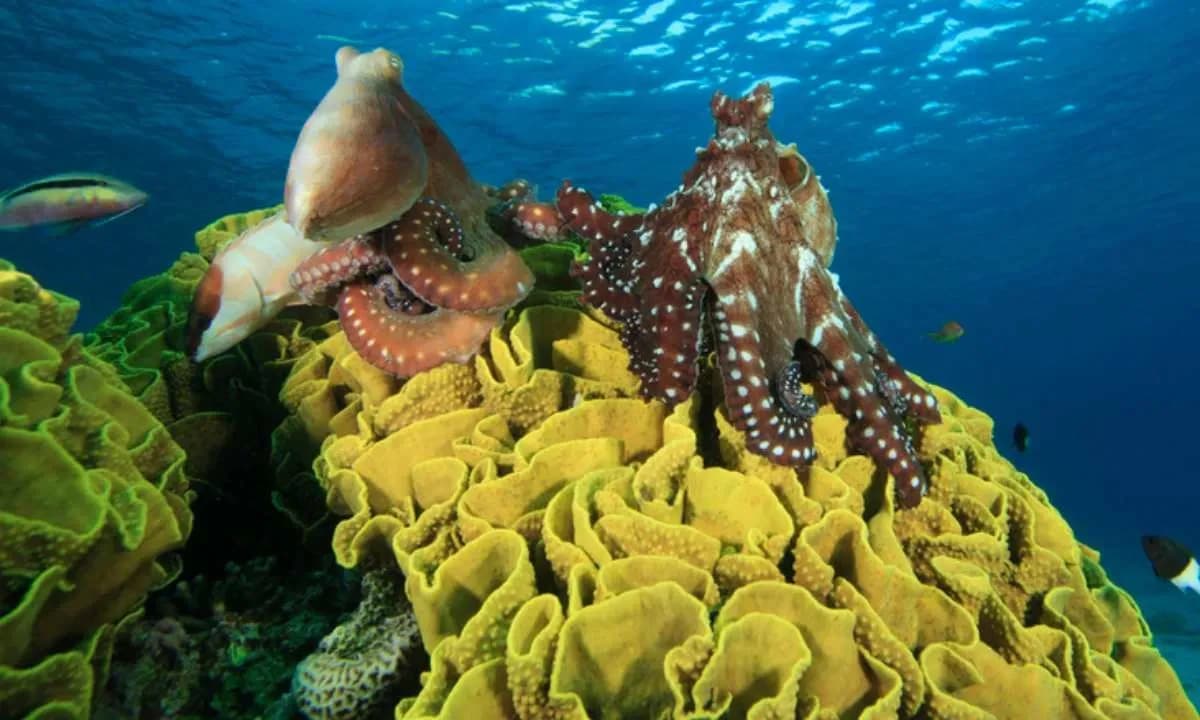
The ocean is home to countless mysteries, many of which continue to defy our understanding of the natural world. One of the most surprising and recent discoveries is the existence of an underwater octopus city, nicknamed “Octlantis.”
Located off the coast of Australia, this underwater settlement is home to a thriving community of gloomy octopuses (Octopus tetricus), who are challenging the long-held belief that these creatures are solitary, reclusive beings. What scientists have uncovered is a fascinating and somewhat shocking new side to octopus behavior — a complex social structure that includes mating, fighting, and even territorial disputes.
For years, we’ve thought of octopuses as loners. These intelligent creatures have long been admired for their ability to solve puzzles, use tools, and even escape from tanks. They are often seen as solitary hunters, spending most of their time in dens made from rocks or shells. But recent discoveries are forcing scientists to rethink their assumptions.
What we now know is that, under certain conditions, these octopuses congregate and form bustling communities. Far from being isolated, they appear to thrive when they live together in these “octopus cities.”
The discovery of Octlantis in Jervis Bay, Australia, sheds light on this unexpected social behavior. Initially, it was assumed that such communities might form around artificial structures, such as discarded metal scraps or human-made objects. But when scientists discovered Octlantis in 2012, they found that this settlement was built entirely by the octopuses themselves, with no human intervention.
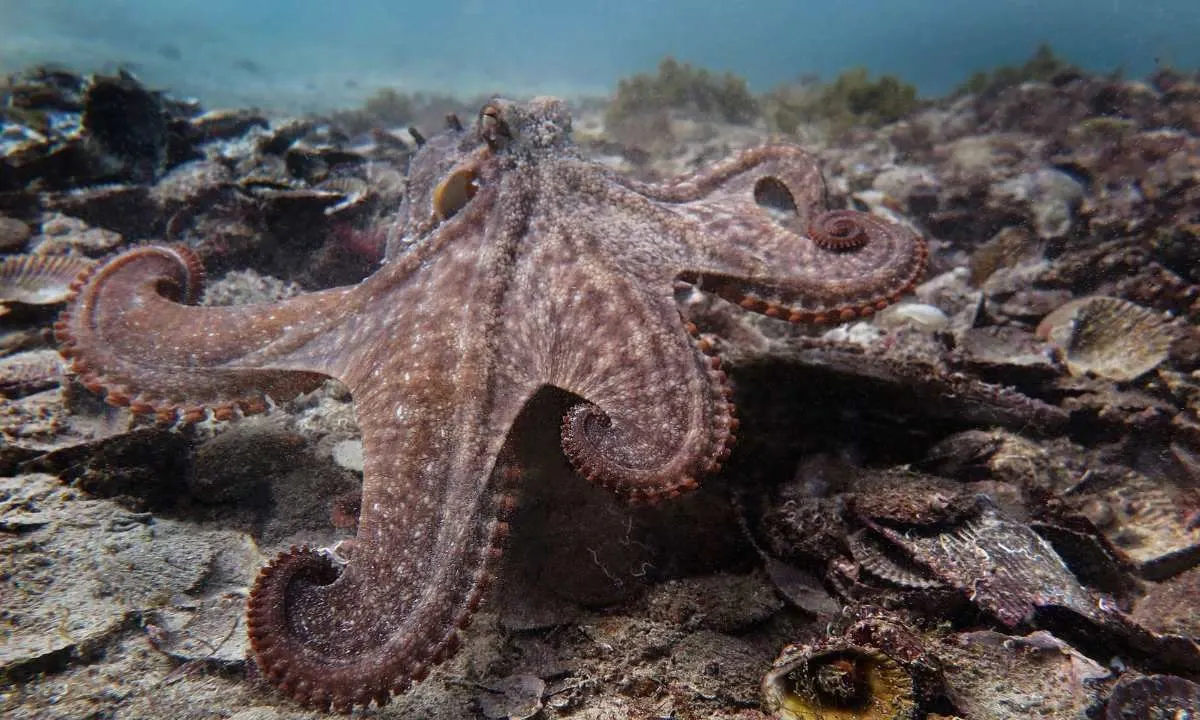
At the heart of this community are piles of clam and scallop shells, the remains of meals consumed by the octopuses. These shells serve not only as food but also as building materials, creating dense “apartments” or dens for the octopuses to live in. The site is a bustling hub of activity, with up to 15 octopuses observed living in close proximity, sharing space, and interacting with one another.
In fact, the social interactions within Octlantis are far more complex than researchers initially expected. Video footage captured by scientists shows octopuses engaging in a range of behaviors typically associated with human communities, including cooperation, conflict, and even eviction. Some octopuses seem to be more dominant, taking control of dens and defending their space from others.
There’s also evidence of communication between individuals, with octopuses using body language and color changes to signal each other. These behaviors suggest that octopuses may have a much more sophisticated social structure than previously thought.
But it’s not all peaceful in Octlantis. Just like in human cities, there are conflicts and competition for resources. Octopuses have been seen chasing each other, evicting others from dens, and even engaging in aggressive displays of dominance.
This behavior, though aggressive, is likely a survival tactic. The site where Octlantis is located is rich in food, but it is also teeming with predators, making shelter a precious commodity. By building dens and congregating in groups, the octopuses increase their chances of survival against the dangers lurking in the water.
One of the most remarkable aspects of this discovery is the way in which the octopuses use the environment to their advantage. The shell piles they create not only provide protection from predators but also stabilize the soft sediment beneath them, allowing the octopuses to build more dens and expand their community.
This natural engineering is something that scientists refer to as “environmental modification,” and it’s a rare and impressive feat in the animal kingdom. The fact that octopuses, creatures with no bones and no vocal cords, can engage in such sophisticated behaviors is a testament to their intelligence and adaptability.
Interestingly, the discovery of Octlantis is not an isolated incident. Another site, known as Octopolis, was discovered a few years earlier in Jervis Bay. Like Octlantis, Octopolis is home to a community of octopuses living in close proximity, but the key difference is that Octopolis centers around a man-made object — a metal scrap — which likely provided a safe spot for the octopuses to congregate.
Despite the artificial nature of the site, the social behavior observed there was strikingly similar to what was seen in Octlantis. This suggests that octopuses are not only capable of living in groups but that they may actually prefer it when the conditions are right.
The idea that octopuses can form these intricate communities raises important questions about animal intelligence and social structures. For years, scientists have considered octopuses to be solitary creatures, but the discovery of Octlantis challenges that view.
These findings also force us to reconsider our understanding of animal behavior in general. If octopuses, with their alien-like appearance and highly specialized biology, can develop social bonds and build complex communities, what does that say about the potential for other animals to do the same?
While much is still unknown about the full extent of octopus social behavior, the discovery of Octlantis and other similar sites is a huge step forward in our understanding of these fascinating creatures.
The research team, led by Professor David Scheel from Alaska Pacific University, is continuing to study these octopus communities, using AI-powered submersibles to gather more data. The hope is that these advanced technologies will provide even more insight into the social lives of octopuses, including how they communicate, form relationships, and interact over time.
In many ways, the discovery of Octlantis feels like a glimpse into a hidden world, one that is both strange and beautiful. It’s a reminder that there is so much we still don’t know about the creatures that share our planet, and that sometimes, the most incredible discoveries come when we least expect them.
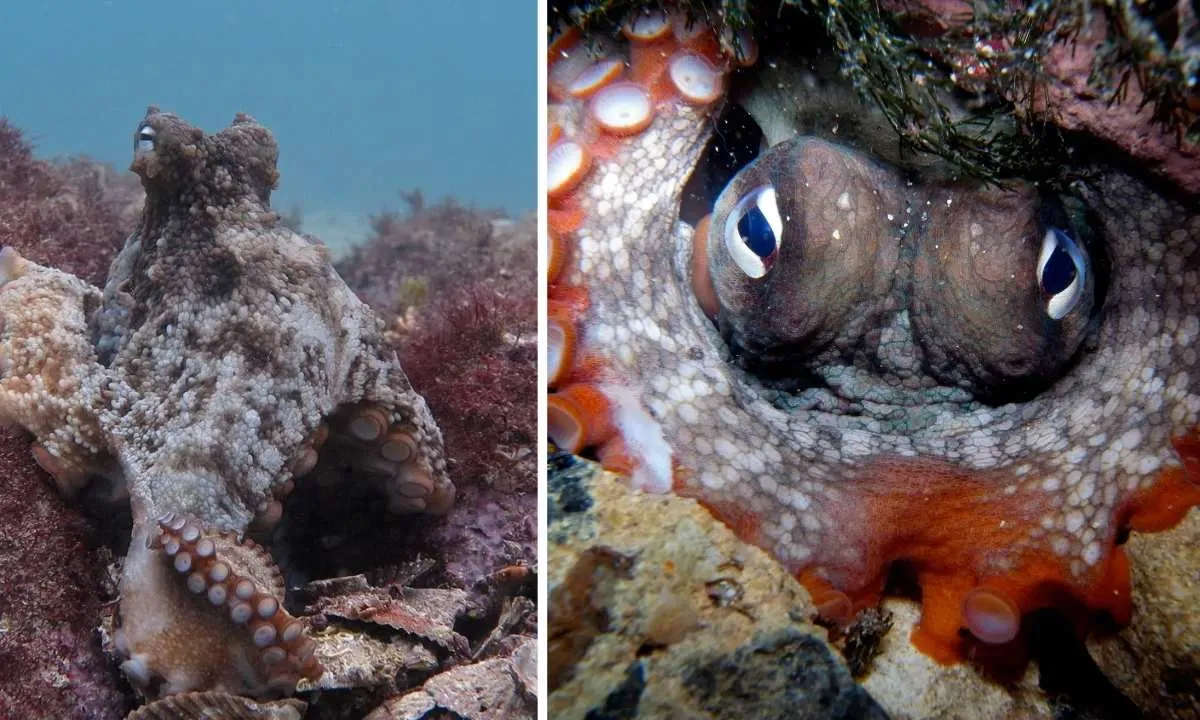
As scientists continue to explore this underwater city, they may uncover even more secrets about the mysterious lives of octopuses, and who knows — we may one day find that other creatures, too, are building their own cities beneath the waves.