The request was small: a dying patient wanted someone to stay with him. Nurse Sandra Clarke had other patients to care for, and when she returned, he had died.
That experience stayed with her. Years later, it helped shape No One Dies Alone, a volunteer program created to offer companionship to people approaching death without someone at their bedside.
A memory that became a program
An end-of-life vigil program guide from Seasons Hospice places Clarke's encounter in 1986. The work of turning that experience into an organized response came later.
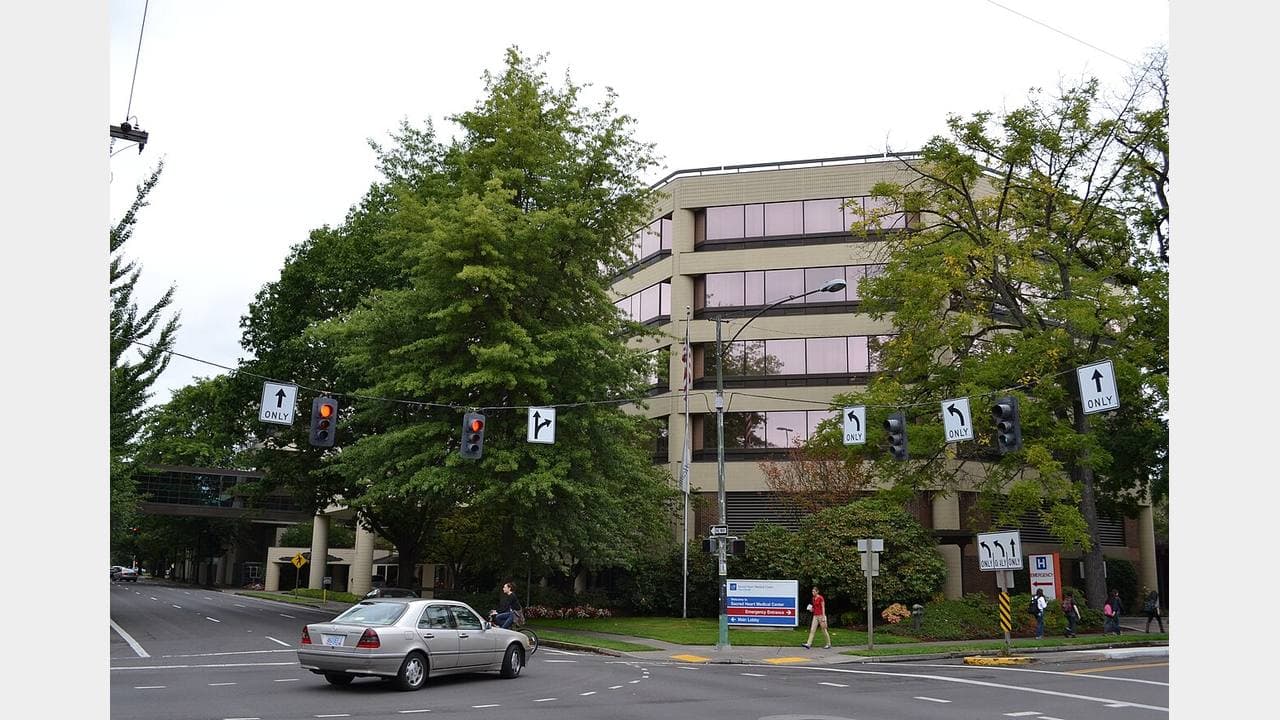
No One Dies Alone began at Sacred Heart Medical Center in Eugene, Oregon, in 2001. PeaceHealth's own account confirms that launch year.
The gap between the encounter and the program matters. This was an idea developed into a practical system, rather than a service that appeared immediately after one difficult shift.

Eugene location photograph, not a scene from Clarke’s bedside encounter. Photo: Kingofthedead, CC BY-SA 4.0. Resized; JPEG conversion. Image adaptation shared under the same CC BY-SA 4.0 license.

What bedside companionship can offer
St. Peter's Health in Montana describes the model it adopted in 2012: trained volunteers offer a comforting presence, with activities that may include reading, music or gentle touch.
Participation is shaped by the circumstances and the wishes of the patient or family. The volunteers supplement professional care by offering time and attention; they do not replace nurses or other clinical staff.
Sometimes the contribution is simply being there. That presence is the central purpose of a vigil, even when there is nothing a companion can fix or say.

Entrance sign at Sacred Heart’s later RiverBend campus in Springfield, Oregon. This is not the site of Clarke’s original 1986 encounter. Photo: Rick Obst, CC BY 4.0. Resized; JPEG conversion.

An idea carried into other hospitals
The University of Washington's Harborview spiritual care information describes another hospital's No One Dies Alone work, showing how the model has been adopted beyond its Oregon origins.
Individual programs depend on their own volunteers, referral arrangements and availability. The name expresses an aim, rather than a guarantee that every death everywhere will be attended.
Clarke's response to the memory of that patient was to create more chances for companionship. The lasting idea is a humane and specific one: when someone is nearing the end of life, another person's time can still be a meaningful form of care.
Featured image: Archival photograph of Sacred Heart Medical Center’s University District campus. Clarke and the patient are not pictured. Photo: Visitor7, CC BY-SA 3.0. Resized and fitted to a 16:9 canvas. Image adaptation shared under the same CC BY-SA 3.0 license.
