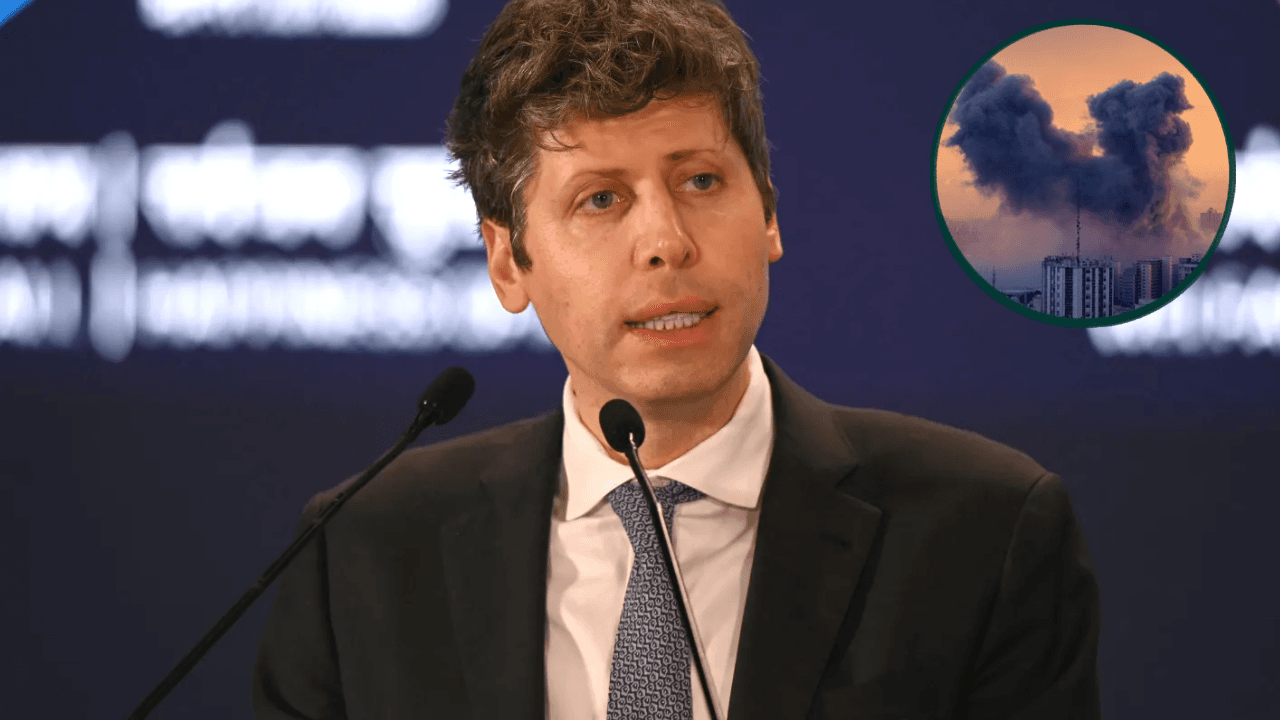
The OpenAI Pentagon AI deal is raising new questions about who controls advanced artificial intelligence once it enters military systems.
OpenAI Chief Executive Officer Sam Altman told employees that the company cannot dictate how the U.S. Department of Defense uses its technology.
“You do not get to make operational decisions,” Altman said during an internal company meeting, according to a person familiar with the discussion.
Pentagon Holds Final Authority
Altman explained that the Defense Department may consult OpenAI for technical expertise, but the military makes the final call on how the technology is deployed.
The remarks came during an all hands meeting held shortly after OpenAI finalized an agreement allowing the Pentagon to deploy its AI models inside classified government networks.
That agreement marks one of the most significant collaborations yet between a leading artificial intelligence company and the U.S. military.
Information about the Defense Department’s technology programs can be found on the U.S. Department of Defense official website.
Deal Followed Rivalry With Anthropic
The Pentagon agreement came after a dispute between the U.S. government and rival AI company Anthropic.
Anthropic reportedly resisted relaxing restrictions on how its AI could be used, particularly rules against domestic surveillance and fully autonomous weapons.
The disagreement led the Trump administration to classify Anthropic as a potential supply chain risk and block federal agencies from using its technology.
Anthropic has previously worked with U.S. intelligence agencies through partnerships involving companies like Amazon Web Services and Palantir.
Internal Debate Inside OpenAI
The Pentagon partnership has sparked strong debate within the tech industry and inside OpenAI itself.
Some employees raised concerns about how artificial intelligence could be used in military operations, including surveillance and weapons systems.
Altman acknowledged that the rollout of the agreement appeared rushed and created backlash both inside and outside the company.
OpenAI Sets Ethical Limits
Altman has said OpenAI included safeguards in the agreement to limit certain uses of its technology.
According to the company, the contract includes principles banning domestic mass surveillance and requiring human oversight for the use of force involving AI systems.
OpenAI’s broader policies on artificial intelligence development are available on the company’s official site at OpenAI.com.
Growing Debate Over AI and War
The dispute highlights a larger global debate about how powerful AI systems should be used by governments and militaries.
Defense agencies increasingly view artificial intelligence as essential for intelligence analysis, logistics, and battlefield decision making.
But critics argue that without clear limits, AI technology could accelerate surveillance and automated warfare.
Altman’s message to staff made one point clear. Once the technology is handed to the government, the military decides how it is used.