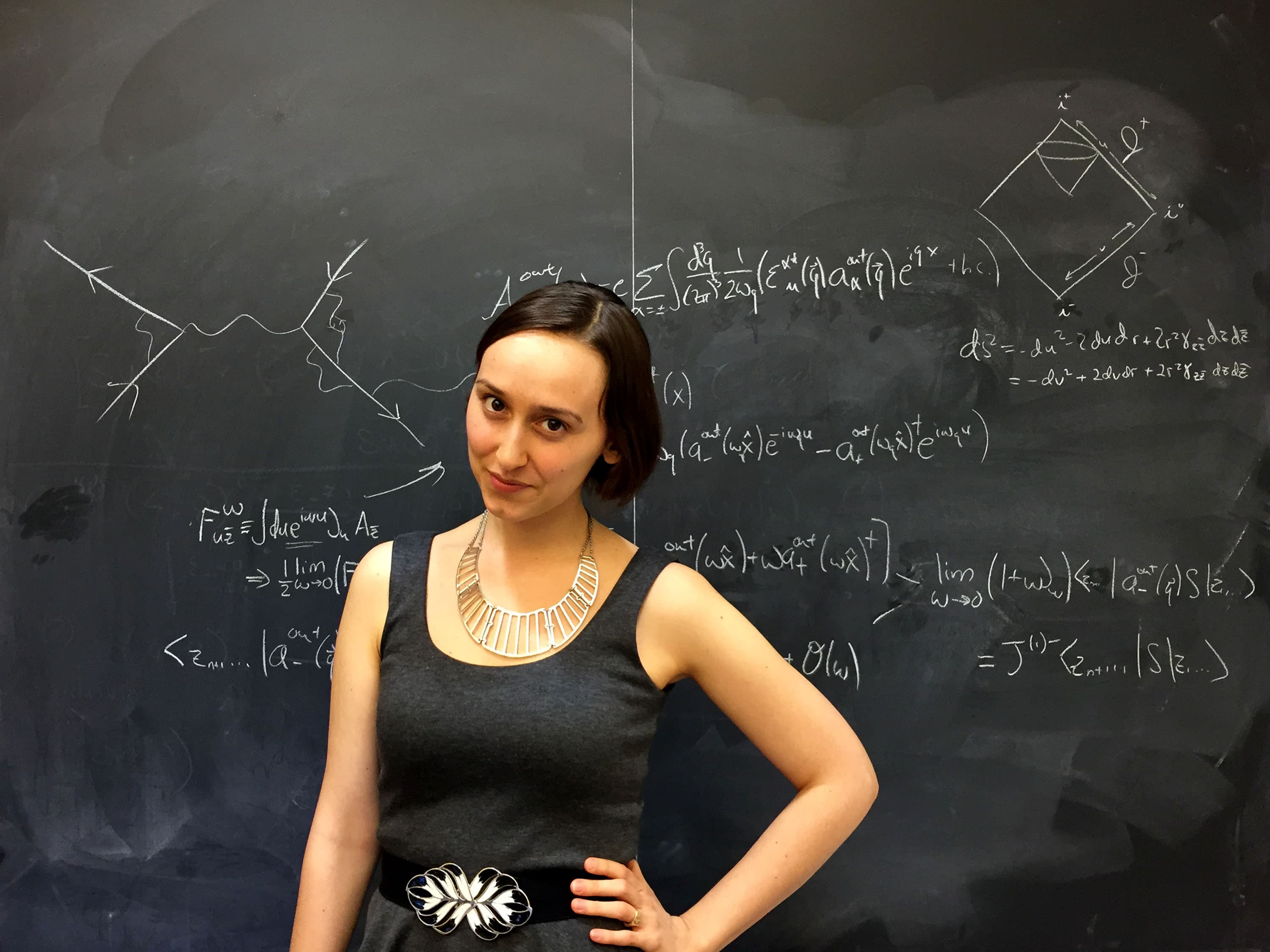
Featured photograph: Sabrina Gonzalez Pasterski at a blackboard in 2014. Archival photograph. Photo: Cambridge02138. CC BY-SA 4.0 via Wikimedia Commons.

As a teenager, Sabrina Gonzalez Pasterski built and flew an airplane. Years later, her questions turned from how machines fly to how gravity and quantum physics might fit together.
At Canada's Perimeter Institute, she founded the Celestial Holography Initiative. The work explores whether gravitational physics can be expressed through a mathematical description on a lower-dimensional boundary.
That is a research question, not a discovery that the universe is literally a projected image.
Flight gave her a way to learn by building
A Perimeter Institute profile traces Pasterski's early fascination with aerospace.
She began flying lessons as a child and built a plane by 14. The project involved sustained hands-on work, giving her an early experience of turning technical knowledge into a functioning machine.
In a later interview, she explained that the aircraft came from a kit. Building it was an achievement without needing to describe it as an entirely original invention.
She then chose physics as the next direction for her curiosity.
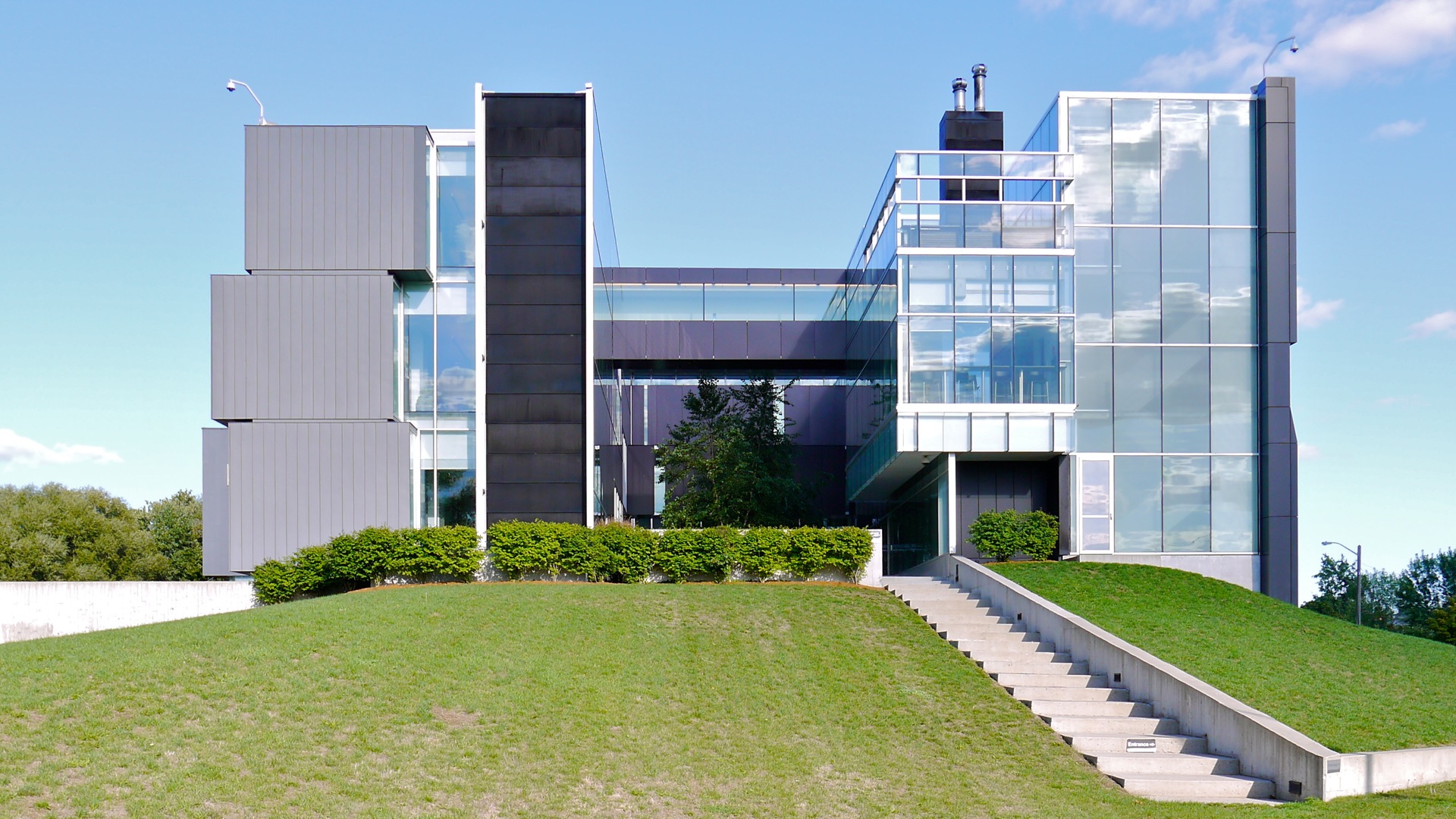
Photo: JustSomePics. CC BY-SA 3.0 via Wikimedia Commons.

From MIT to a new research program
MIT's record of her undergraduate thesis dates her physics degree to 2013. She earned her doctorate at Harvard in 2019.
Her Perimeter faculty profile describes subsequent work at Princeton and her move to Perimeter in 2021.
Her research includes work on the spin memory effect and relationships connecting the mathematics of gravity, radiation and symmetries. Perimeter notes that research she contributed to was cited by Stephen Hawking.
That citation is one part of a collaborative scientific career. It does not mean Hawking endorsed every later claim made about her in popular coverage.
Photo: Cambridge02138. CC BY-SA 4.0 via Wikimedia Commons.

What celestial holography is trying to do
Pasterski's research review on celestial holography describes a field concerned with building a holographic account of gravity in asymptotically flat spacetime.
In plainer terms, researchers are investigating whether one set of mathematical tools can describe processes usually studied with very different theories.
Einstein's gravity and quantum theory each explain important aspects of nature. Developing a complete framework that brings them together remains unfinished work.
A lower-dimensional description would not make the world an illusion. It would provide another way to calculate and understand physical processes.
Pasterski's path connects two kinds of curiosity: building something that works, and asking why the world works at all. The questions she studies remain open, which is precisely why the research continues.