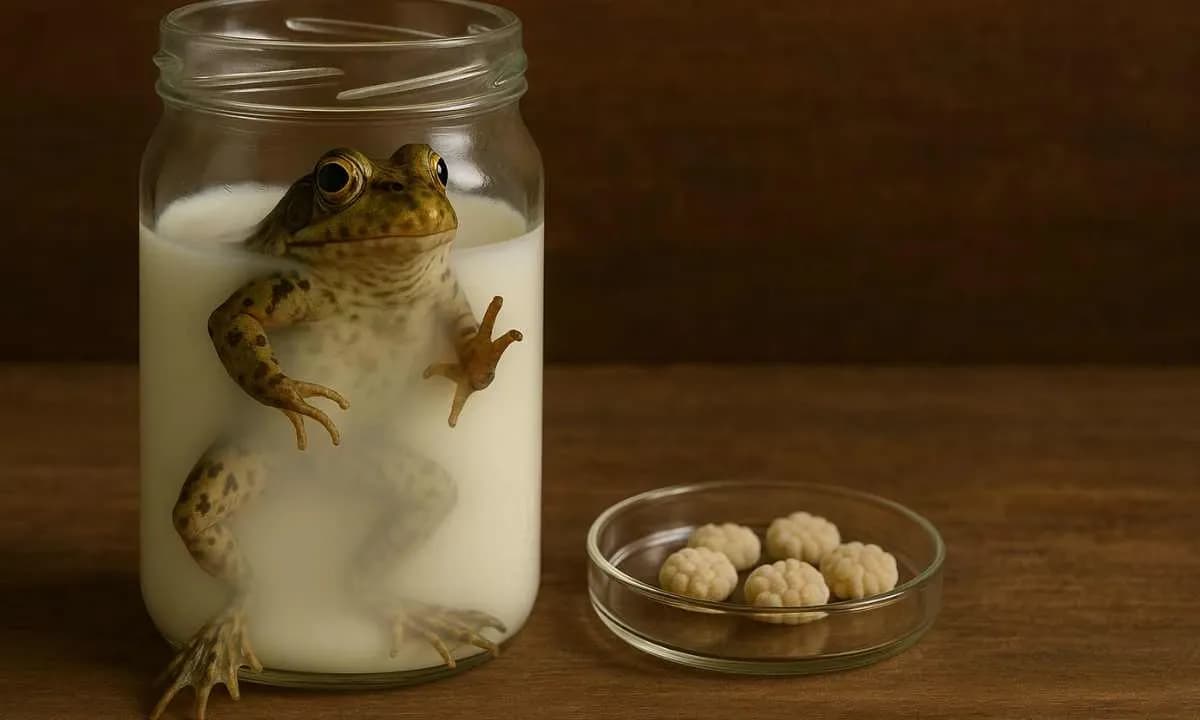
In the villages of rural Russia and Finland, locals had an unusual yet effective technique to keep their milk fresh. They would drop a live frog into a bucket of milk, creating an odd sight you wouldn’t expect to see in the modern world. It seemed absurd then, and it may seem even more so now, but those frog-filled buckets were a crucial survival tactic for people long before refrigerators existed.
This practice, often scoffed at by outsiders, was based on keen observation. Generations of families noted that milk remained fresh longer when a frog was swimming in it. Folk wisdom deemed it beneficial, yet no one understood the science behind it. The frogs, specifically the European brown frog or *Rana temporaria*, were simply acting as nature intended.
Fast forward to the modern era, where scientists began to uncover the secrets hidden within the frog’s skin. They found that these frogs secrete powerful antimicrobial peptides. Shockingly, these compounds inhibit bacterial growth, allowing milk to stay fresh far beyond its normal shelf life. It was like nature’s own refrigerator!
In 2012, a group of researchers made a groundbreaking discovery. They identified up to 76 distinct peptides in the secretions of *Rana temporaria*. One of these peptides, named Brevinin 1Tb, showed remarkable effectiveness against the bacteria that typically spoil milk. What was once thought to be mere folklore turned out to be a profound example of early biochemical wisdom.

Particularly in Finland and Russia, where people lived in a pre-refrigeration world, the frog in the milk was more than just a quirky ritual; it was a clever adaptation to prevent spoilage. Albert Lebedev, one of the leading scientists studying these frogs, explained that their secretions worked as natural preservatives, stopping harmful bacteria in their tracks. Imagine the lives saved because of this unusual but effective strategy!
Research into these peptides has opened new avenues for creating antibiotics. As antibiotic resistance becomes a pressing concern in medicine today, scientists are excited to explore these uniquely derived compounds as potential therapeutic agents. The bizarre tradition of dipping frogs in milk may have led to life-saving discoveries that could revolutionize modern medicine.
As we marvel at this odd tradition, we can reflect on a key question: How many forgotten practices might hold the key to solving contemporary problems just waiting to be rediscovered?