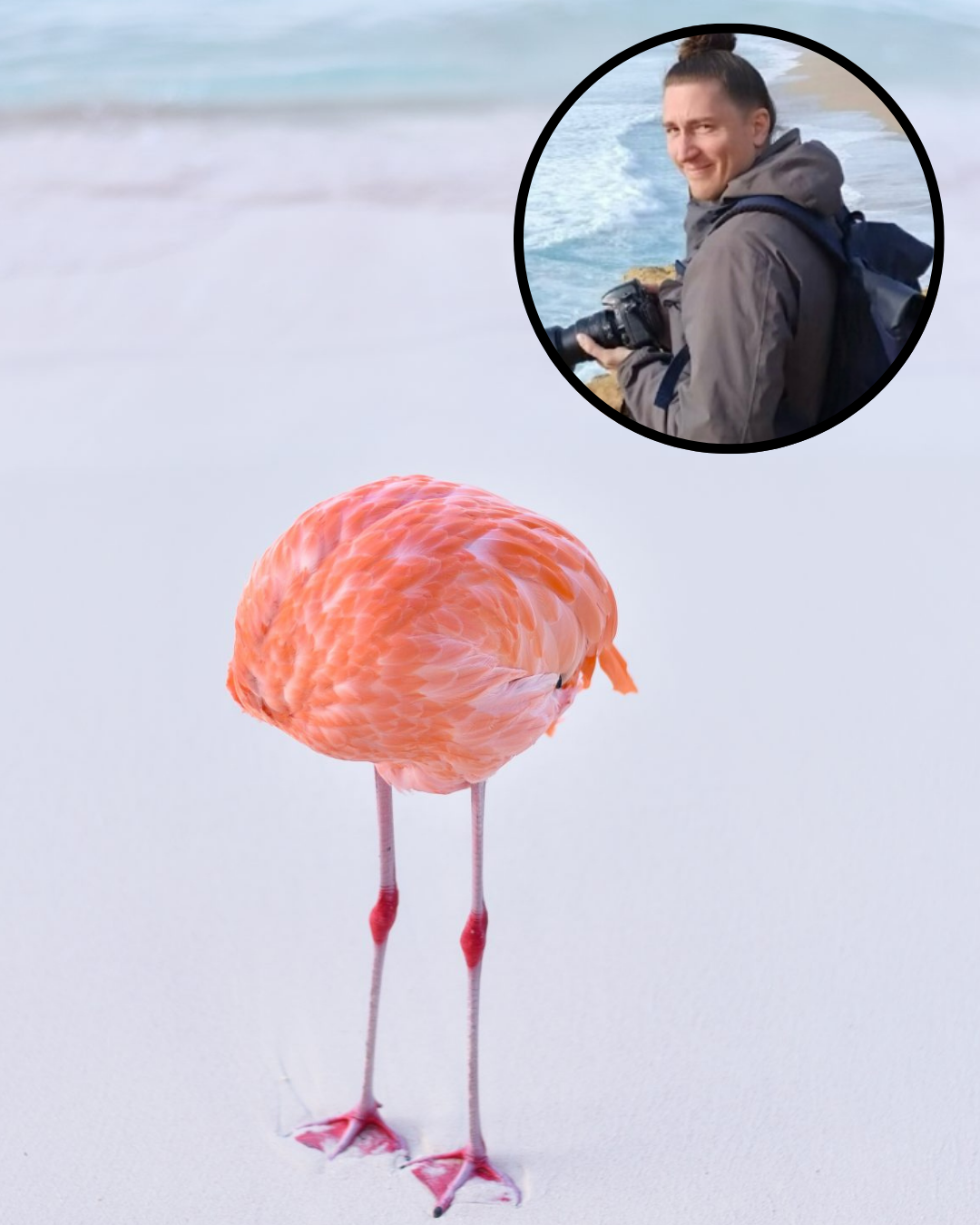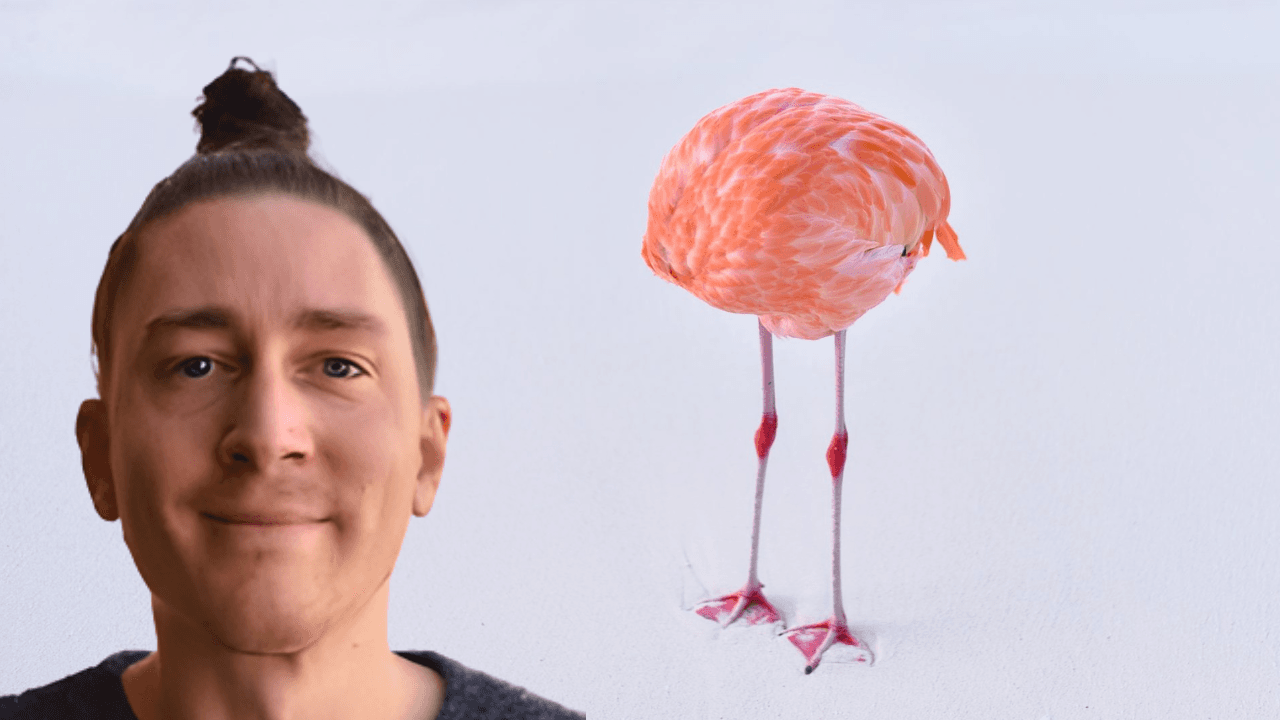
In June 2024, an event sent ripples through the art and photography communities. Photographer Miles Astray, a pseudonym for the artist, entered a surreal image titled “FLAMINGONE” into the AI-generated imagery category of the prestigious 1839 Color Photography Awards. To everyone’s surprise, the photo placed third and also won the People’s Vote – despite being completely real.

This story began at dawn on a quiet beach in Aruba, where Astray arrived early to photograph the island’s famous flamingos before the crowds arrived. As the sun rose, he captured a flamingo mid-motion, its twisted neck creating the illusion that it had no head. The resulting image, strange, elegant, and almost algorithmic in symmetry — looked like something an AI model might invent.
“I wasn’t trying to fool anyone,” Astray later told CNN. “I just wanted to show that nature can outdo any machine.”
View this post on Instagram
When FLAMINGONE won, the art world erupted. Some hailed Astray’s move as a brilliant commentary on the blurring lines between human and machine creativity; others accused him of breaking the rules. The debate sparked bigger questions: can human artists still stand out in an era of algorithmic art? Or had Astray simply exposed how fragile the system had become?
“To see it shortlisted by the jury was surreal,” he told CNN. The panel — which included judges from Getty Images, Christie’s, and The New York Times — had believed the image was AI-generated. Astray’s work stood as proof that human timing, instinct, and patience could rival the most advanced generative tools.
As headlines spread, so did controversy. The 1839 Awards soon announced that FLAMINGONE would be disqualified from the AI category once Astray revealed the truth. “We appreciated the point he made,” organizers wrote in a public note, “but our AI category is reserved for generative works.”
Still, the incident forced the organization to revise and clarify its rules about AI submissions. Many artists applauded Astray’s experiment for highlighting the importance of transparency in digital art. Others viewed it as a needed wake-up call for the industry itself, a reminder that even experts can no longer easily tell what’s real and what’s not.
Through the debate, Astray held his ground. “The photo is real,” he said. “It took skill, timing, and luck, things algorithms can’t replicate.” For him, the experiment wasn’t about deception but about celebrating authenticity in an age when images are increasingly synthetic.
“I wanted to show that nature is the real artist,” he added, “and all I did was frame it.” His statement resonated worldwide, sparking conversations about what creativity truly means when machines can now imitate imagination itself.

Following the uproar, the 1839 Awards tightened their AI-category submission guidelines, explicitly requiring proof of generative methods for future entries. Although Astray’s image was removed from official standings, the public saw his “disqualification” as a symbolic victory, a reminder that real artistry can still beat artificial intelligence at its own game.
The incident has since become a cultural touchpoint for discussions about art’s future. As Smithsonian Magazine put it, FLAMINGONE “blurred the boundaries between what is real and what we now expect from machines.”
Astray’s experience raises timeless questions: as creativity becomes increasingly automated, how do we define an artist’s role? Should photography remain a purely human craft, or should technology share the canvas?
In the end, Miles Astray’s “FLAMINGONE” became more than a viral photo, it became a symbol of artistic rebellion. His sunrise shot of a flamingo on a Caribbean beach proved that even in a digital age obsessed with algorithms, the human eye still has its magic.
Disclosure: We may earn a commission when you make a purchase through the ads.