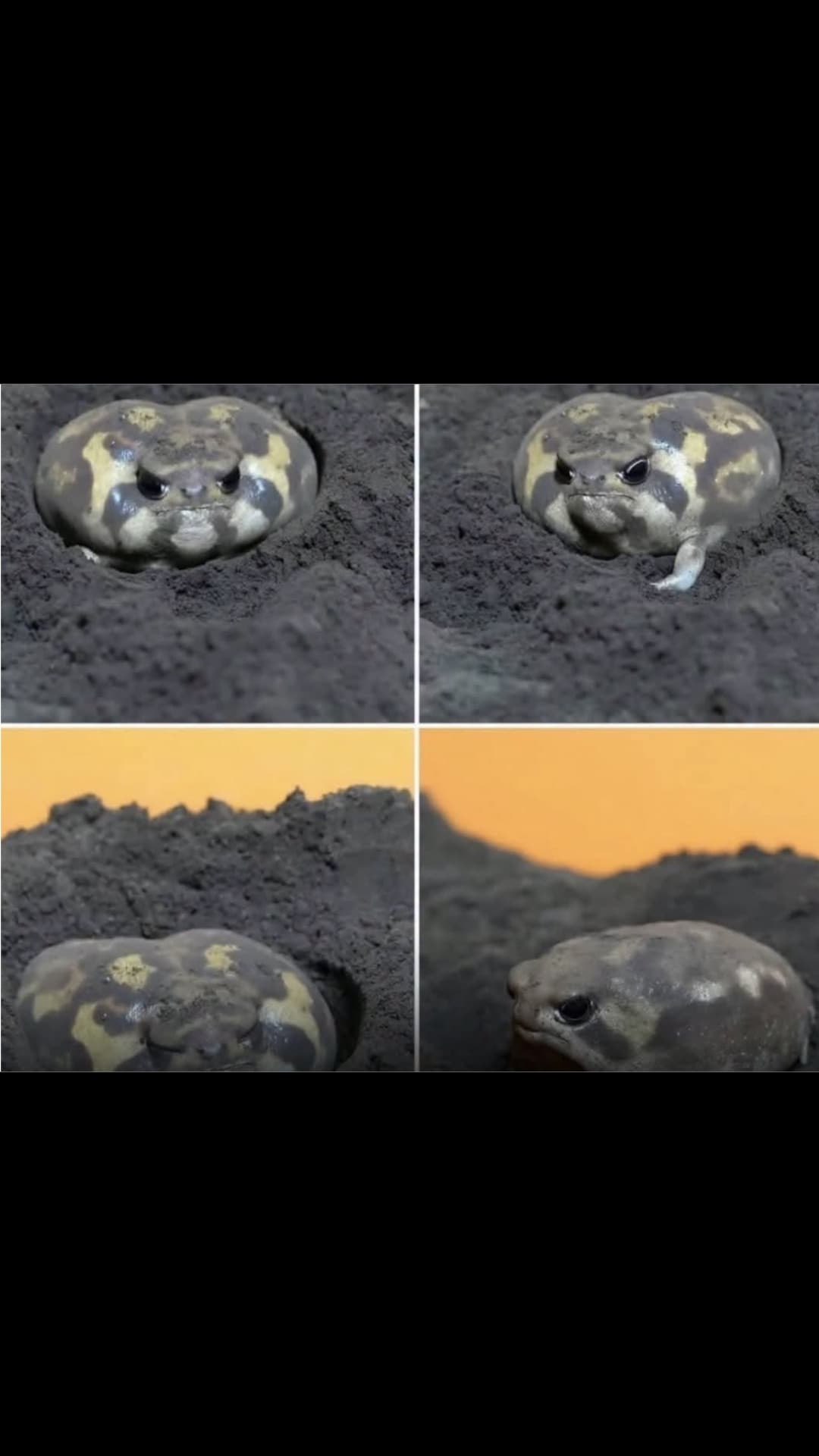
A rain frog can look thoroughly unimpressed without being in a bad mood. The facial impression that makes these animals popular online is not a reliable reading of their emotional state.
“Rain frog” also covers multiple species. A photograph identified only with that common name does not establish which one it depicts.
A round body with a burrowing lifestyle
The South African National Biodiversity Institute’s Cape rain frog profile describes a rounded body, short legs and forward-facing eyes.
Cape rain frogs spend much of their time underground and are more visible around wet weather. Their appearance makes more sense in the context of that lifestyle than as a human-like expression of annoyance.
When threatened, they can inflate their bodies. Looking larger is a defensive response, rather than evidence that the animal is permanently angry.
Different species have different calls
Viral squeaking clips should not be generalized to every rain frog. SANBI describes the Cape rain frog’s breeding call as a harsh squawk. Other species have different calls and ranges.
The American Museum of Natural History’s amphibian database documents individual species within the genus Breviceps, illustrating why precise identification matters.
The animal in a particular meme may not be securely identifiable from the caption accompanying it. A species claim should follow evidence, rather than the popularity of a nickname.
The curiosity is still real: these small amphibians have distinctive shapes and specialized lives. Appreciating those features is more informative than assuming that a downturned-looking mouth tells us exactly how a frog feels.