In a quiet village called Wyskoć in western Poland, archaeologists have made a discovery that might reshape how we view ancient Europe. While Egypt’s Great Pyramid of Giza often gets all the attention when it comes to ancient wonders, these newly found Polish structures are actually older—by centuries.
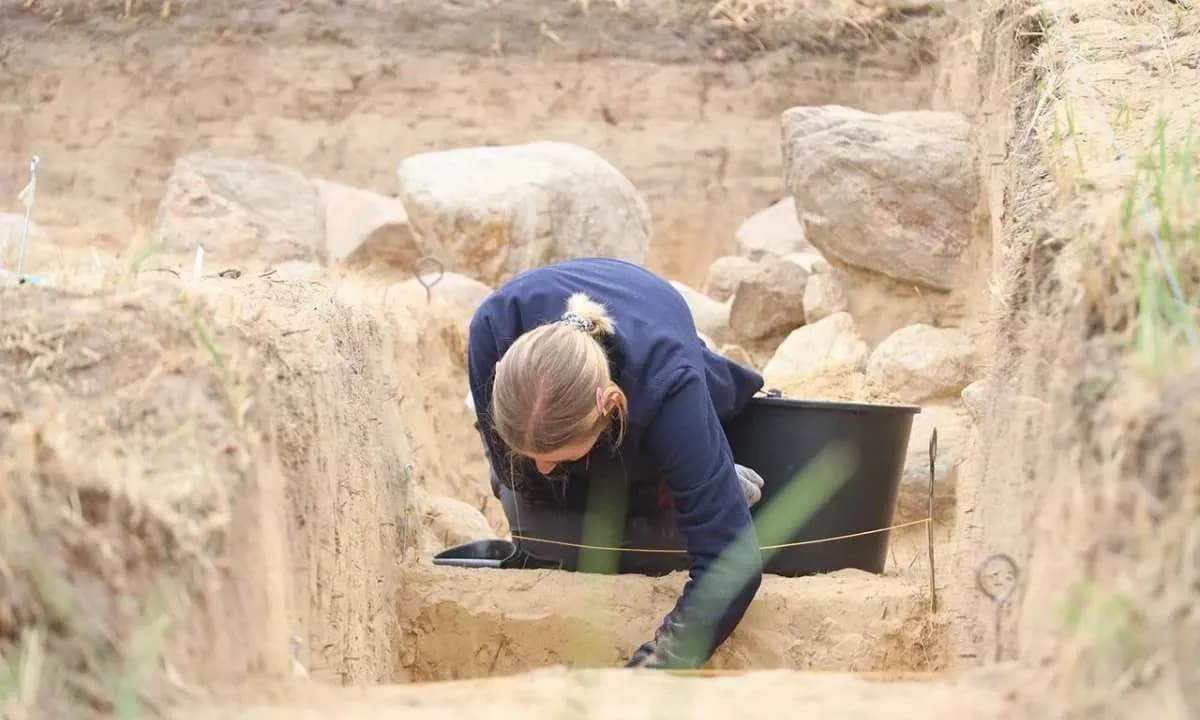
The discovery was made during a routine archaeological survey in Chłapowski Landscape Park. A team from Adam Mickiewicz University was using remote sensing technology to scan the area when they noticed odd shapes in the ground. What they found were two massive trapezoid-shaped earthen tombs, now being called the “Polish pyramids.” These tombs date back around 5,500 years, to the time of the Funnelbeaker culture, one of Europe’s earliest agricultural societies.
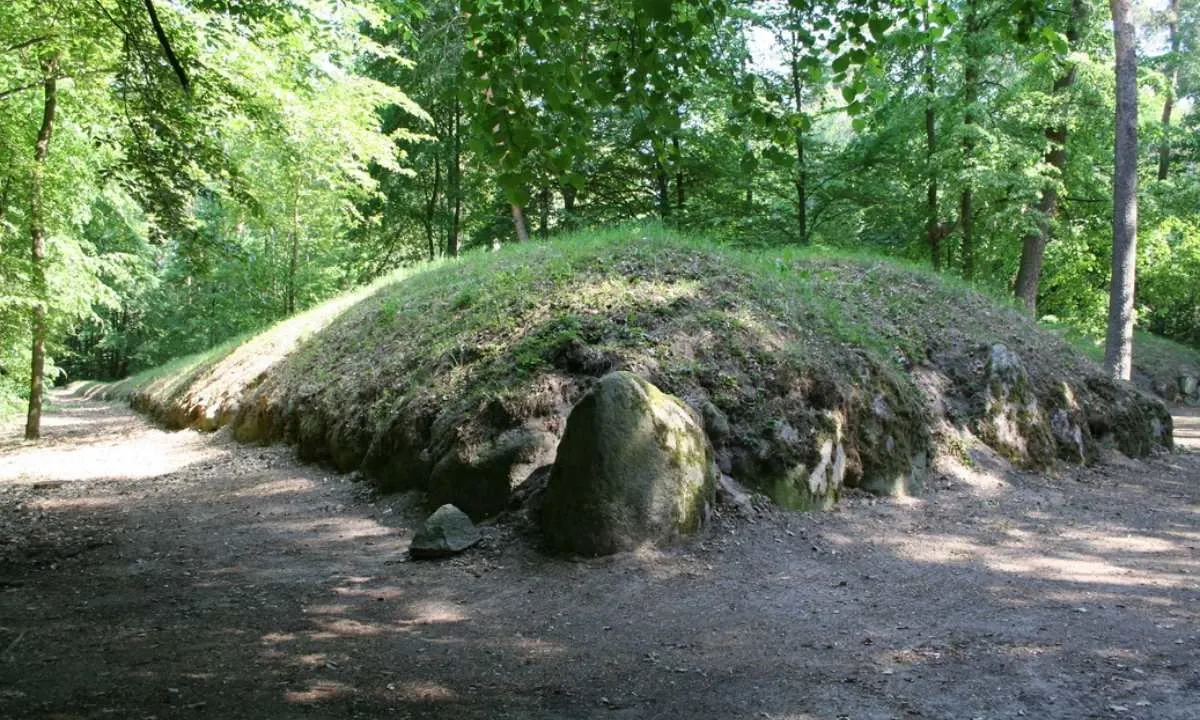
These ancient tombs are among the largest prehistoric structures ever discovered in Poland. One of them stretches roughly 200 meters (656 feet) long and rises up to 4 meters (13 feet) high. Instead of the classic pyramid shape we see in Egypt, these tombs have a long triangular or trapezoid form. The east end of the mound is wide and tall, while the west end narrows like a tail. This shape might reflect the design of houses used by Neolithic cultures in that region.
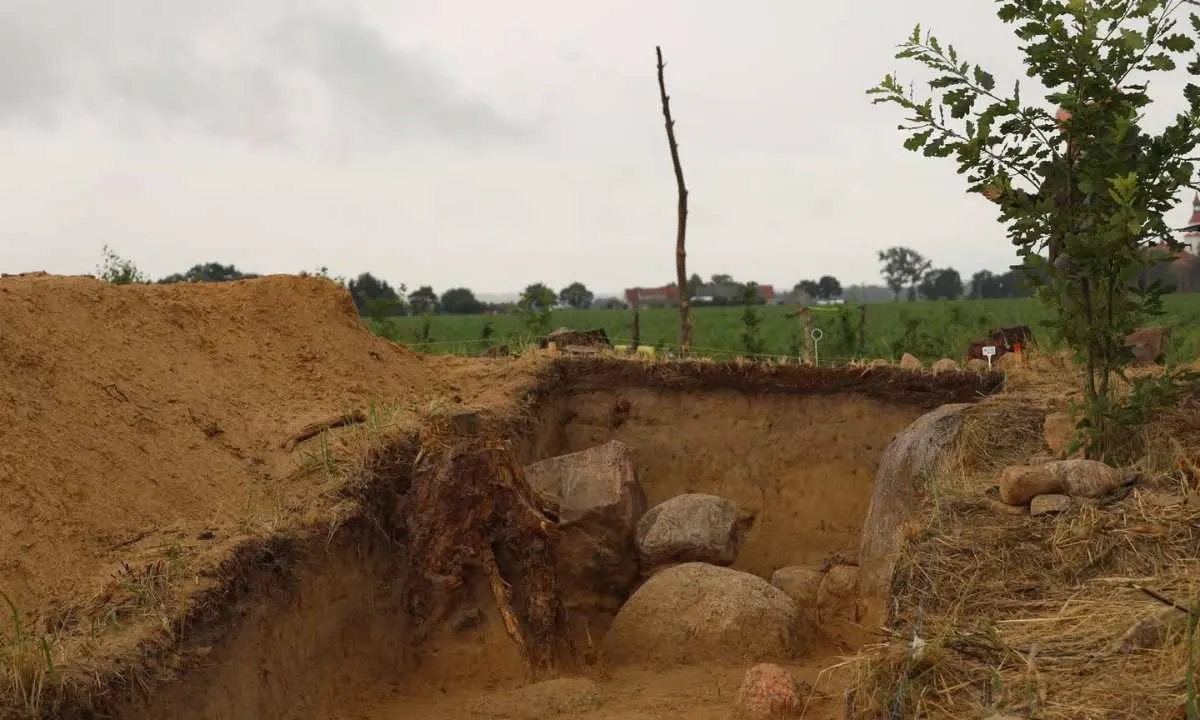
The tombs were carefully built with layers of earth, cobblestones, and huge boulders, some weighing as much as 10 tonnes. These stones were placed at the front of the mound, possibly to mark the entrance or to signal the importance of the person buried inside. Over the centuries, many of these stones have disappeared—most likely taken and repurposed by locals for other building projects.
The tombs were oriented east to west, with their entrance facing the rising sun. This alignment was probably intentional and may point to early knowledge of astronomy. Experts believe that important individuals like leaders, priests, or shamans were buried here. The Funnelbeaker culture was generally considered egalitarian, meaning people lived relatively equal lives—but even in such societies, some individuals still held special roles. Those people would have been buried in these tombs, separate from common burial areas.
Inside each tomb, archaeologists expect to find only a single skeleton, laid on its back with the legs pointing toward the front of the tomb. Along with the body, there were usually grave goods—objects placed with the dead that could include stone axes, pottery, copper ornaments, and sometimes ritual items like opium vessels. These objects are believed to have spiritual significance or to reflect the social role of the person buried. So far, no human remains have been found in these particular tombs, but the researchers are hopeful that burial offerings still remain inside, waiting to be uncovered.
The discovery is especially exciting because this is only the second time such tombs have been found in the Wielkopolska region. Most Polish pyramids—also called “beds of giants” by locals—have been located further north in the Kuyavia-Pomerania province. That makes this site not only ancient but rare.
To confirm the structures’ age and purpose, archaeologists used aerial laser scanning, followed by careful on-the-ground excavation. The size and precision of these tombs show a high level of teamwork and planning among people who lived thousands of years ago—without wheels, metal tools, or modern machinery.
Artur Golis, one of the lead researchers, noted how these tombs weren’t just for burial. Each generation may have built its own megalith to honor someone who played a key role in the community. The way they’re built and the effort it took to complete them tells us that these people deeply valued memory, tradition, and spiritual beliefs.
For now, the site remains closed to the public as researchers continue their work. Once the excavations are complete, there may be a decision to open it for visitors. But even before the tombs are fully explored, one thing is already clear: ancient Europe was not a land of primitive wanderers. It was home to organized communities capable of building complex monuments, planning astronomical alignments, and preserving the legacies of their most important members.
And with every stone unearthed from Poland’s forgotten past, our picture of early civilization grows just a little clearer—and a lot more surprising.