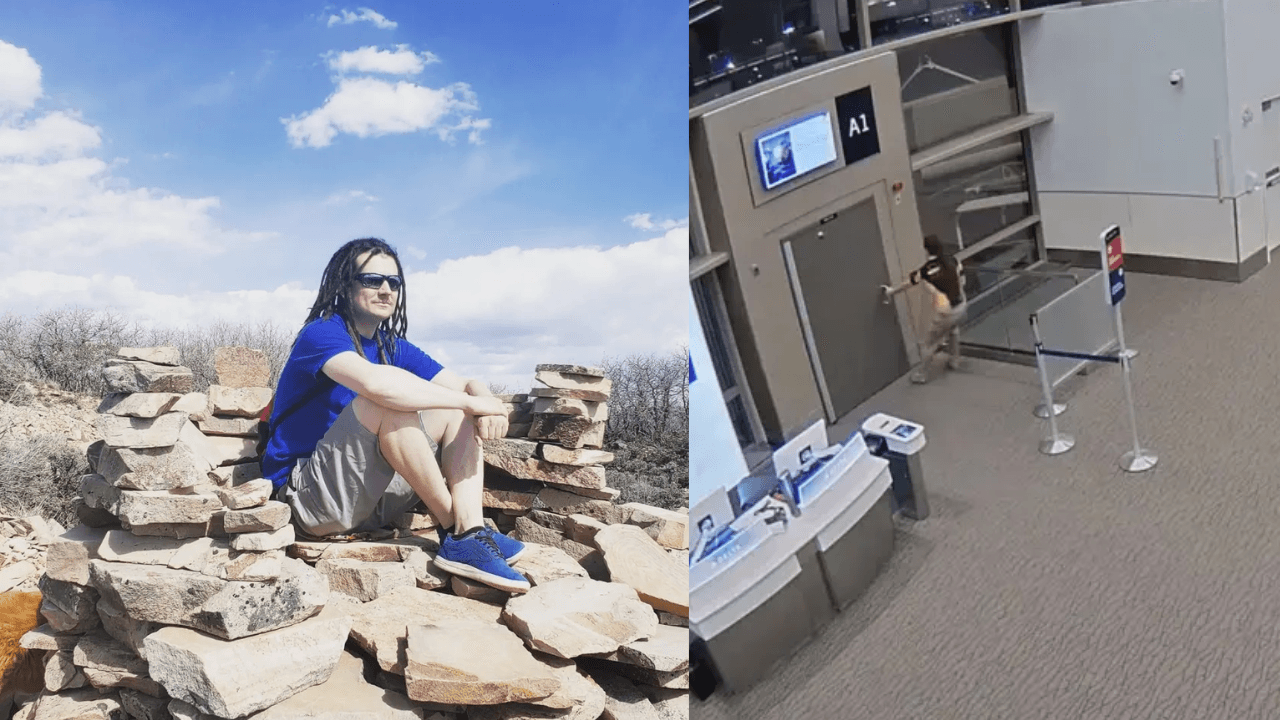
The parents of a Utah man who died after crawling into the engine of a Delta Air Lines plane are suing Salt Lake City, claiming his death was preventable.
The lawsuit alleges repeated security failures at Salt Lake City International Airport allowed their son, who was in visible mental distress, to access the runway and reach an aircraft.
The man, 30 year old Kyler Efinger, was found dead on New Year’s Day 2024.
Man Was Experiencing Mental Health Crisis, Lawsuit Says
According to the lawsuit filed by Judd and Lisa Efinger, their son showed clear signs of a mental health emergency before his death.
Efinger had been diagnosed with bipolar disorder a decade earlier and sometimes experienced episodes of disorientation.
On the night of Dec. 31, 2023, he was at the airport waiting for a flight to visit his ill grandfather.
The suit says he slipped into a manic episode while inside the terminal.

Erratic Behavior Reported by Airport Staff
Court records state Efinger paced repeatedly on a terminal walkway around 9 p.m.
Shortly afterward, he entered a Utah Jazz team store and behaved so unusually that the manager accepted less than full payment for a jersey.
When Efinger left his bag behind, the store manager contacted Airport Operations.
Efinger then ran back toward the store without shoes and with his shirt unzipped, the lawsuit claims.
Security Gaps Alleged Inside Terminal
The lawsuit says airport staff did not escalate the situation despite Efinger becoming agitated and incoherent.
After security was called, Efinger fled toward Gate A1.
At around 9:52 p.m., he attempted to open locked jet bridge doors and pounded on windows, all in view of airport workers.
No one stopped him or tracked his movements, according to the complaint.
Emergency Door Failure Cited
The lawsuit alleges Efinger accessed the tarmac through an emergency exit door that lacked a delayed egress locking system.
Such a system would have delayed opening for 15 to 20 seconds and alerted staff.
“The City did not maintain any impediments to prevent a visibly disoriented person from freely accessing the tarmac,” the lawsuit states.
Officials allegedly did not know where Efinger exited or failed to communicate it clearly.

Fatal Moments on the Runway
Efinger walked nearly a mile on the tarmac in freezing conditions, the lawsuit says.
He removed his pants and undergarments and ran toward an Airbus aircraft that was taxiing.
Airport staff allegedly failed to alert pilots, air traffic controllers, or ground crews that a person was loose outside.
Efinger climbed into the plane’s running engine and was fatally injured by the turbine blades.
Pilot Shut Down Engine Too Late
The pilot noticed Efinger and cut engine power, but the injuries were already fatal.
Medical examiners concluded Efinger died from blunt head trauma caused by contact with the engine blades.
The lawsuit claims Efinger would have survived if officers had reached him just 30 seconds sooner.
City Accused of Systemic Failures
The lawsuit accuses Salt Lake City of failing to maintain safe airport premises and security systems.
It also alleges failures in communication between airport personnel, police, and air traffic control.
“The notion that an airport was so dangerously designed and operated as to allow this sequence of events generated international attention and shock,” the lawsuit states.
Broader Questions About Airport Mental Health Response
The case has renewed scrutiny on how airports handle travelers experiencing mental health crises.
Advocates say large transportation hubs often lack clear protocols for nonviolent mental health emergencies.
Federal aviation safety standards require strict control of secure areas, including runways.
What Happens Next
Salt Lake City has not yet responded publicly to the lawsuit.
The case remains pending in court.
For Efinger’s parents, the lawsuit is about accountability and prevention.
They say their son’s death exposed dangerous gaps that could put others at risk if left unaddressed.