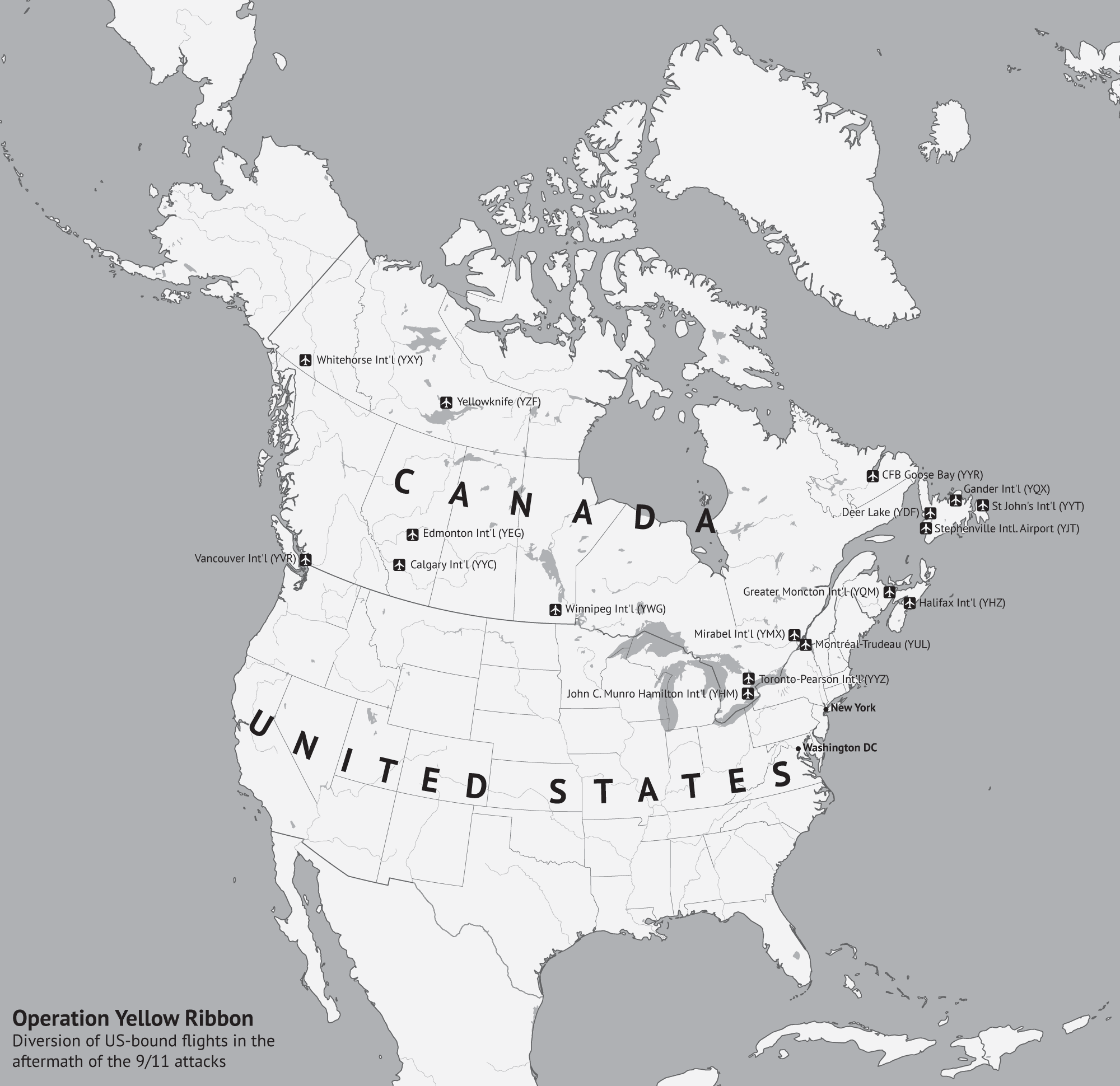
When the United States closed its airspace on September 11, 2001, airliners already crossing the Atlantic had to turn back or find somewhere else to land. Canada directed flights to airports including Goose Bay, Gander and Stephenville. Once the planes were down, thousands of passengers and crew needed somewhere to sleep. Canadian military crews brought in beds, blankets and the customs officers who could help get travelers out of the airports. Transport Canada’s account of Operation Yellow Ribbon. Canada House retrospective on the military response.
The airlift that followed the diversions
Transport Canada coordinated the diversions under Operation Yellow Ribbon. The Canadian Forces mobilized under Operation Support. Nine military transport aircraft delivered about 8,800 cots, 8,300 blankets and 55 support personnel to communities receiving diverted flights, according to a Canada House retrospective. Military units in Atlantic Canada provided beds and ration packs, and military facilities helped accommodate stranded travelers. Canada House retrospective. Royal Canadian Air Force history of 9 Wing Gander.
The military also flew customs officers to diversion airports. Many travelers waited on their aircraft for 16 hours or more while authorities screened passengers and checked baggage. In Stephenville, a federal aviation inspector who arrived the next day found more than 1,700 passengers from eight wide-body jets awaiting screening. The last diverted flight left several days after the attacks. Transport Canada’s account of airport screening. Canada House account of the customs airlift.
Canada also placed three naval ships on higher readiness in case a U.S. port needed humanitarian help. Canadian rapid-response aircraft assigned to NORAD were deployed as part of the air defense response. Canada House retrospective. Canadian parliamentary record.
In Gander, coffee turned into a stay of several days
Gander had about 10,000 residents. Transport Canada counted 38 aircraft and 6,656 people arriving there. Gander and nearby communities found places for travelers to sleep and provided food, clothing and other supplies. One resident later told Transport Canada that the travelers had come to “drop by for coffee, then stay for three or four days.” Transport Canada’s Gander account. Historica Canada’s account of the community response.
Featured map by Redgeographics, reproduced as supplied. Wikimedia Commons source. CC BY-SA 4.0 license.
