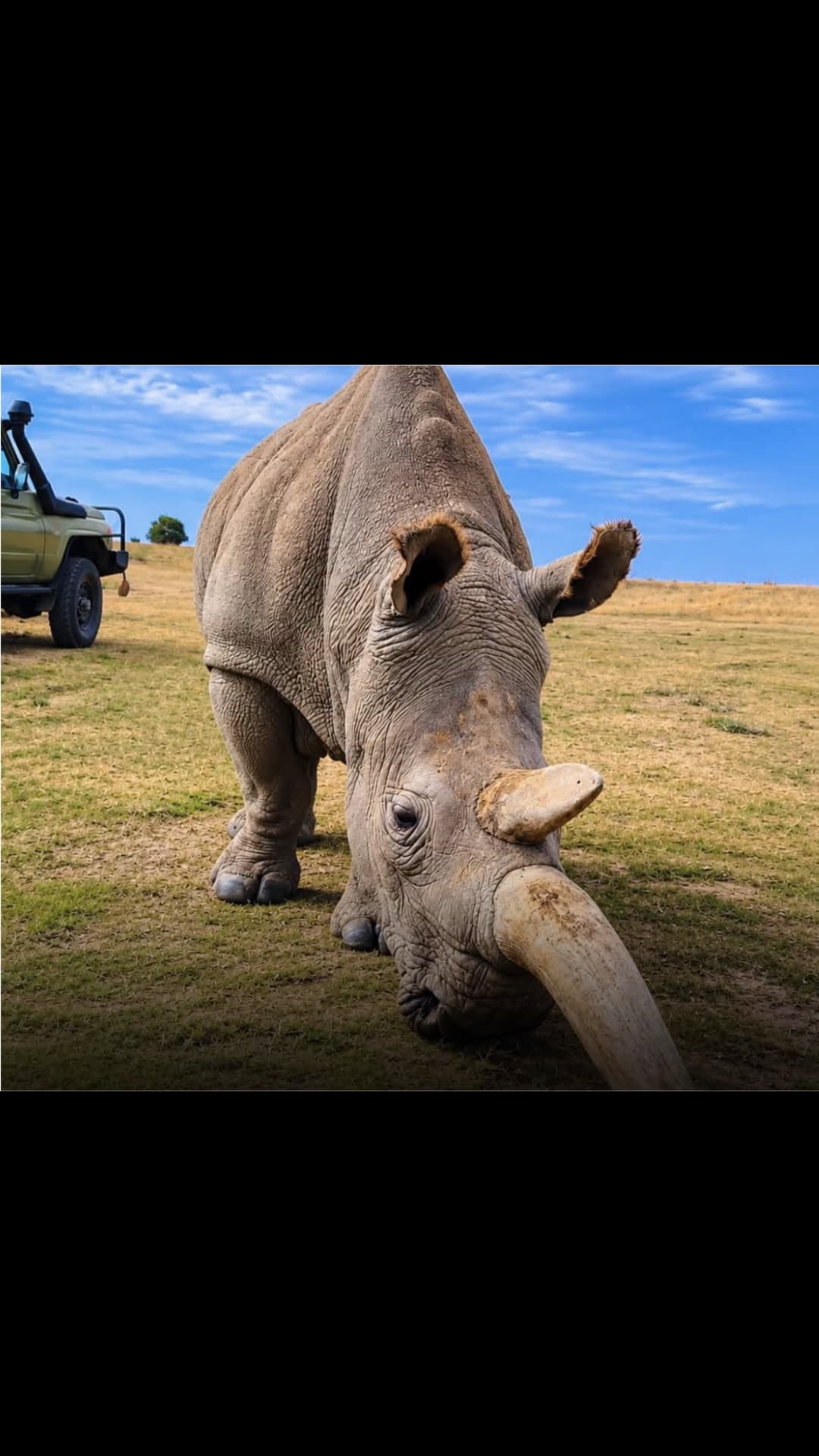
The last two northern white rhinos are both female. With no surviving male and no possibility of natural breeding, the subspecies’ future depends on an ambitious assisted-reproduction effort.
Najin and her daughter Fatu live at Kenya’s Ol Pejeta Conservancy. The conservancy describes the northern white rhino as extinct in the wild, following decades of poaching and conflict across its former Central African range.
Embryos preserve a possibility
In an April 22, 2026 update, the BioRescue Consortium reported producing another embryo from an egg collected from Fatu. That brought the total produced to 39 at the time of the announcement.
The date and wording matter. Thirty-nine embryos produced does not mean 39 pregnancies, 39 calves or a verified count of embryos available today.
The plan involves transferring northern white rhino embryos into southern white rhino surrogate mothers. The April update said three transfers in the second half of 2025 had not resulted in long-term pregnancies.
A difficult path from embryo to population
The research has established important possibilities. Associated Press reported in 2024 that an embryo-transfer pregnancy in a southern white rhino provided a proof of concept. The surrogate later died from a bacterial infection, underlining the project’s uncertainty.
Even a successful birth would be a step toward recovery rather than recovery itself. Building a healthy, genetically viable population takes sustained scientific work, secure habitat and protection from the threats that devastated the subspecies.
Najin and Fatu make the urgency tangible: two living animals remain while researchers try to preserve the possibility of more.