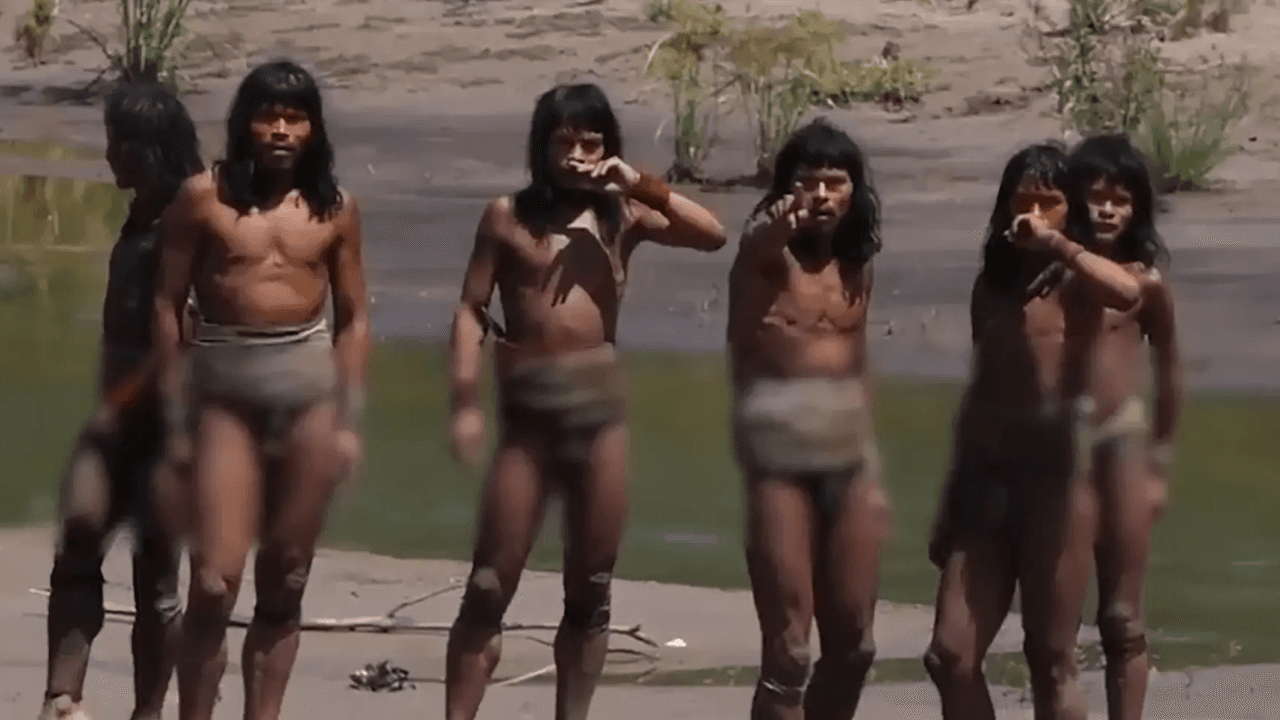
Never-before-seen high-definition footage of an uncontacted Amazon tribe has surfaced, offering a rare and emotional glimpse into one of the world’s most isolated communities.
The video was revealed by American conservationist and author Paul Rosolie during a recent interview on the Lex Fridman Podcast. Rosolie said the moment was among the most intense experiences of his two decades working in the Amazon rainforest.
A World First on Camera
Rosolie told podcaster Lex Fridman that the footage had never been shown publicly before. He explained that most known images of uncontacted tribes are blurry aerial shots taken from long distances.
This footage, however, captures the tribe at close range as they emerge from the forest onto a riverbank. The scene begins with the group moving cautiously through clouds of butterflies, scanning their surroundings and gripping weapons.
“You can see how alert they are. They are reading every movement,” Rosolie said during the interview.
Tension Turns to Curiosity
At first, the encounter appeared on the brink of violence. Rosolie said he watched closely, unsure if arrows would be fired.
As the distance closed, something unexpected happened. Several tribe members slowly lowered their bows and arrows, signaling restraint and curiosity instead of aggression.
Moments later, Rosolie said some appeared relaxed and even amused, a rare shift that underscores the complexity of human behavior even without outside contact.
Why Contact Can Be Deadly
Experts estimate nearly 200 uncontacted Indigenous groups still exist worldwide, mostly across the Amazon regions of Brazil and Peru.
According to Survival International, even brief contact can expose these communities to common illnesses like flu or measles, which can be fatal due to lack of immunity.
Researchers rely on satellite imagery, aerial monitoring, and reports from neighboring Indigenous groups to track their presence without direct contact.
Lessons From Past Tragedies
The dangers of contact were highlighted in 2018 when American missionary John Allen Chau was killed after attempting to approach the Sentinelese tribe on North Sentinel Island.
Indian authorities had strictly banned access to the island, citing risks to both outsiders and the tribe. Chau’s death reinforced why governments and conservation groups oppose direct engagement.
More details on that case were previously reported by Reuters.
Growing Threats to Isolation
Rosolie and other conservationists warn that industrial activity is shrinking the natural buffer zones that once protected these tribes.
Illegal logging, mining, and drug trafficking routes have pushed deeper into remote forest areas. In response, some tribes have appeared more frequently near rivers and settlements, often defensively.
Brazil’s Indigenous affairs agency FUNAI has released rare images of uncontacted groups in regions like Massaco, while Peru has documented increased sightings of the Mashco Piro people.
Calls for Protection, Not Contact
Organizations such as Survival International and FUNAI continue to advocate strict no-contact policies paired with strong land protection enforcement.
They argue that preserving territory is the most effective way to protect these communities from disease, violence, and cultural collapse.
Rosolie said the footage is not meant to encourage contact, but to remind the world that these tribes still exist and need protection.
The full footage and Rosolie’s account appear in his conversation with Lex Fridman, sparking renewed global attention on the fragile future of uncontacted Amazon tribes.