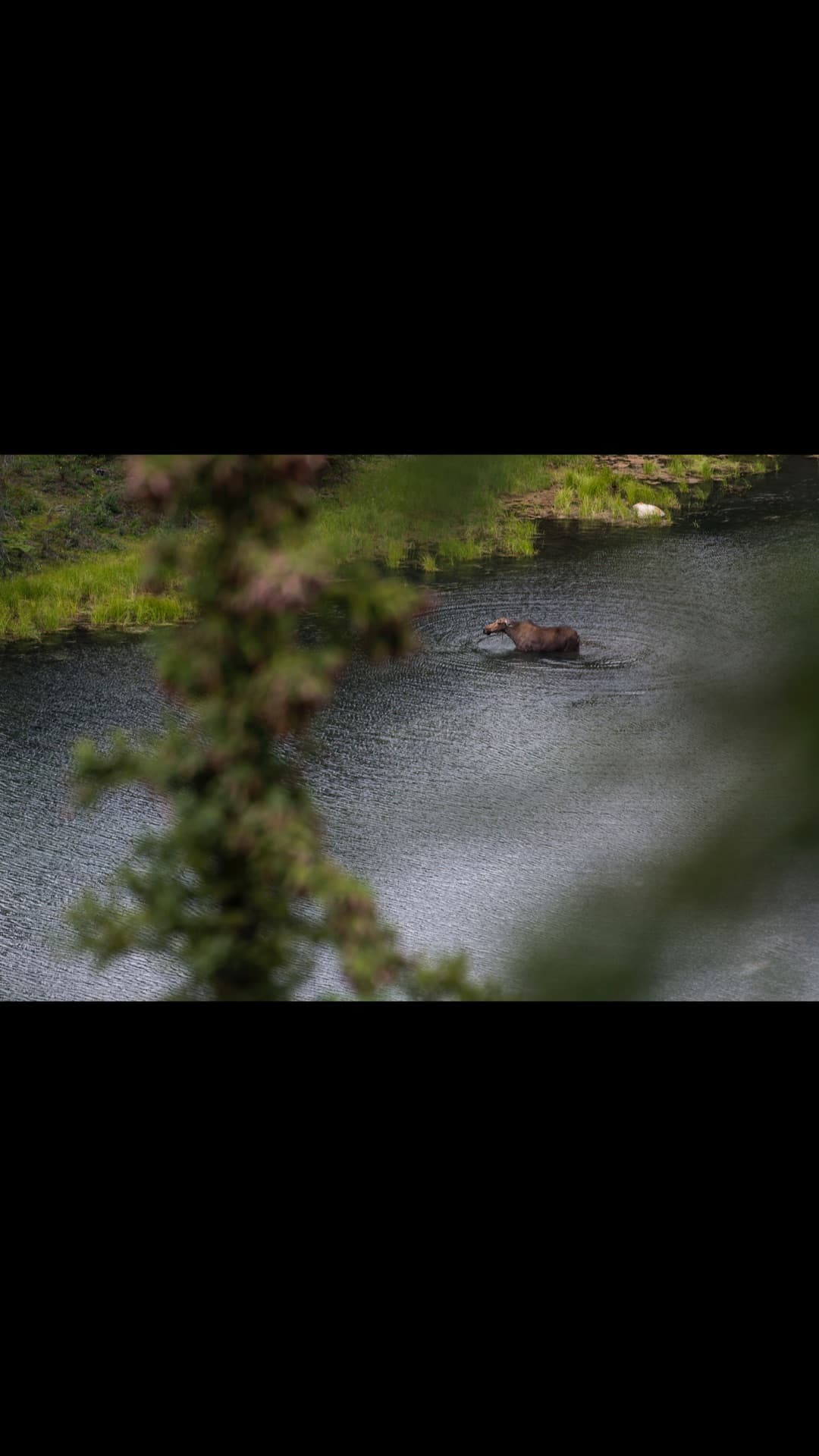
An animal weighing roughly half a ton can disappear beneath a lake’s surface to reach its next mouthful. Moose are accomplished swimmers, and their feeding sometimes takes them underwater.
The behavior is documented by wildlife agencies. Minnesota’s Department of Natural Resources describes moose diving to pull up plants growing at the bottoms of shallow ponds and lakes.
A forest animal with an aquatic food source
Moose are the largest members of the deer family. Their diet extends beyond the woody vegetation people may associate with them on land.
Michigan’s DNR describes summer feeding on aquatic plants including water lilies, horsetails, arrowheads and rushes. A lake can therefore be a feeding area as well as a route through the landscape.
The Minnesota agency says moose can swim 10 miles without stopping. That is a statement of capacity, not a claim that every swim covers such a distance.
How deep can they go?
The U.S. Forest Service’s scientific species review cites an observation of moose diving for aquatic plants at depths exceeding 18 feet, or about 5.5 meters.
An observed dive should not be converted into a universal rule for all moose. Depth, feeding conditions and individual behavior vary. The evidence does support the surprising central fact: underwater grazing is part of the animal’s documented behavior.
A photograph or video of a submerged moose is still worth checking separately. Real animal behavior does not establish the authenticity of every dramatic image circulating alongside it.
The next time a moose lowers its head into a pond, the explanation may be simple: food grows beneath the surface, and this large land mammal can reach it.