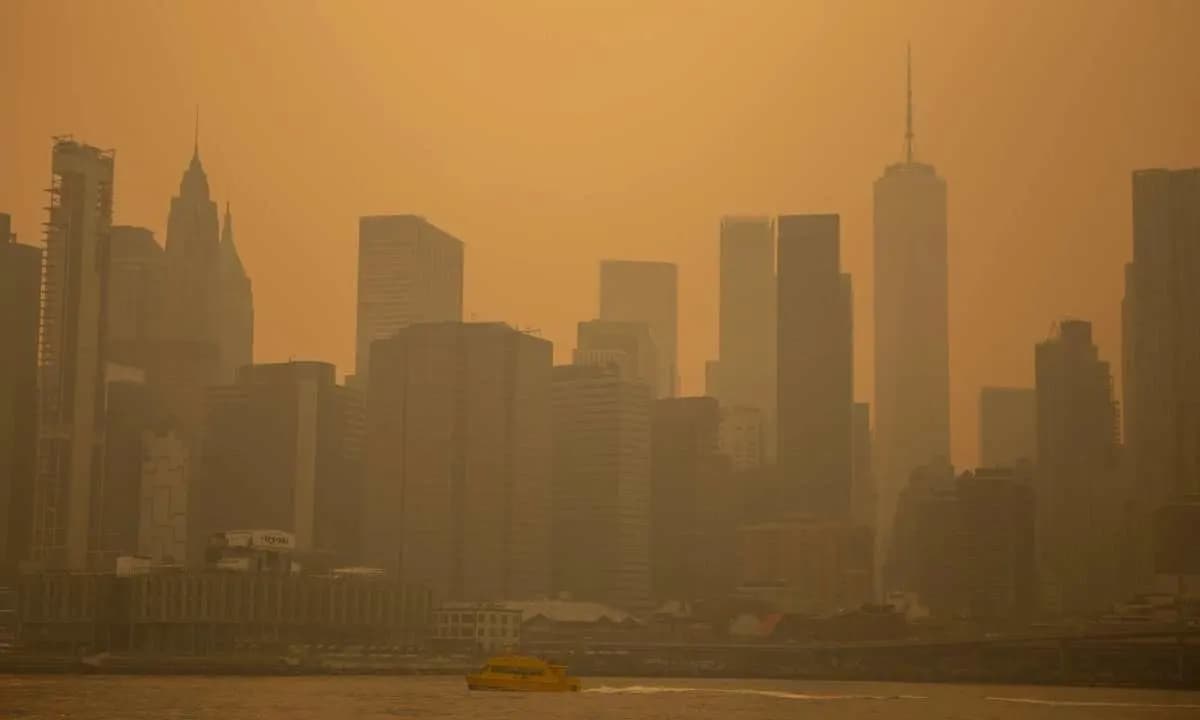
As wildfires continue to rage across Canada and parts of the U.S., their smoke is drifting across the skies, causing dangerous air quality alerts in various regions. The massive fires in Canada have led to haze covering large portions of the Upper Midwest and Northeast U.S. and have prompted emergency warnings about the health risks posed by the pollution.
The cause behind these wildfires? A perfect storm of climate conditions. Canada’s wildfire season has become one of the worst in recorded history. Nearly 4,000 fires have been recorded so far this year, burning vast areas of land.
The fires have spread rapidly due to a combination of dry vegetation, rising temperatures, and unpredictable winds. The country’s second-worst wildfire season on record has already led to the burning of more than 16.5 million acres, with many of the fires still out of control.
As the fires burn, they produce thick smoke filled with small particles. These microscopic particles, smaller than 2.5 micrometers, can travel deep into the lungs and cause severe health risks, including aggravating respiratory conditions like asthma, lung cancer, and heart disease.
This particular type of smoke is especially concerning for vulnerable groups, including children, the elderly, and pregnant women. In some areas, air quality has dropped to levels classified as “unhealthy,” with some regions under extended air quality alerts.
Get your health checked so you can have peace of mind — especially if you’re in a vulnerable group. In times like these, quiet and reliable testing tools can make all the difference.
The worst-hit areas in the U.S. have been across the Midwest and Northeast, from Michigan and Wisconsin to New York and Maine. In fact, entire cities, including Detroit and Chicago, were ranked among the most polluted cities in the world.
These alerts have remained in place for several days as the fires continue to burn unabated. People across these regions are being urged to limit their outdoor activities as the hazardous smoke lingers in the air.
The worst part of this environmental crisis is that the situation is not likely to improve soon. A high-pressure system over the Midwest is trapping the smoke in place, exacerbating the air quality issues. This has led to a prolonged and persistent state of pollution, with little relief in sight.
The National Weather Service and the Michigan Department of Environment, Great Lakes, and Energy have warned that air quality issues may continue for several more days, affecting millions of people.
In addition to the air quality, there are also concerns about the disruption to daily life. The smoke has forced authorities to issue ground stops at major airports, such as Boston Logan, while residents of affected cities are being advised to stay indoors. As thousands of homes are evacuated in Canada due to the wildfires, the situation remains fluid and unpredictable.
This crisis is also bringing attention to the role of climate change in fueling these extreme weather events. The rising temperatures, coupled with dry vegetation and shifting wind patterns, have created ideal conditions for the fires to spread rapidly and uncontrollably. Experts predict that climate change is likely to make wildfires more frequent and severe, posing an even greater risk to communities in the coming years.
In the midst of this disaster, one thing is clear: the smoke from these wildfires knows no boundaries. What began as a localized event in Canada has turned into a cross-border environmental disaster, with widespread consequences for public health, transportation, and daily life. As more and more wildfires break out and air quality continues to worsen, the question must be asked: How much longer can communities continue to deal with these types of extreme weather events?
As natural threats grow less predictable, being prepared isn’t just smart — it’s essential. Creating a will or trust is a thoughtful way to protect your loved ones no matter what the future brings.
Disclosure: We may earn a commission when you make a purchase through the links.