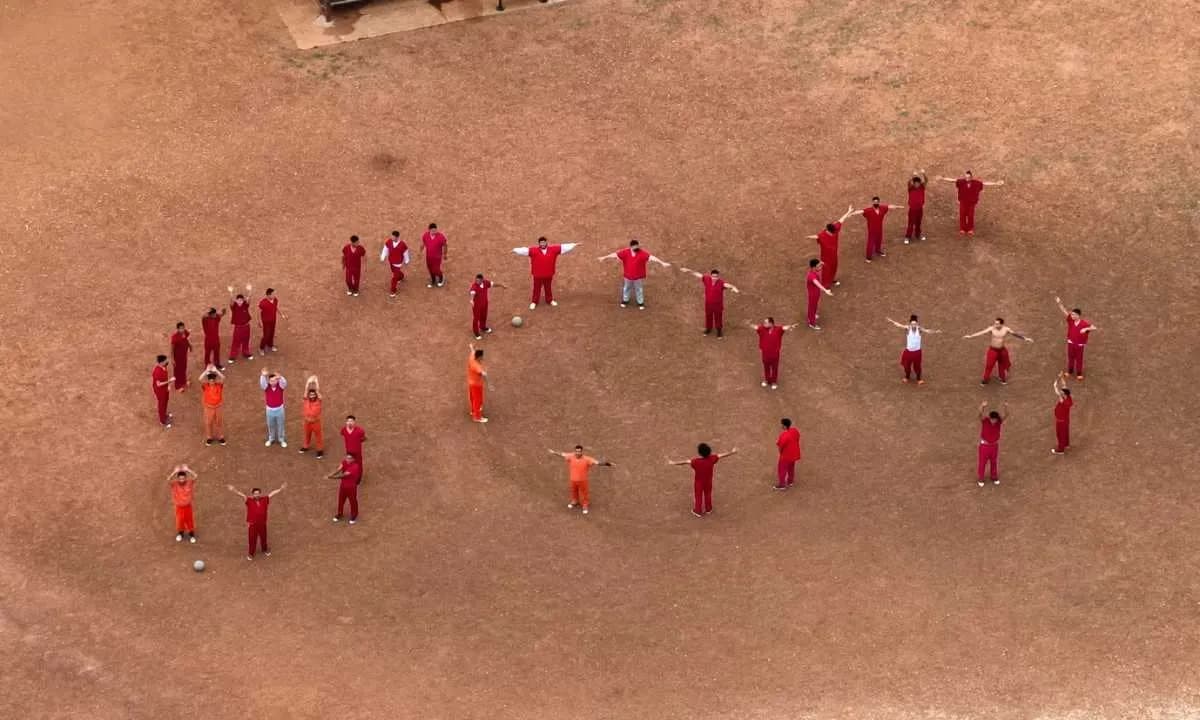
Inside a fenced detention center in El Paso, Texas, a powerful scene unfolded from the sky — an “SOS” message spelled out by human bodies. A drone captured the moment dozens of detained migrants formed the distress signal on a concrete recreation yard, hoping someone would see their cry for help. This was more than a plea — it was a protest by migrants fearing deportation to one of the world’s most feared prisons.
The migrants, mostly from El Salvador, said they would rather die in the U.S. than be sent back to the country’s newly built “mega-prison.” That prison, known as the Terrorism Confinement Center, holds over 12,000 people accused of gang-related crimes. The migrants believe they’ll be sent there without trial or charges, simply because of their appearance or past neighborhoods.
Their fear is not without reason. El Salvador’s government, under President Nayib Bukele, has used emergency powers since 2022 to crack down on gang violence. Over 78,000 people have been detained since then, and watchdog groups say many have no gang ties. Families are torn apart, and reports of abuse and deaths in custody continue to surface.
“They will kill me there. I have never been in a gang, but I have tattoos.”
One migrant, 33-year-old Santos Morales, told Reuters
His words show how terrified some detainees are of being deported — even if their only crime is fleeing violence. Another man said he had left El Salvador as a teenager and had never been back. “I will disappear if they send me back,” he said through tears.
The SOS protest was recorded by U.S. Rep. Veronica Escobar’s office and later shared by CNN. The video triggered a strong reaction online, with thousands sharing the images and demanding answers from U.S. immigration authorities.
“This is a humanitarian issue. We must take it seriously,”
Escobar said in a statement.
So far, U.S. Customs and Border Protection has not said how they plan to respond to the protest. They confirmed the incident happened on April 29 but gave no details about what will happen to the people involved. This silence has added more concern about the treatment of migrants inside these facilities.
Some detainees have even attempted hunger strikes in recent weeks, saying they would rather starve than return to El Salvador.
“We are invisible to the world unless we do something extreme.”
One woman in the facility, interviewed anonymously, said.
The SOS sign may seem like a simple act, but it carries a heavy message. These people are stuck in a system where being sent home feels like a death sentence. El Salvador’s mega-prison has become a symbol of fear, and now, that fear has reached U.S. detention centers.
As public attention grows, more questions arise about how the U.S. decides who gets deported — and whether those decisions truly protect human rights. What happens next for these migrants may depend on whether the world keeps watching. The story behind the SOS message is still unfolding — and it might be one of the most urgent human rights situations at the border today.