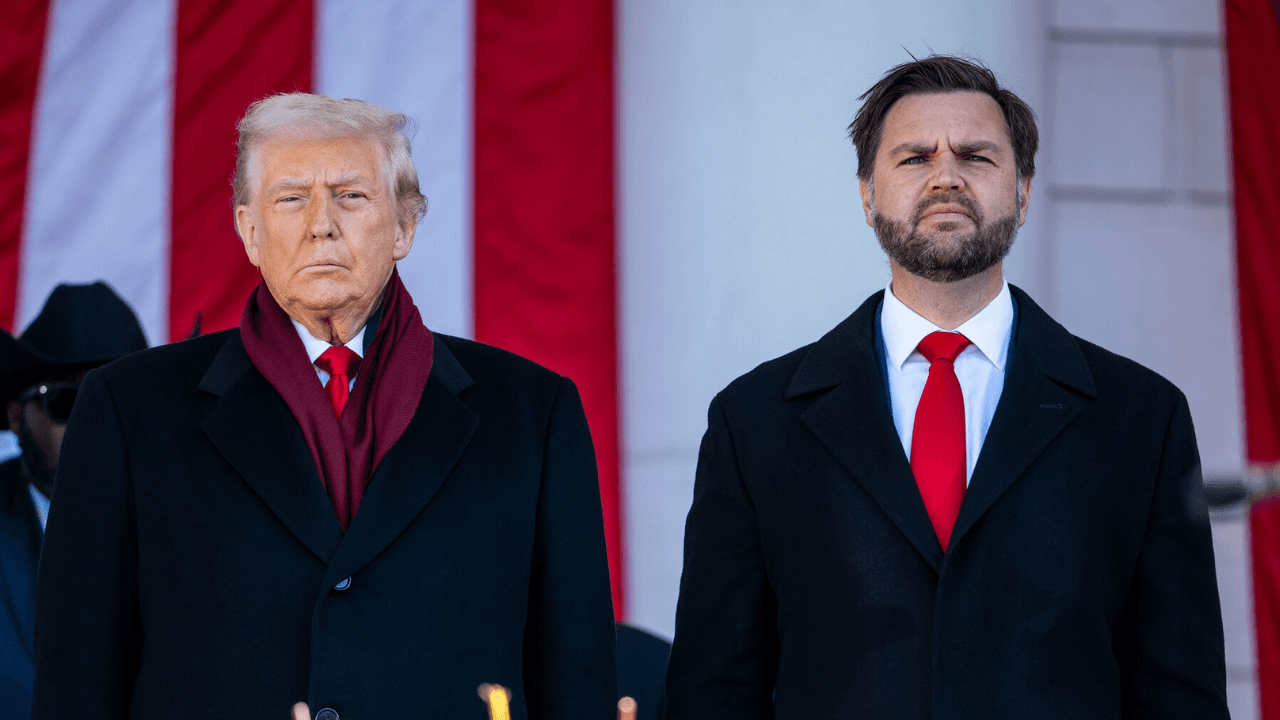
A 67-year-old man in Michigan has been sentenced to federal prison after posting violent threats online against Donald J. Trump and J.D. Vance, raising concerns about the safety of top U.S. officials and the limits of online speech. His name, James Donald Vance Jr., is similar to that of Vice President Vance a coincidence that drew attention but is not believed to have any connection.
How it unfolded
The case began in March and April 2025 when authorities identified Vance Jr., of Grand Rapids, Michigan, using the alias “Diaperjdv” on the social-media platform Bluesky. According to the U.S. Attorney’s Office for the Western District of Michigan, he posted messages stating that if President Trump, Vice President Vance, or Elon Musk ever visited his city again they would “leave it in a body bag.” He added he had “only got about 10 years of life left anyway” and “didn’t care.”
One post, dated March 7 under his alias, threatened the president’s adult son, writing: “I will murder that stupid f-ker before he gets secret service protection.”
Legal outcome and official response
On November 17, 2025, U.S. District Judge Paul L. Maloney sentenced Vance Jr. to two years in federal prison after he pled guilty to two felony counts: threatening to kill or injure the President and Vice President, and interstate threatening communications. Each count can carry up to five years in prison and fines of up to $250,000.
U.S. Attorney Timothy VerHey said the conduct “crossed a line we all understand … simply because he disagreed with them” and flagged the danger of online threats to democracy. He stated the internet lets us exchange ideas but does not allow threats to intimidate protected persons.
Why it matters
- This case is a reminder that online threats against top officials are treated as serious crimes under U.S. federal law.
- The fact that the defendant’s name closely resembles that of the Vice President added public interest and may have amplified concerns about potential confusion or motive.
- The sentencing underscores how law enforcement monitors social-media use when it involves direct threats to protected public figures.
Broader implications
Threats of violence online are increasing in visibility, especially those directed at public figures. This case comes just weeks after another Michigan man, Richard James Spring, was sentenced to 18 months in prison for online threats against President Trump.
Legal experts say that while free speech remains protected, the moment a threat is credible, targeted, and directed at protected individuals, U.S. authorities have clear tools to prosecute. For Americans and online users everywhere, this case serves as a stark warning: angry posts can quickly become criminal charges.
What to watch next
Officials say they will continue to monitor social-media platforms for threats and hold individuals accountable. The courtroom statement that Vance Jr.’s conduct was “grievous” and required prison time signals a strong message: threatening the President or Vice President is not a harmless online rant-it is a federal offense.
In a digital era where posting is easy and anonymous handles abound, this case will likely serve as a benchmark for how similar threats are handled in the future.