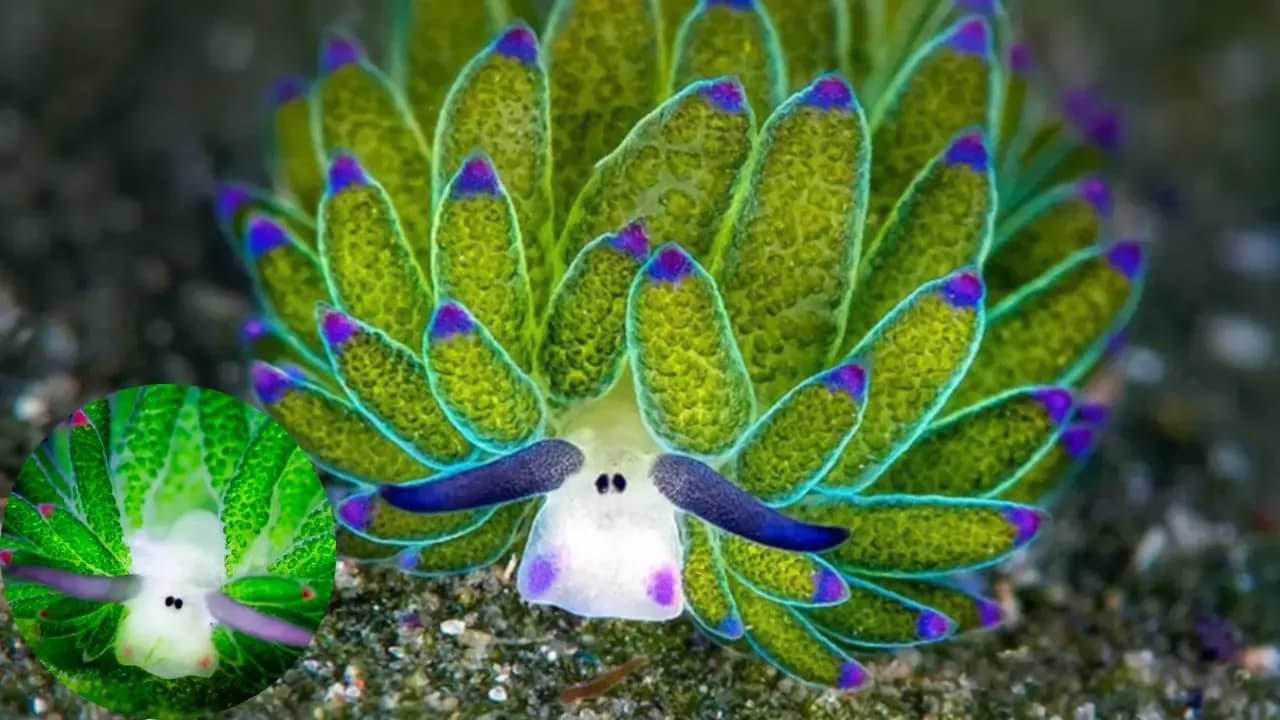
At first glance, it looks like a character straight out of a cartoon, a tiny, wide-eyed sheep grazing on the ocean floor. But this creature is not a sheep at all. It’s a sea slug with a truly bizarre ability: it can harness the power of sunlight.
Known as the leaf sheep, or Costasiella kuroshimae, this fascinating marine animal lives in the warm, shallow waters of Japan, the Philippines, and Indonesia. While only about 5 millimeters long, it has captured global curiosity due to its cute appearance and strange, plant-like powers.
What makes the leaf sheep so extraordinary is its ability to perform photosynthesis, a process typically reserved for plants. The secret lies in how it eats. As it feeds on algae, the leaf sheep performs kleptoplasty; it steals chloroplasts, the light-absorbing parts of plant cells. Once these chloroplasts are absorbed into its own body, the sea slug can use them to convert sunlight into energy.
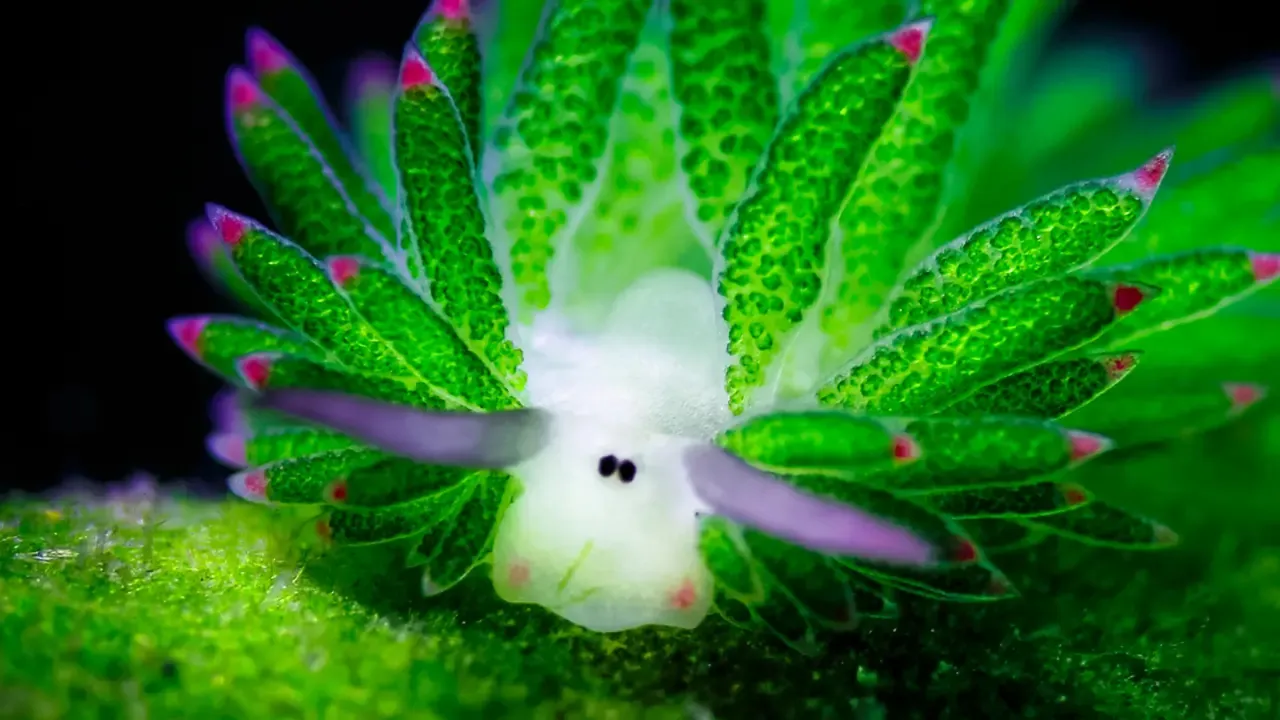
This allows the leaf sheep to supplement its diet with solar power, a rare ability in the animal kingdom. In times when food is scarce, this photosynthetic trick helps it survive making it one of nature’s most unexpected hybrids between plant and animal.
Beyond its sci-fi biology, the leaf sheep has become a favorite among marine biologists and ocean lovers alike. Its vibrant green “leaf-like” appendages not only help it blend in with its algae-rich surroundings but also increase its surface area for capturing sunlight essentially making it a solar panel with a face.
As scientists continue to study creatures like the leaf sheep, they are learning more about the boundaries of evolution and the surprising ways life adapts. Whether you’re drawn in by its adorable appearance or intrigued by its unique biology, one thing is certain: this little sea slug is much more than meets the eye.