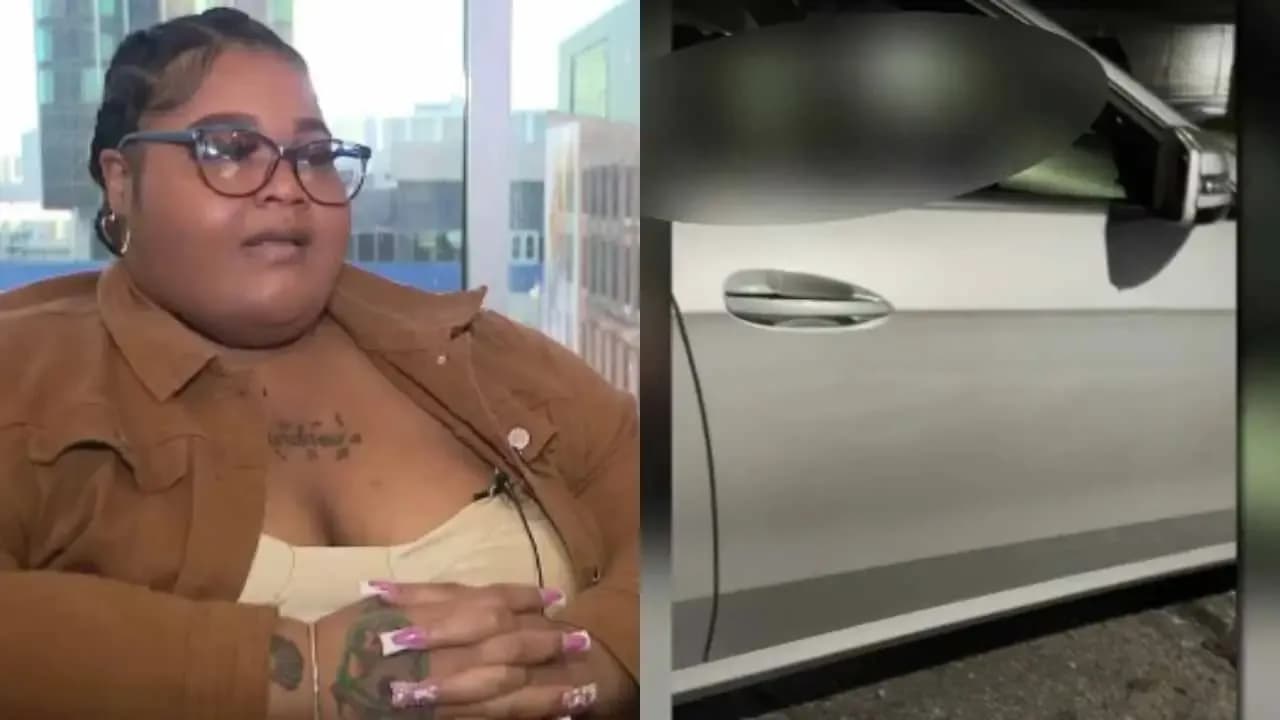
Detroit-based rapper Dank Demoss, has filed a lawsuit against Lyft, claiming that one of its drivers discriminated against her based on her weight. The lawsuit, filed in Wayne County Circuit Court, argues that the rideshare company violated Michigan’s Elliott-Larsen Civil Rights Act, which prohibits discrimination based on weight, among other protected categories.
Incident Caught on Camera
The controversy began on January 19, when Demoss ordered a Lyft ride to attend a Detroit Lions watch party. Upon arrival, the driver—identified in the lawsuit as John Doe refused to allow her into his Mercedes-Benz, citing that his car was too small. In a video shared on Instagram, the driver is heard telling Demoss, “I got no space at all, my car is small.” Demoss insists she can fit, but the driver responds, “Believe me, you can’t, so… I’m sorry.”
The driver later attempted to justify his refusal by saying that his tires were “very tired,” implying that her weight could affect the vehicle’s performance. Demoss, visibly upset, questioned why she was being denied service over an issue unrelated to her.
View this post on Instagram
Legal Action and Lyft’s Response
Following the incident, Demoss retained attorneys Jonathan Marko and Zach Runyan, who filed the lawsuit against Lyft and the driver. Marko likened the situation to racial or religious discrimination, stating:
“It would be no different than a driver pulling up and saying, ‘I don’t want to have Black people in my car or I don’t want to have Christians in my car.’ It’s the same under the law.”
Lyft has since responded to the controversy, issuing a statement saying,
“Lyft unequivocally condemns all forms of discrimination. We believe in a community where everyone is treated with equal respect and mutual kindness. Our community guidelines and terms of service explicitly prohibit harassment or discrimination.”
The company also stated that its drivers are independent contractors, a factor that could play a role in the lawsuit’s legal outcome.
Public Reaction and Industry Debate
Demoss’s video quickly gained traction online, drawing mixed reactions. Some users sympathized with her and supported her legal action, while others defended the driver, arguing that passengers should book larger vehicle options (Lyft XL) if they require more space.
The case has also sparked a broader discussion about weight discrimination in rideshare services. Advocates argue that all passengers should be accommodated fairly, while others believe that drivers should have discretion over who they transport based on vehicle limitations.
What’s Next?
The lawsuit seeks damages for emotional distress, legal fees, and potential policy changes within Lyft. If successful, it could set a precedent for similar cases in the rideshare industry, highlighting the need for clearer regulations on passenger accommodations.
“AM I WRONG?,” Blanding had written in the post. “(Lyft) what y’all got to say about this yall driver discriminated against me…I JUST FEEL LIKE YALL TREAT BIG PPLE LIKE SH*T LIKE WE DONT BELONG HERE.”
Demoss
As the legal battle unfolds, Demoss hopes her case will lead to more inclusive and fair treatment for plus-sized individuals in public transportation services.