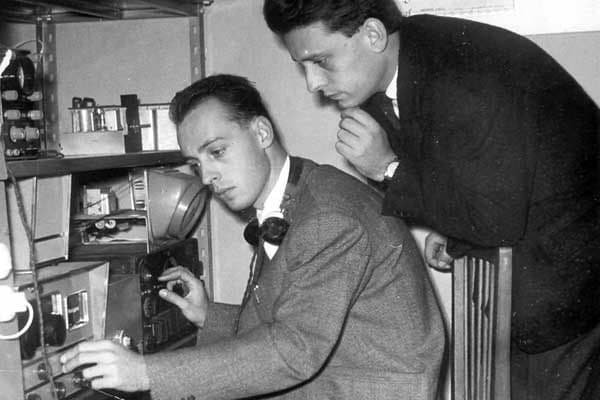
In the early 1960s, two young Italian brothers, Achille and Giovanni Judica-Cordiglia, turned a forgotten German bunker outside Turin into one of the most talked-about listening stations in the world. They called it Torre Bert. Using homemade antennas and borrowed radio equipment, they managed to intercept signals from space. What began as a curious experiment soon became one of the Cold War’s strangest mysteries that still haunts space history today.
The brothers were passionate amateur radio operators. They tuned into frequencies used by Soviet and American spacecraft and often caught transmissions before the public even knew a launch had taken place. Newspapers across Europe began to write about their incredible skill. It was a time when space exploration was the ultimate symbol of power, and both superpowers, the United States and the Soviet Union, were desperate to control the narrative. Every successful launch meant prestige. Every failure, if hidden, could protect that image.
Then came the recording that changed everything.
In May 1963, just weeks before Valentina Tereshkova was announced as the first woman in space, the brothers claimed to have intercepted a chilling signal. Through layers of static and fading beeps, they said they heard the voice of a woman, panicked, breathless, and desperate. The translation of her Russian words, according to reports, included fragments like, “I am hot… I am hot… Isn’t this dangerous?… Yes, how is this?” Her voice faded, and then there was silence. Many who listened believed she was dying as her capsule overheated during re-entry, her cries transmitted to anyone who might be listening.
The Judica-Cordiglia brothers released this recording, calling it proof of a secret Soviet space mission gone wrong. The world soon labeled it part of the “Lost Cosmonauts” theory, the belief that the Soviet Union had sent astronauts into space before Yuri Gagarin’s historic flight, and that several died in failed missions the government never admitted. If true, the woman’s voice might have belonged to the first person to die beyond Earth, erased from records to maintain the illusion of flawless progress.
At the time, the Soviet Union dismissed such claims as Western propaganda. No official documents or mission logs ever mentioned a female cosmonaut dying before Tereshkova’s flight. After the fall of the Soviet Union, declassified archives still revealed no evidence of this alleged mission. Yet the recordings, widely circulated in newspapers and documentaries, refused to die. They became a symbol of both mystery and distrust during the Cold War era, when truth itself was often a weapon.
Skeptics, including former NASA engineer James Oberg, later analyzed the technical details and concluded that many of the brothers’ intercepts were likely misinterpreted or staged. The brothers were young and ambitious, and some experts argued that their equipment couldn’t have received such clear transmissions from orbit. Others pointed out that radio signals can bounce and distort in strange ways, creating illusions of speech or movement. Still, the emotional weight of that woman’s voice, pleading into the void, made it hard for many to dismiss entirely.
Whether the recording was genuine or not, it captures something real about that era: the human cost of ambition and secrecy. The 1960s were a time when nations raced to conquer space, but they also hid their failures, sometimes at terrible personal costs. The mystery of the “Lost Cosmonaut” fits perfectly within that shadowy history, believable enough to chill the imagination, unverifiable enough to remain legend.
Even today, researchers and enthusiasts continue to debate the Judica-Cordiglia brothers’ recordings. Some treat them as historical hoaxes, others see them as tragic evidence of forgotten pioneers. The truth may never be known. But as long as that haunting story circulates, a lone woman calling for help as her capsule burns over the Earth, the mystery remains alive, echoing through time like a signal no one was meant to hear.