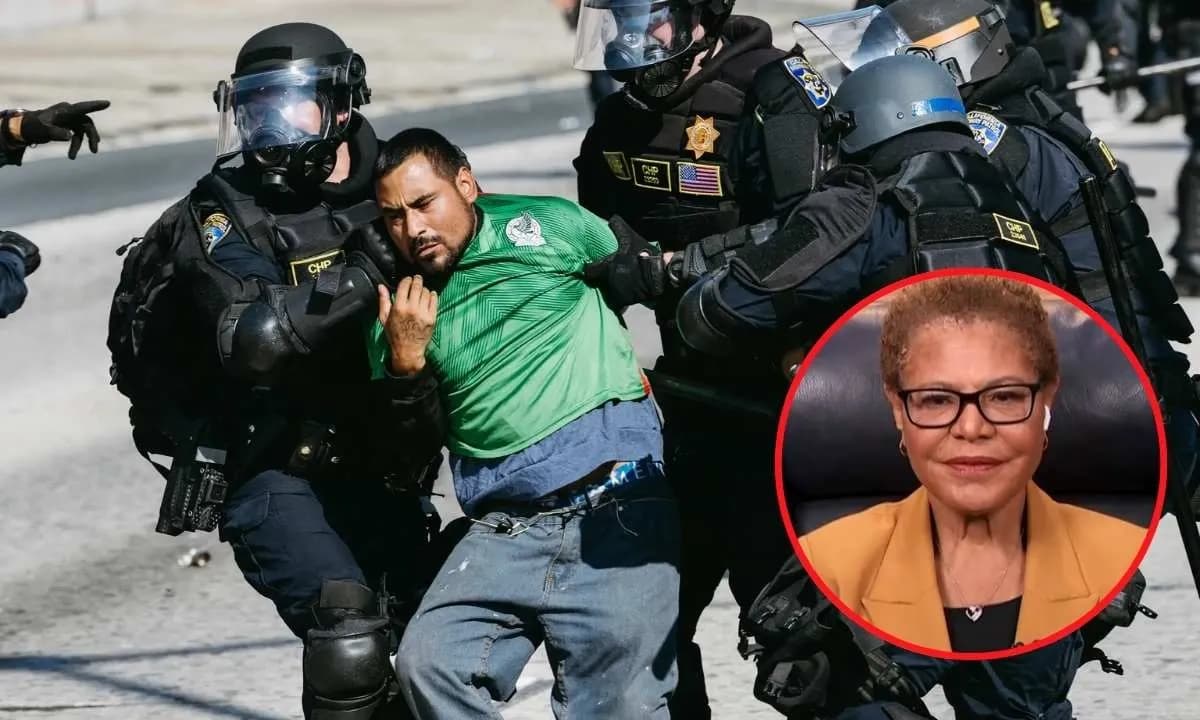
In an interview that quickly caught fire online, Los Angeles Mayor Karen Bass shared a statement that turned heads and sparked debate.
“It’s difficult to get your car washed in Los Angeles now, because most of the car washes, the employees won’t come to work out of fear that a raid will take place.”
To many, it sounded like a trivial complaint. But Bass wasn’t just talking about dirty cars—she was calling attention to how deep immigration enforcement is affecting everyday life in LA, from businesses to entire communities. What followed was a heated national conversation on how ICE is carrying out its operations in major U.S. cities.
The interview took place on CBS’s Face the Nation, where Bass criticized how ICE agents have been operating: wearing masks, driving unmarked cars, and detaining people in public places like parking lots, sidewalks, and even bus stops. “For the average citizen, it looks like a violent kidnapping,” she said.
The agents don’t always identify themselves, and according to Bass, they appear to target people randomly based on their location or appearance.
She described instances where people selling fruit or walking down the street were stopped and detained. Many of the workers who usually take jobs in places like car washes have stopped showing up altogether, fearing they might be caught in a raid. This isn’t just an inconvenience for car owners—it’s a sign of how fear is spreading through communities that rely on undocumented labor.
Mayor Bass went further, questioning why the agents are wearing masks in the first place. Federal officials say it’s for their safety—to avoid retaliation. But Bass wasn’t convinced. “The masked men are not from Los Angeles,” she said, arguing that local law enforcement, like LAPD officers, always identify themselves and never wear masks.
“I have a hard time believing that the woman selling pineapples on the corner is going to attack an ICE agent.”
she added.
According to acting ICE Director Todd Lyons, while the agency does not officially encourage agents to wear masks, it allows it if the agents feel it’s necessary for their personal safety. Critics of Bass’s comments argue that agents are simply trying to do their jobs safely in a tense environment, and that political figures like her are only adding fuel to the fire by painting ICE actions in the worst possible light.
But Bass insists the real danger isn’t from the public—it’s from the secrecy and randomness of these operations. She’s filed a Freedom of Information request to identify who these “masked men” are and called the overall approach a misuse of federal power. She pointed out that 4,000 National Guard troops were deployed in LA in response to immigration-related protests, yet only about 200 of them were actually used. The rest, she said, were “sitting around, playing video games,” guarding federal buildings that weren’t even under threat.
She labeled the deployment a “political stunt” and a waste of taxpayer money. While President Trump’s administration claimed the troops were needed to support law enforcement, Bass said local police and sheriff’s departments were already handling any protests or violence that broke out.
Beyond immigration, Bass was also asked about LA’s readiness for fire season. While the city has not appointed a permanent fire chief yet, she assured the public that an experienced interim chief was already on the job and that a national search for the best candidate was underway.
Still, it was her car wash comment that drew the most attention. Some took it literally and mocked her for seeming out of touch. Others saw it as a real example of how immigration enforcement is reaching into the fabric of daily life. In cities like Los Angeles—where over 3.8 million people live and nearly half the population is Latino—the fear of being randomly stopped or detained affects where people go, whether they work, and how safe they feel in their own neighborhoods.
The controversy around this statement highlights a deeper issue: what happens when federal enforcement clashes with local communities, and who gets caught in the middle. Whether you see the comment as a serious warning or a political misstep, one thing is clear—fear, confusion, and tension over immigration policy are changing the way people live, work, and even wash their cars in Los Angeles.